 Uyiyiphi idayinaso? Ikwizi
 Idabi leedayinaso
 Ugqatso lweedayinaso
 Imidlalo emincinci yeedayinaso
 I-albhamu yezitikha
 Iilisti ze-TOP zeedayinaso
 Ndothuse!
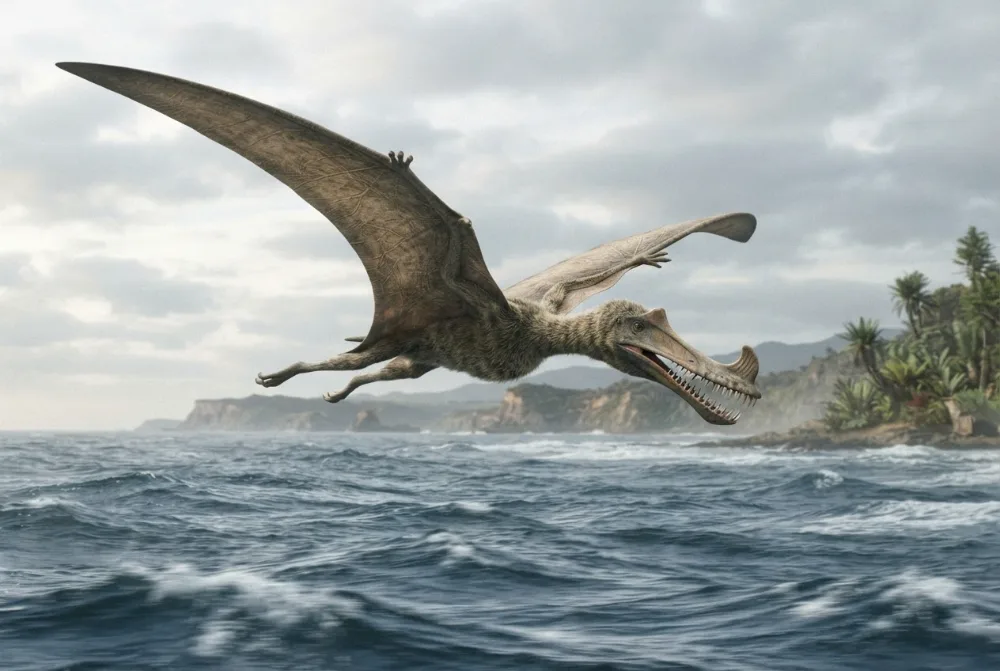
Coloborhynchus
Coloborhynchus was a flying reptile with a long, toothed snout that lived near the sea. It soared over the waves and snatched fish with its sharp teeth. Some scientists think it was one of the biggest toothed pterosaurs ever!1
Yaphila nini?
Yayinkulu kangakanani?
Amaphiko ayo ayebanzi kangakanani?
 amaphiko abanzi njengeebhayisikile ezingama-4 zilandelelana⚽ibinokubhabha inqumle ibala lebhola ekhatywayo lonke ngemizuzwana engama-4.8
Coloborhynchus wayemkhulu kangakanani xa ethelekiswa NAWE?
Yimathematika nje kwibhrawuza yakho. Akukho nto igcinwayo okanye ithunyelwe naphi na.
Yayikhawuleza kangakanani?


Iinyani ezimnandi
Coloborhynchus lived about 140 to 94 million years ago, during the Cretaceous Period.4
Its name means 'maimed beak' because the first fossil found was a damaged snout.1
The first Coloborhynchus fossil was a piece of the upper jaw with tooth sockets, found in England.12
Coloborhynchus belonged to a group called Anhangueridae, which were fish-eating pterosaurs with crests on their snouts.41
Some scientists now think only one species, Coloborhynchus clavirostris, truly belongs to this genus.2
Fossils of Coloborhynchus have been found in both England and Morocco, showing it lived in different parts of the world.41
Coloborhynchus had a flat, squared-off tip on its upper jaw, which helped it catch fish.2
Eyona mibuzo ibuzwa kakhulu: Coloborhynchus
?How big was Coloborhynchus?
It could have a wingspan of about 7 metres (23 feet), which is as long as a small boat. The largest toothed pterosaur specimen, Coloborhynchus capito, had a skull up to 75 centimetres long.13
?What did Coloborhynchus eat?
It ate fish, just like many other pterosaurs that lived near the sea. Its sharp teeth and long snout helped it catch them.1
?When did Coloborhynchus live?
It lived during the Early Cretaceous Period, about 140 to 94 million years ago.1
?Why is it called Coloborhynchus?
Its name means 'maimed beak' because the first fossil found was a damaged snout. The name was given by Richard Owen in 1874.1
Inyaniso ngeentsomi
Intsomi: Coloborhynchus was the largest flying animal ever.
Inyaniso: It was once thought to be the largest toothed pterosaur, but a close relative called Tropeognathus is now believed to have had a bigger wingspan.1
Kwiingcali zeedayinaso
- Igama lenzululwazi
- Coloborhynchus
- Inikwe igama ngu:
- Owen 18744
- Iqela
- Izirhubuluzi ezibhabhayo
- Usapho / iclade
- Anhangueridae4
- Ukuhlelwa
- Pterosauria > Pterodactyloidea4
- Ubudala bamatye
- 139 ukuya ku-94 izigidi zeminyaka (Berriasian / Cenomanian)4
- Izakhiwo zamatye
- Wessex, Ifezouane4
- Amazwe
- iMorocco, iUnited Kingdom4
- Iirekhodi zeefosili
- 5 kwi-Paleobiology Database4
- Ikwaziwa ngokuba
- Amblydectes (amagama amadala ngoku abalwa njengesilwanyana esinye)4
- Ukufunyanwa
- Richard Owen named Coloborhynchus in 1874 based on a partial snout from East Sussex, England. The fossil was damaged, so Owen called it 'maimed beak'.14
- Kusaxoxwa ngayo
- Scientists are still debating which species belong to Coloborhynchus and which should be placed in other genera like Nicorhynchus or Uktenadactylus.2
Apho iinyani zivela khona
- Coloborhynchus (en.wikipedia.org)
- A taxonomic and phylogenetic review of the anhanguerid pterosaur group Coloborhynchinae and the new clade (ddd.uab.cat)
- The world’s largest toothed pterosaur, NHMUK R481, an incomplete rostrum of Coloborhynchus capito (Seeley, 1870) from the Cambridge Greensand of England (sciencedirect.com)
- Coloborhynchus in The Paleobiology Database (CC BY 4.0): ubudala, iindawo, izakhiwo zamatye, ukuhlelwa.
Yonke inyani ekweli phepha inenombolo ebonisa umthombo wayo. Ukuba siphosisile, uxolo, sithanda iidayinaso, asiyojenali yenzululwazi. Sixelele apha: [email protected], siya kuyilungisa.
 URex ulambile! I-Dino Wiki yiprojekthi katata ukwenzela unyana wakhe othanda iidayinaso, isimahla, ayinazintengiso, ayinazilandeli. Abantu abadala banokuphakela uRex isidlwana ukuze incede ihlale kwi-intanethi.Phakela uRex
 Pteranodon
 Quetzalcoatlus
 Dorygnathus
 Rhamphorhynchus
 Anhanguera
 Pterodactylus
 Stegosaurus
 Iguanodon
 Archaeopteryx
 Giganotosaurus
 Microraptor
 Deinonychus