 Uyiyiphi idayinaso? Ikwizi
 Idabi leedayinaso
 Ugqatso lweedayinaso
 Imidlalo emincinci yeedayinaso
 I-albhamu yezitikha
 Iilisti ze-TOP zeedayinaso
 Ndothuse!
Yaphila nini?

Yayinkulu kangakanani?
Yayinde kangakanani?
Yayiphakame kangakanani?
uqikelelo
Yayinzima kangakanani?
 inde njengezinja ezingama-3, impumlo ukuya emsileni🍌inde njengeebhanana ezingama-17 zilandelelana
 inzima njengeekati zasekhaya ezingama-10🍉inzima njengamavatala angama-8🧸inzima njengabantwana basenkulisa abangama-2🎒inzima njengabantwana besikolo abangama-1🏃ibinokubaleka iimitha ezili-100 ngemizuzwana engama-7.5 (oyena mntu ukhawulezayo udinga i-9,6)
Dromaeosauroides wayemkhulu kangakanani xa ethelekiswa NAWE?
Yimathematika nje kwibhrawuza yakho. Akukho nto igcinwayo okanye ithunyelwe naphi na.
Yayikhawuleza kangakanani?


Iinyani ezimnandi
Dromaeosauroides is the first dinosaur ever found in Denmark and the only one that has been given a scientific name.1
It is known from only two teeth, one found in 2000 and another in 2008.1
The first tooth was declared a 'Danekræ' (Danish creature) because of its scientific importance.1
Dromaeosauroides lived about 140 million years ago in a coastal lagoon environment.1
Scientists think Dromaeosauroides used its large sickle claw to grip and hold onto prey while eating it, like a bird of prey does.1
Some fossil droppings (coprolites) found in the same area contain fish scales and may have come from Dromaeosauroides or a similar dromaeosaur.1
Dromaeosauroides is one of the oldest known dromaeosaurs in the world.1
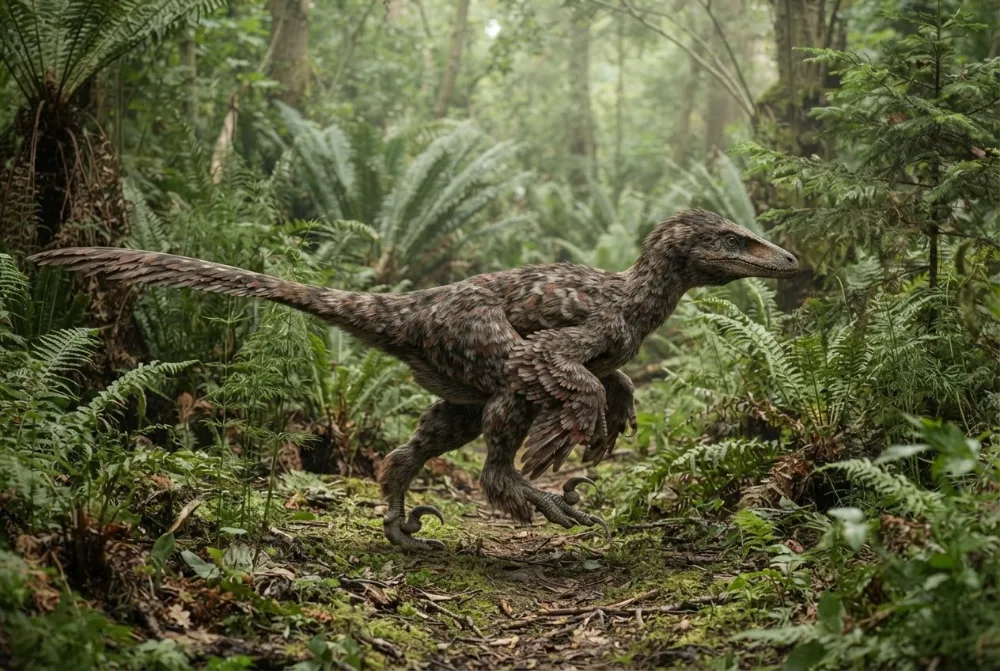
Eyona mibuzo ibuzwa kakhulu: Dromaeosauroides
?How big was Dromaeosauroides?
Dromaeosauroides was about 2 to 3 metres (7 to 10 ft) long and weighed around 40 kilograms (88 lb). Some estimates suggest it could have been up to 3 to 4 metres (9.8 to 13.1 ft) long.1
?Did Dromaeosauroides have feathers?
Yes, as a dromaeosaur, Dromaeosauroides would have been covered in feathers. A life-sized sculpture at the NaturBornholm centre shows it with feathers.1
?What did Dromaeosauroides eat?
Dromaeosauroides was a meat-eater. It likely used its large sickle claw to grip and hold prey while eating it, and may have even caught fish.1
?When did Dromaeosauroides live?
Dromaeosauroides lived about 140 million years ago, during the Early Cretaceous period.1
Kwiingcali zeedayinaso
- Igama lenzululwazi
- Dromaeosauroides
- Inikwe igama ngu:
- Christiansen and Bonde 20032
- Iqela
- Iirapta
- Usapho / iclade
- Dromaeosauridae2
- Ukuhlelwa
- Theropoda > Dromaeosauridae2
- Ubudala bamatye
- 139 ukuya ku-137 izigidi zeminyaka (Berriasian)2
- Izakhiwo zamatye
- Jydegaard2
- Amazwe
- iDenmark2
- Iirekhodi zeefosili
- 1 kwi-Paleobiology Database2
- Ukufunyanwa
- The first tooth was found in September 2000 by geology student Eliza Jarl Estrup during a field course taught by palaeontologists Per Christiansen and Niels Bonde. They named the dinosaur Dromaeosauroides bornholmensis in 2003.1
- Kusaxoxwa ngayo
- Scientists are not sure exactly how Dromaeosauroides used its large sickle claw, but most think it was for gripping and holding prey.1
Apho iinyani zivela khona
- Dromaeosauroides (en.wikipedia.org)
- Dromaeosauroides in The Paleobiology Database (CC BY 4.0): ubudala, iindawo, izakhiwo zamatye, ukuhlelwa.
Yonke inyani ekweli phepha inenombolo ebonisa umthombo wayo. Ukuba siphosisile, uxolo, sithanda iidayinaso, asiyojenali yenzululwazi. Sixelele apha: [email protected], siya kuyilungisa.
 URex ulambile! I-Dino Wiki yiprojekthi katata ukwenzela unyana wakhe othanda iidayinaso, isimahla, ayinazintengiso, ayinazilandeli. Abantu abadala banokuphakela uRex isidlwana ukuze incede ihlale kwi-intanethi.Phakela uRex
 Velociraptor
 Microraptor
 Deinonychus
 Asiamericana
 Richardoestesia
 Saurornitholestes
 Stegosaurus
 Iguanodon
 Archaeopteryx
 Giganotosaurus
 Baryonyx
 Paronychodon