 Uyiyiphi idayinaso? Ikwizi
 Idabi leedayinaso
 Ugqatso lweedayinaso
 Imidlalo emincinci yeedayinaso
 I-albhamu yezitikha
 Iilisti ze-TOP zeedayinaso
 Ndothuse!
Dysalotosaurus
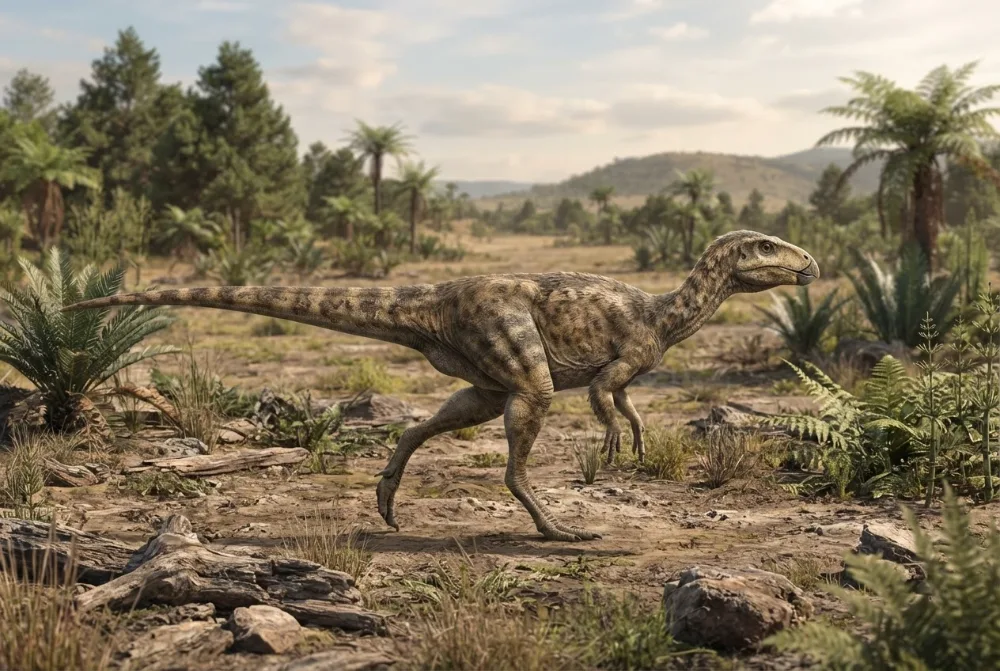
Dysalotosaurus was a small, fast plant-eater that lived in Africa during the Late Jurassic. It ran on two strong legs and had a long tail to help it balance. Thousands of its bones have been found together, suggesting it lived in big herds.1
Yaphila nini?
Yayinkulu kangakanani?
Yayinde kangakanani?
Yayiphakame kangakanani?
uqikelelo
Yayinzima kangakanani?
 inde njengezinja ezingama-2.5, impumlo ukuya emsileni🍌inde njengeebhanana ezingama-14 zilandelelana🍉inzima njengamavatala angama-16🧸inzima njengabantwana basenkulisa abangama-4🎒inzima njengabantwana besikolo abangama-2.5🏃ibinokubaleka iimitha ezili-100 ngemizuzwana engama-7.8 (oyena mntu ukhawulezayo udinga i-9,6)
Dysalotosaurus wayemkhulu kangakanani xa ethelekiswa NAWE?
Yimathematika nje kwibhrawuza yakho. Akukho nto igcinwayo okanye ithunyelwe naphi na.
Yayikhawuleza kangakanani?


Iinyani ezimnandi
Dysalotosaurus lived about 152 to 149 million years ago, during the Kimmeridgian stage of the Late Jurassic.2
Thousands of Dysalotosaurus bones have been found in Tanzania, and scientists think a whole herd died together in a single event.1
Dysalotosaurus had a life expectancy of about 20 years and lived in mixed-age herds.1
Young Dysalotosaurus had different teeth than adults, suggesting they ate a mix of plants and small animals before becoming full herbivores.1
Dysalotosaurus held its head pointing straight forward when not feeding, based on CT scans of its braincase.1
All known Dysalotosaurus specimens were not yet fully grown when they died.1
Eyona mibuzo ibuzwa kakhulu: Dysalotosaurus
?How big was Dysalotosaurus?
Dysalotosaurus was about 2.5 metres (8.2 ft) long and weighed around 80 kilograms (180 lb).1
?What did Dysalotosaurus eat?
It was a plant-eater, but young Dysalotosaurus may have also eaten small animals before becoming full herbivores.1
?Did Dysalotosaurus live in herds?
Yes, thousands of bones found together suggest it lived in big herds, and a whole herd may have died together.1
?How fast could Dysalotosaurus run?
Its long, powerful hind legs suggest it was a fast runner, but no exact speed is known.1
Kwiingcali zeedayinaso
- Igama lenzululwazi
- Dysalotosaurus
- Inikwe igama ngu:
- Virchow 19193
- Iqela
- Izitya-zityalo ezinemilomo
- Usapho / iclade
- Dryosauridae3
- Ukuhlelwa
- Ornithischia > Ornithopoda > Iguanodontia3
- Ubudala bamatye
- 152 ukuya ku-149 izigidi zeminyaka (Kimmeridgian)3
- Izakhiwo zamatye
- Tendaguru3
- Amazwe
- iTanzania3
- Iirekhodi zeefosili
- 1 kwi-Paleobiology Database3
- Ukufunyanwa
- Dysalotosaurus was named by Hans Virchow in 1919. The fossils were found between 1909 and 1913 in Tanzania, Africa. The species name honors German army officer Paul von Lettow-Vorbeck.1
- Kusaxoxwa ngayo
- Scientists still debate whether Dysalotosaurus was a separate genus or the same as Dryosaurus.1
Apho iinyani zivela khona
- Dysalotosaurus (en.wikipedia.org)
- PBDB Taxon (paleobiodb.org)
- Dysalotosaurus in The Paleobiology Database (CC BY 4.0): ubudala, iindawo, izakhiwo zamatye, ukuhlelwa.
Yonke inyani ekweli phepha inenombolo ebonisa umthombo wayo. Ukuba siphosisile, uxolo, sithanda iidayinaso, asiyojenali yenzululwazi. Sixelele apha: [email protected], siya kuyilungisa.
 URex ulambile! I-Dino Wiki yiprojekthi katata ukwenzela unyana wakhe othanda iidayinaso, isimahla, ayinazintengiso, ayinazilandeli. Abantu abadala banokuphakela uRex isidlwana ukuze incede ihlale kwi-intanethi.Phakela uRex
 Iguanodon
 Tenontosaurus
 Thescelosaurus
 Zalmoxes
 Camptosaurus
 Rhabdodon
 Brachiosaurus
 Diplodocus
 Allosaurus
 Brontosaurus
 Compsognathus
 Camarasaurus