 Uyiyiphi idayinaso? Ikwizi
 Idabi leedayinaso
 Ugqatso lweedayinaso
 Imidlalo emincinci yeedayinaso
 I-albhamu yezitikha
 Iilisti ze-TOP zeedayinaso
 Ndothuse!
Europejara
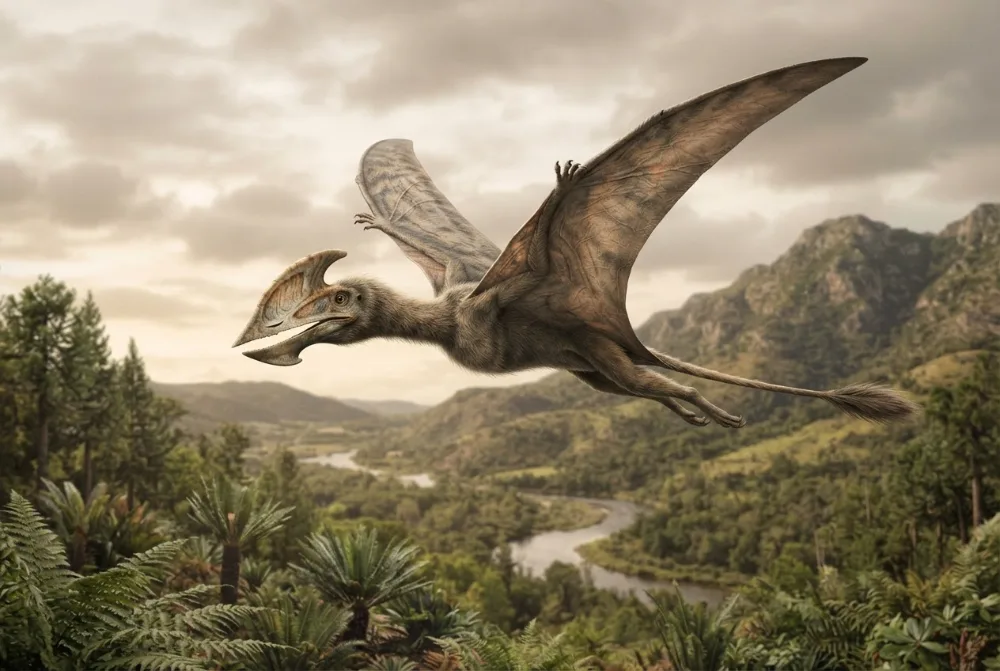
Europejara was a flying reptile with a big, bony crest on its chin that curved backwards. It lived in what is now Spain during the Early Cretaceous, about 130 to 125 million years ago. This pterosaur had no teeth and probably ate fruits and seeds.21
Yaphila nini?
Yayinkulu kangakanani?
Amaphiko ayo ayebanzi kangakanani?
 amaphiko abanzi njengeebhayisikile ezingama-2 zilandelelana⚽ibinokubhabha inqumle ibala lebhola ekhatywayo lonke ngemizuzwana engama-6
Europejara wayemkhulu kangakanani xa ethelekiswa NAWE?
Yimathematika nje kwibhrawuza yakho. Akukho nto igcinwayo okanye ithunyelwe naphi na.
Yayikhawuleza kangakanani?


Iinyani ezimnandi
Europejara is the oldest known toothless pterosaur, meaning it had no teeth at all.2
It was the first tapejarid pterosaur ever found in Europe. Before that, tapejarids were only known from China and Brazil.2
Europejara had a strange crest on its lower jaw that curved backwards, which is different from other tapejarids.2
Its wingspan was about 2 to 4 metres (6.6 to 13.1 feet), making it a medium-sized pterosaur.1
The only fossil found is a crushed skull and lower jaw, preserved in fine limestone from an ancient lake.2
Scientists think Europejara may have helped spread early flowering plants by eating their fruits and pooping out the seeds.2
Eyona mibuzo ibuzwa kakhulu: Europejara
?How big was Europejara?
It was a small to medium sized pterosaur. Its wingspan was about 2 to 4 metres (6.6 to 13.1 feet).1
?Did Europejara have teeth?
No, it had no teeth. It was the oldest known toothless pterosaur when it was discovered.12
Kwiingcali zeedayinaso
- Igama lenzululwazi
- Europejara
- Inikwe igama ngu:
- Vullo et al. 20123
- Iqela
- Izirhubuluzi ezibhabhayo
- Usapho / iclade
- Azhdarchoidea3
- Ukuhlelwa
- Pterosauria > Pterodactyloidea3
- Ubudala bamatye
- 126 ukuya ku-121 izigidi zeminyaka (Barremian)3
- Izakhiwo zamatye
- La Huérguina3
- Amazwe
- iSpeyin3
- Iirekhodi zeefosili
- 1 kwi-Paleobiology Database3
- Ukufunyanwa
- Europejara was named in 2012 by Romain Vullo and colleagues based on a skull found at Las Hoyas in Spain. The name means 'Europe's old being' and honors the ancient Olcades people.13
- Kusaxoxwa ngayo
- Scientists are not sure if Europejara was a fruit-eater or an omnivore that also ate insects and small animals. The evidence from its beak shape is not enough to be certain.2
Apho iinyani zivela khona
- Europejara (en.wikipedia.org)
- A New Crested Pterosaur from the Early Cretaceous of Spain: The First European Tapejarid (Pterodactyloidea: Azhdarchoidea) | PLOS One (journals.plos.org)
- Europejara in The Paleobiology Database (CC BY 4.0): ubudala, iindawo, izakhiwo zamatye, ukuhlelwa.
Yonke inyani ekweli phepha inenombolo ebonisa umthombo wayo. Ukuba siphosisile, uxolo, sithanda iidayinaso, asiyojenali yenzululwazi. Sixelele apha: [email protected], siya kuyilungisa.
 URex ulambile! I-Dino Wiki yiprojekthi katata ukwenzela unyana wakhe othanda iidayinaso, isimahla, ayinazintengiso, ayinazilandeli. Abantu abadala banokuphakela uRex isidlwana ukuze incede ihlale kwi-intanethi.Phakela uRex
 Pteranodon
 Quetzalcoatlus
 Dorygnathus
 Rhamphorhynchus
 Anhanguera
 Pterodactylus
 Stegosaurus
 Iguanodon
 Archaeopteryx
 Giganotosaurus
 Microraptor
 Deinonychus