 Uyiyiphi idayinaso? Ikwizi
 Idabi leedayinaso
 Ugqatso lweedayinaso
 Imidlalo emincinci yeedayinaso
 I-albhamu yezitikha
 Iilisti ze-TOP zeedayinaso
 Ndothuse!
Jobaria
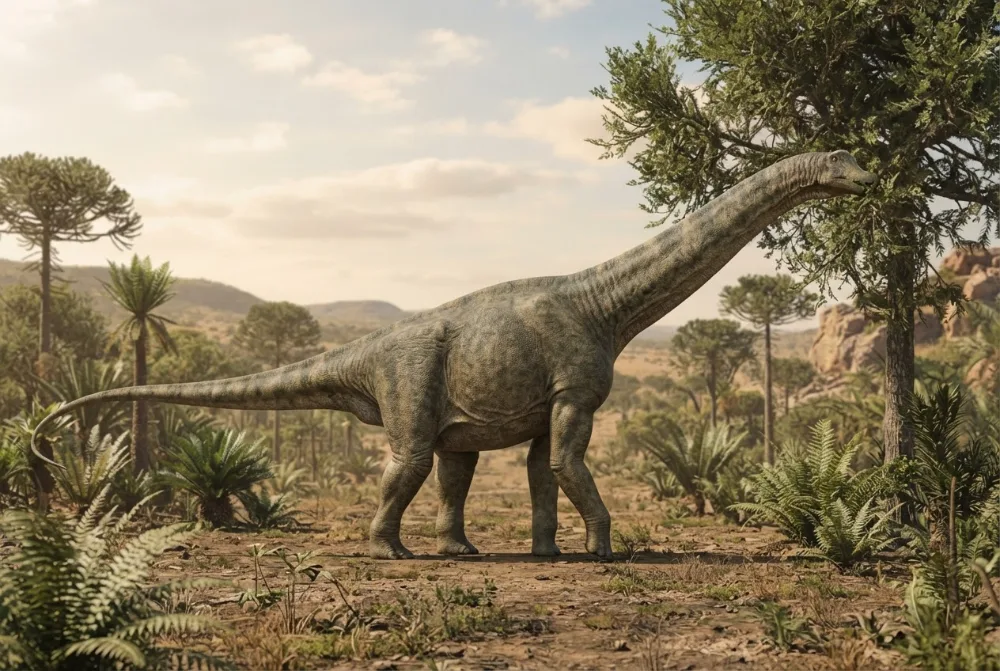
Jobaria was a huge, long-necked plant eater that stomped through the Sahara Desert millions of years ago. It was one of the most complete sauropod skeletons ever found, so scientists know a lot about it!1
Yaphila nini?
Yayinkulu kangakanani?
Yayinde kangakanani?
Yayiphakame kangakanani?
Yayinzima kangakanani?

 inde njengeemoto ezingama-5 zipakwe zilandelelana🍌inde njengeebhanana ezingama-120 zilandelelanainzima njengeemoto ezingama-15🍉inzima njengamavatala angama-4500🎒inzima njengamagumbi okufundela apheleleyo abantwana angama-28🐻❄️inzima njengeebhere ezimhlophe ezingama-50🏢iphakame ngokwaneleyo ukuba ilunguze efestileni yomgangatho 2🏃ibinokubaleka iimitha ezili-100 ngemizuzwana engama-30 (oyena mntu ukhawulezayo udinga i-9,6)
Jobaria wayemkhulu kangakanani xa ethelekiswa NAWE?
Yimathematika nje kwibhrawuza yakho. Akukho nto igcinwayo okanye ithunyelwe naphi na.
Yayikhawuleza kangakanani?


Iinyani ezimnandi
Jobaria is one of the most complete sauropods ever found, with over 95% of its skeleton preserved.1
Its backbone and tail were simpler than those of later sauropods like Diplodocus, which had complex vertebrae and a whiplash tail.1
Scientists think Jobaria could rear up on its hind legs, like elephants can, because its weight was supported more by its back legs.1
Jobaria lived during the Middle Jurassic, about 167 to 161 million years ago, though some sources say Early Cretaceous.12
The name Jobaria comes from a mythical giant beast called Jobar, whose bones some Tuareg people thought the fossils were.1
Jobaria was discovered in 1997 during a four-month expedition led by paleontologist Paul Sereno.1
Eyona mibuzo ibuzwa kakhulu: Jobaria
?How big was Jobaria?
About 18.2 metres (60 feet) long and weighing around 22.4 tonnes (24.7 short tons), though some scientists give a smaller estimate of 16 metres (52 feet) and 16 tonnes (18 short tons).1
?What did Jobaria eat?
It was a plant eater, or herbivore, chomping on leaves and other vegetation.2
?Could Jobaria rear up on its hind legs?
Yes, scientists think it could, like elephants do, because its weight was supported more by its back legs.1
?When did Jobaria live?
It lived during the Middle Jurassic Period, about 167 to 161 million years ago, though some older sources say Early Cretaceous.1
Inyaniso ngeentsomi
Intsomi: Some people think Jobaria lived during the Early Cretaceous, about 132 million years ago.
Inyaniso: Scientists now think the rocks where it was found are actually Middle Jurassic, about 167 to 161 million years old.1
Kwiingcali zeedayinaso
- Igama lenzululwazi
- Jobaria
- Inikwe igama ngu:
- Sereno et al. 19995
- Iqela
- Iintamo-nde
- Usapho / iclade
- Eusauropoda5
- Ukuhlelwa
- Sauropodomorpha > Sauropoda5
- Ubudala bamatye
- 162 ukuya ku-143 izigidi zeminyaka (Oxfordian / Tithonian)5
- Izakhiwo zamatye
- Tiourarén5
- Amazwe
- iNiger5
- Iirekhodi zeefosili
- 2 kwi-Paleobiology Database5
- Ukufunyanwa
- Jobaria was discovered in 1997 by a team led by Paul Sereno, during an expedition in the Sahara Desert. It was found in a mass-death site in Niger, and the species was named Jobaria tiguidensis in 1999.15
- Kusaxoxwa ngayo
- Scientists are still debating exactly where Jobaria fits in the sauropod family tree. Some think it is a basal macronarian, while others think it is a non-neosauropod eusauropod.1
Apho iinyani zivela khona
- Jobaria (en.wikipedia.org)
- Jobaria | Natural History Museum (nhm.ac.uk)
- Discoveries | Paul Sereno - Paleontologist | The University of Chicago (paulsereno.uchicago.edu)
- paulsereno.uchicago.edu (paulsereno.uchicago.edu)
- Jobaria in The Paleobiology Database (CC BY 4.0): ubudala, iindawo, izakhiwo zamatye, ukuhlelwa.
Yonke inyani ekweli phepha inenombolo ebonisa umthombo wayo. Ukuba siphosisile, uxolo, sithanda iidayinaso, asiyojenali yenzululwazi. Sixelele apha: [email protected], siya kuyilungisa.
 URex ulambile! I-Dino Wiki yiprojekthi katata ukwenzela unyana wakhe othanda iidayinaso, isimahla, ayinazintengiso, ayinazilandeli. Abantu abadala banokuphakela uRex isidlwana ukuze incede ihlale kwi-intanethi.Phakela uRex
 Brachiosaurus
 Diplodocus
 Brontosaurus
 Argentinosaurus
 Camarasaurus
 Morosaurus
 Allosaurus
 Compsognathus
 Camptosaurus
 Nanosaurus
 Rhamphorhynchus
 Ceratosaurus