 Uyiyiphi idayinaso? Ikwizi
 Idabi leedayinaso
 Ugqatso lweedayinaso
 Imidlalo emincinci yeedayinaso
 I-albhamu yezitikha
 Iilisti ze-TOP zeedayinaso
 Ndothuse!
Yaphila nini?

Yayinkulu kangakanani?
Yayinde kangakanani?
Yayiphakame kangakanani?
uqikelelo
Yayinzima kangakanani?
 inde njengeemoto ezingama-3 zipakwe zilandelelana🍌inde njengeebhanana ezingama-83 zilandelelana
 inzima njengeendlovu ezingama-1.5🍉inzima njengamavatala angama-2000🎒inzima njengamagumbi okufundela apheleleyo abantwana angama-12🐻❄️inzima njengeebhere ezimhlophe ezingama-22🏃ibinokubaleka iimitha ezili-100 ngemizuzwana engama-20 (oyena mntu ukhawulezayo udinga i-9,6)
Malawisaurus wayemkhulu kangakanani xa ethelekiswa NAWE?
Yimathematika nje kwibhrawuza yakho. Akukho nto igcinwayo okanye ithunyelwe naphi na.
Yayikhawuleza kangakanani?


Iinyani ezimnandi
Malawisaurus had a blunter snout than most other sauropods, which is unusual for this group.2
Its teeth were flattened, not pencil-shaped like many other sauropods. This suggests that pencil-shaped teeth evolved more than once in sauropods.2
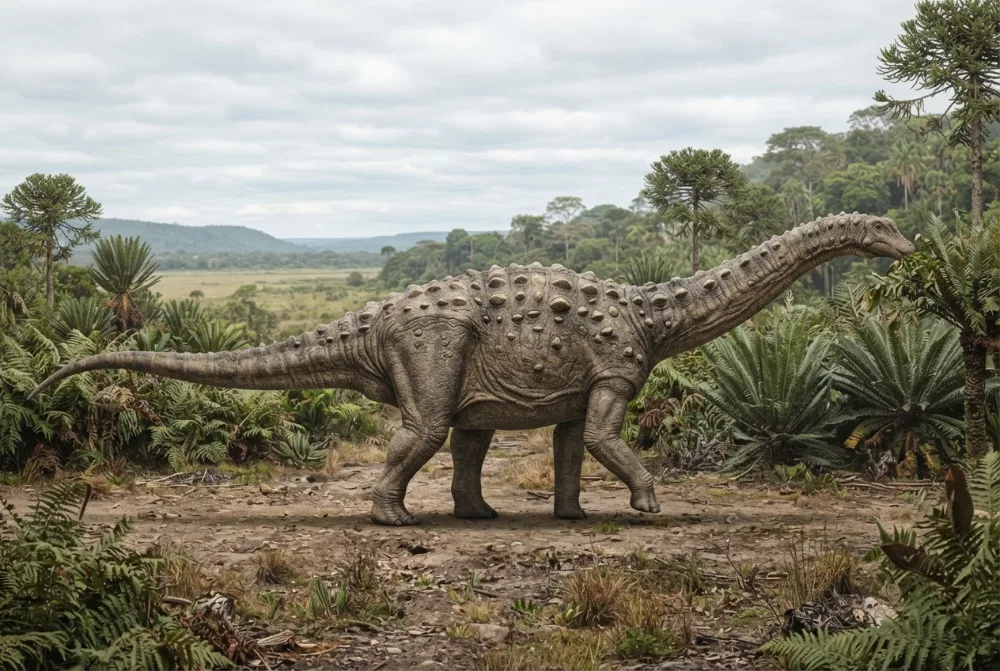
Bony plates called ossicles have been found with Malawisaurus, which probably covered its skin like armor.1
The vertebrae in the middle of its tail were longer than those in other parts, which is a unique feature.1
Malawisaurus lived about 121 to 113 million years ago, during the Aptian stage of the Early Cretaceous.4
An isolated tooth from Brazil might belong to Malawisaurus, which would mean it also lived in South America.1
Eyona mibuzo ibuzwa kakhulu: Malawisaurus
?How big was Malawisaurus?
About 15 metres (49 feet) long and weighed about 10 tonnes (11 short tons), though a 2020 estimate gave a smaller size of 11 metres (36 feet) and 2.8 tonnes (3.1 short tons).1
?Where did Malawisaurus live?
It lived in what is now northern Malawi in Africa, during the Early Cretaceous period about 121 to 112 million years ago.13
?What did Malawisaurus eat?
It was an herbivore, meaning it ate plants.3
?Did Malawisaurus have armor?
Yes, bony plates called ossicles or dermal scutes were found with the skeleton, suggesting it had armor in its skin like some other titanosaurs.1
Inyaniso ngeentsomi
Intsomi: Some people think Malawisaurus was a giant like Argentinosaurus.
Inyaniso: Malawisaurus was actually one of the smaller sauropods, reaching only about 11 to 15 metres long.1
Kwiingcali zeedayinaso
- Igama lenzululwazi
- Malawisaurus
- Inikwe igama ngu:
- Jacobs et al. 19934
- Iqela
- Iintamo-nde
- Usapho / iclade
- Lithostrotia4
- Ukuhlelwa
- Sauropodomorpha > Sauropoda > Titanosauria > Macronaria4
- Ubudala bamatye
- 121 ukuya ku-113 izigidi zeminyaka (Aptian)4
- Izakhiwo zamatye
- Dinosaur Beds4
- Amazwe
- iMalawi4
- Iirekhodi zeefosili
- 8 kwi-Paleobiology Database4
- Ukufunyanwa
- The first fossils were found around 1924 in Malawi, and Sidney H. Haughton named the species in 1928. In 1993, Louis L. Jacobs and colleagues gave it the new name Malawisaurus after more bones were found.1
- Kusaxoxwa ngayo
- Scientists are not sure if Malawisaurus lived in South America too, because only a single tooth from Brazil might belong to it.1
Apho iinyani zivela khona
- Malawisaurus (en.wikipedia.org)
- New material of an Early Cretaceous titanosaurid sauropod dinosaur from Malawi | The Palaeontological Association (palass.org)
- Malawisaurus | Natural History Museum (nhm.ac.uk)
- Malawisaurus in The Paleobiology Database (CC BY 4.0): ubudala, iindawo, izakhiwo zamatye, ukuhlelwa.
Yonke inyani ekweli phepha inenombolo ebonisa umthombo wayo. Ukuba siphosisile, uxolo, sithanda iidayinaso, asiyojenali yenzululwazi. Sixelele apha: [email protected], siya kuyilungisa.
 URex ulambile! I-Dino Wiki yiprojekthi katata ukwenzela unyana wakhe othanda iidayinaso, isimahla, ayinazintengiso, ayinazilandeli. Abantu abadala banokuphakela uRex isidlwana ukuze incede ihlale kwi-intanethi.Phakela uRex
 Brachiosaurus
 Diplodocus
 Brontosaurus
 Argentinosaurus
 Camarasaurus
 Morosaurus
 Stegosaurus
 Iguanodon
 Archaeopteryx
 Giganotosaurus
 Microraptor
 Deinonychus