 Uyiyiphi idayinaso? Ikwizi
 Idabi leedayinaso
 Ugqatso lweedayinaso
 Imidlalo emincinci yeedayinaso
 I-albhamu yezitikha
 Iilisti ze-TOP zeedayinaso
 Ndothuse!
Pterodaustro
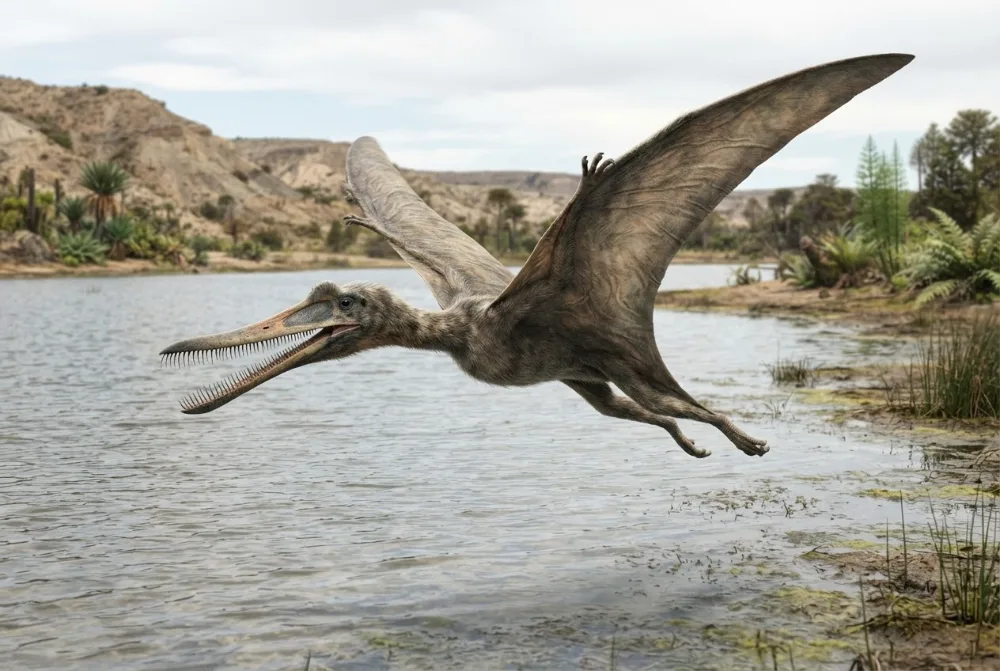
Pterodaustro was a flying reptile that lived near lakes in what is now Argentina. It had a weird mouth with about 1,000 long, bristle-like teeth in its lower jaw, just like a comb! It used those teeth to strain tiny shrimp and other small animals from the water, just like flamingos do today.12
Yaphila nini?
Yayinkulu kangakanani?
Amaphiko ayo ayebanzi kangakanani?
Yayinzima kangakanani?

 amaphiko abanzi njengeebhayisikile ezingama-1.5 zilandelelana🍌inzima njengeebhanana ezingama-77⚽ibinokubhabha inqumle ibala lebhola ekhatywayo lonke ngemizuzwana engama-6.8
Pterodaustro wayemkhulu kangakanani xa ethelekiswa NAWE?
Yimathematika nje kwibhrawuza yakho. Akukho nto igcinwayo okanye ithunyelwe naphi na.
Yayikhawuleza kangakanani?


Iinyani ezimnandi
Pterodaustro had about 1,000 teeth in its lower jaw, each only 0.2 to 0.3 millimeters wide. That's thinner than a human hair!12
Scientists have found over 750 fossils of Pterodaustro, including eggs and embryos, making it one of the best-known pterosaurs.1
Pterodaustro had a long tail with 22 vertebrae, which is unusual for a pterodactyloid pterosaur. Most others have at most 16.1
Two Pterodaustro fossils were found with gizzard stones in their stomachs. These are the first gizzard stones ever reported for any pterosaur.1
Pterodaustro may have been pink like a flamingo! Its diet of tiny crustaceans could have given it a pink color, just like flamingos get from eating brine shrimp.12
Pterodaustro had a hard time taking off from the ground. Because of its long body and short legs, it needed a lot of open space to launch, like modern geese and swans.1
Juvenile Pterodaustro grew quickly in their first two years, reaching about half of adult size. They then grew more slowly for four to five years until they were fully grown.1
Eyona mibuzo ibuzwa kakhulu: Pterodaustro
?How big was Pterodaustro?
It had a wingspan of about 3 metres (9 ft 10 in) and weighed about 9.2 kilograms (20 lb).1
?What did Pterodaustro eat?
It ate tiny shrimp, crustaceans, and other small water animals. It used its comb-like teeth to strain them from the water, just like flamingos do.214
?Could Pterodaustro swim?
Yes, it had a long body and large, splayed feet that were adaptations for swimming and wading in lakes.1
Inyaniso ngeentsomi
Intsomi: Pterodaustro was a dinosaur.
Inyaniso: Pterodaustro was a pterosaur, a flying reptile that lived at the same time as dinosaurs but is not a dinosaur.1
Kwiingcali zeedayinaso
- Igama lenzululwazi
- Pterodaustro
- Inikwe igama ngu:
- Bonaparte 19705
- Iqela
- Izirhubuluzi ezibhabhayo
- Usapho / iclade
- Lophocratia5
- Ukuhlelwa
- Pterosauria > Pterodactyloidea5
- Ubudala bamatye
- 121 ukuya ku-100 izigidi zeminyaka (Aptian / Albian)5
- Izakhiwo zamatye
- Lagarcito, La Cruz5
- Amazwe
- i-Argentina5
- Iirekhodi zeefosili
- 2 kwi-Paleobiology Database5
- Ukufunyanwa
- The first fossils of Pterodaustro were discovered in the late 1960s by paleontologist José Bonaparte in the Lagarcito Formation of San Luis Province, Argentina. Bonaparte named the genus in 1970, with the species name P. guinazui honoring Román Guiñazú.1
- Kusaxoxwa ngayo
- Scientists are still debating whether Pterodaustro was actually pink like a flamingo. While its diet suggests it could have been, no direct fossil evidence of color has been found.12
Apho iinyani zivela khona
- Pterodaustro (en.wikipedia.org)
- Pterosaur of the Day: Pterodaustro | AMNH (amnh.org)
- PBDB Taxon (paleobiodb.org)
- Pterodaustro guinazui (amnh.org)
- Pterodaustro in The Paleobiology Database (CC BY 4.0): ubudala, iindawo, izakhiwo zamatye, ukuhlelwa.
Yonke inyani ekweli phepha inenombolo ebonisa umthombo wayo. Ukuba siphosisile, uxolo, sithanda iidayinaso, asiyojenali yenzululwazi. Sixelele apha: [email protected], siya kuyilungisa.
 URex ulambile! I-Dino Wiki yiprojekthi katata ukwenzela unyana wakhe othanda iidayinaso, isimahla, ayinazintengiso, ayinazilandeli. Abantu abadala banokuphakela uRex isidlwana ukuze incede ihlale kwi-intanethi.Phakela uRex
 Pteranodon
 Quetzalcoatlus
 Dorygnathus
 Rhamphorhynchus
 Anhanguera
 Pterodactylus
 Stegosaurus
 Iguanodon
 Archaeopteryx
 Giganotosaurus
 Microraptor
 Deinonychus