 Uyiyiphi idayinaso? Ikwizi
 Idabi leedayinaso
 Ugqatso lweedayinaso
 Imidlalo emincinci yeedayinaso
 I-albhamu yezitikha
 Iilisti ze-TOP zeedayinaso
 Ndothuse!
Sinopterus
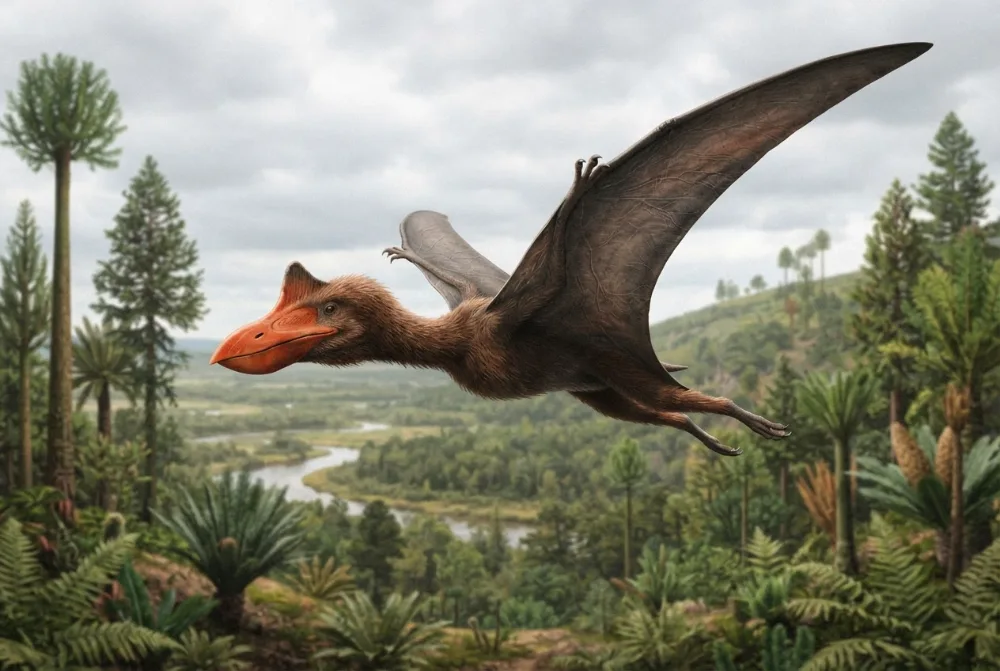
Sinopterus was a flying reptile with a big, toothless beak like a parrot. It lived in China during the Early Cretaceous, about 120 million years ago, and probably ate plants and seeds.13
Yaphila nini?
Yayinkulu kangakanani?
Amaphiko ayo ayebanzi kangakanani?
Yayinzima kangakanani?
 inde njengeekati zasekhaya ezingama-4, impumlo ukuya emsilenimalunga nobunzima bekati yasekhaya🍌inzima njengeebhanana ezingama-24⚽ibinokubhabha inqumle ibala lebhola ekhatywayo lonke ngemizuzwana engama-8
Sinopterus wayemkhulu kangakanani xa ethelekiswa NAWE?
Yimathematika nje kwibhrawuza yakho. Akukho nto igcinwayo okanye ithunyelwe naphi na.
Yayikhawuleza kangakanani?


Iinyani ezimnandi
Sinopterus had a long, bony crest on top of its skull that pointed backward like a spike.1
Its beak had no teeth, similar to modern birds and some other pterosaurs.1
Scientists found tiny plant fossils (phytoliths) in the stomach of a Sinopterus, proving it ate plants.1
Sinopterus also swallowed small stones (gastroliths) to help grind up tough plant food in its gizzard.1
It was one of the first tapejarid pterosaurs found outside Brazil, showing these flying reptiles lived in many places.1
The largest Sinopterus had a wingspan of about 1.9 metres (6.2 feet) and weighed around 2.9 kilograms (6.3 pounds).1
Many scientists now think that only one species of Sinopterus is valid: Sinopterus dongi.2
Eyona mibuzo ibuzwa kakhulu: Sinopterus
?Was Sinopterus a dinosaur?
No, Sinopterus was a pterosaur, a flying reptile, not a dinosaur.1
?How big was Sinopterus?
The largest Sinopterus had a wingspan of about 1.9 metres and weighed around 2.9 kilograms. The type specimen had a skull 17 centimetres long.1
?What did Sinopterus eat?
Sinopterus was a herbivore. Scientists found plant fossils and gastroliths in its stomach, showing it ate seeds, grains, and other plants.1
?Did Sinopterus have teeth?
No, Sinopterus had a toothless, bird-like beak similar to a parrot.1
?When did Sinopterus live?
Sinopterus lived during the Early Cretaceous period, about 120 million years ago.1
?Why did Sinopterus have a crest?
The long bony crest on its skull may have been used for display, such as attracting mates or recognizing other members of its species. Scientists are not completely sure.1
Inyaniso ngeentsomi
Intsomi: Some people think Sinopterus ate fish or insects like many other pterosaurs.
Inyaniso: Stomach contents show Sinopterus was a plant-eater, with no fish bones or insect shells found.1
Kwiingcali zeedayinaso
- Igama lenzululwazi
- Sinopterus
- Inikwe igama ngu:
- Wang and Zhou 20023
- Iqela
- Izirhubuluzi ezibhabhayo
- Usapho / iclade
- Tapejaridae3
- Ukuhlelwa
- Pterosauria > Pterodactyloidea3
- Ubudala bamatye
- 121 ukuya ku-113 izigidi zeminyaka (Aptian)3
- Izakhiwo zamatye
- Jiufotang3
- Amazwe
- iTshayina3
- Iirekhodi zeefosili
- 3 kwi-Paleobiology Database3
- Ukufunyanwa
- Sinopterus was named in 2002 by Chinese paleontologists Wang Xiaolin and Zhou Zhonghe, based on a nearly complete skeleton found in Liaoning, China.13
- Kusaxoxwa ngayo
- Scientists still debate how many different species of Sinopterus existed, because the crests and sizes vary a lot among fossils.2
Apho iinyani zivela khona
- Sinopterus (en.wikipedia.org)
- PeerJ A taxonomic revision of the Sinopterus complex (Pterosauria, Tapejaridae) from the Early Cretaceous Jehol Biota, with the new genus Huaxiadraco (peerj.com)
- Sinopterus in The Paleobiology Database (CC BY 4.0): ubudala, iindawo, izakhiwo zamatye, ukuhlelwa.
Yonke inyani ekweli phepha inenombolo ebonisa umthombo wayo. Ukuba siphosisile, uxolo, sithanda iidayinaso, asiyojenali yenzululwazi. Sixelele apha: [email protected], siya kuyilungisa.
 URex ulambile! I-Dino Wiki yiprojekthi katata ukwenzela unyana wakhe othanda iidayinaso, isimahla, ayinazintengiso, ayinazilandeli. Abantu abadala banokuphakela uRex isidlwana ukuze incede ihlale kwi-intanethi.Phakela uRex
 Pteranodon
 Quetzalcoatlus
 Dorygnathus
 Rhamphorhynchus
 Anhanguera
 Pterodactylus
 Stegosaurus
 Iguanodon
 Archaeopteryx
 Giganotosaurus
 Microraptor
 Deinonychus