 Woyɛ dino bɛn? Nsɛmmisa agoro
 Dino ko
 Dino mmirikatuo
 Dino agodie nketewa
 Stika nwoma
 Dino TOP nhyehyɛeɛ
 Ma me nwanwa!
Abrictosaurus
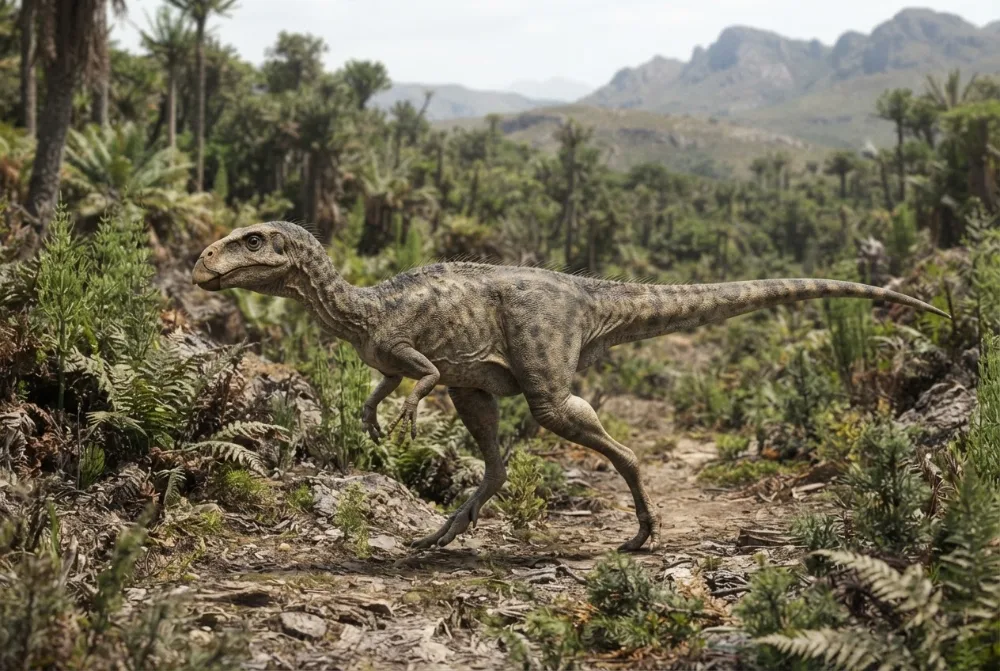
Abrictosaurus was a tiny, speedy dinosaur that munched on plants in the Early Jurassic. It had a beak at the front of its mouth and different kinds of teeth, kind of like we do. Scientists named it 'wakeful lizard' because they disagreed about whether it slept through dry seasons.12
Berɛ bɛn na ɛtenaa ase?
Na ne kɛseɛ yɛ sɛn?
Na ne tenten yɛ sɛn?
Na ne korɔn yɛ sɛn?
Na ne mu yɛ duru sɛn?

 ne tenten te sɛ fie agyinamoa 2.5 firi hwene kɔsi dua🍌ne tenten te sɛ kwadu 7 a wɔde abɔ toatoa sone mu duru te sɛ fie agyinamoa 11🍉ne mu duru te sɛ watamɛlɔn 9🧸ne mu duru te sɛ nkɔkɔaa sukuu mmofra 2.5🎒ne mu duru te sɛ sukuu mmofra 1.5🪑ketewa ara ma ɔbɛtumi afa akonnwa ase🏃anka ɔbɛtumi atu mmirika mita 100 wɔ sikɛn 9 mu (onipa a ɔyɛ ntɛm sen biara hia 9.6)
Abrictosaurus kɛseɛ yɛ sɛn sɛ wode toto WO ho a?
Akontaa nko ara wɔ wo browser mu. Yɛnkora biribiara so, na yɛmmfa biribiara nkɔ baabiara.
Na ɛyɛ ntɛm sɛn?


Nsɛm a ɛyɛ anigye
Abrictosaurus is known from only two fossils: a partial skull and skeleton, plus a fragmentary skull.1
Unlike some relatives, its cheek teeth were widely spaced with low crowns, more like early ornithischians.1
One fossil had impressive tusks: an upper one 10.5 mm tall and a lower one 17 mm tall, serrated only on the front edge.1
It lived in a hot, half-dry environment with sand dunes and seasonal floods, alongside dinosaurs like Massospondylus and Heterodontosaurus.1
The first scientist who described it thought the tusks were just in males, so he called the female fossil 'consors', meaning partner or spouse.12
Abrictosaurus had small, weak forelimbs with only four finger bones in the fourth and fifth fingers, fewer than its relative Heterodontosaurus.1
Nsɛm a wɔbisa bebree fa Abrictosaurus ho
?How big was Abrictosaurus?
About 1.2 metres (3.9 feet) long and weighed less than 45 kilograms (99 pounds). That is about as long as a small bicycle.12
?What did Abrictosaurus eat?
It was a herbivore or omnivore, meaning it mostly ate plants but may have eaten small animals too. It had a beak for cropping plants and different kinds of teeth for chewing.13
?Did Abrictosaurus have tusks?
Yes, one of the two known fossils had impressive tusks: an upper one 10.5 mm tall and a lower one 17 mm tall, serrated only on the front edge. The other fossil lacked tusks, which may mean it was a female or a juvenile.12
?When did Abrictosaurus live?
It lived during the Early Jurassic Period, about 200 to 190 million years ago. That is long before the famous T. rex.1
Atosɛm sɛefoɔ
Atosɛm: Some people think Abrictosaurus had no tusks because it was female.
Nokorɛ: Abrictosaurus did have tusks. One fossil shows clear upper and lower tusks, but they are serrated only on the front, unlike relatives that have serrations on both sides.1
Ma dino ho animdefoɔ
- Nyansahu din
- Abrictosaurus
- Obi a ɔtoo din
- Hopson 19754
- Kuo
- Ahabandifoɔ a wɔwɔ anomaa ano
- Abusua / kuo kɛseɛ
- Heterodontosauridae4
- Nkyekyɛmu
- Ornithischia > Heterodontosauridae4
- Abotan no mfeɛ
- mfeɛ ɔpepem 201 kɔsi 193 (Hettangian / Sinemurian)4
- Abotan nhyehyɛeɛ
- Elliot4
- Aman
- Lesotho4
- Fɔsil nkyerɛwee
- 1 wɔ The Paleobiology Database mu4
- Nhunumu
- The first fossil was found in Lesotho and named Lycorhinus consors by Richard Thulborn in 1974. In 1975, James Hopson gave it the new genus name Abrictosaurus after studying another skull from South Africa.12
- Wɔda so gye ho akyinnye
- Scientists are still debating whether Abrictosaurus is really a different genus from Lycorhinus and Heterodontosaurus. Some think all three might just be species of Lycorhinus.1
Baabi a nsɛm no firi
- Abrictosaurus (en.wikipedia.org)
- ABRICTOSAURUS : DinoChecker dinosaur archive (dinochecker.com)
- Abrictosaurus — Early Jurassic heterodontosaurid from southern Africa (en.alegsaonline.com)
- Abrictosaurus in The Paleobiology Database (CC BY 4.0): mfeɛ, mmeaeɛ, abotan nhyehyɛeɛ, nkyekyɛmu.
Asɛm biara a ɛwɔ krataafa yi so wɔ nɔma a ɛkyerɛ baabi a ɛfiri. Sɛ yɛfom biribi a, kafra, yɛyɛ dino dɔfoɔ, yɛnyɛ nyansahu nsɛmma krataa. Ka kyerɛ yɛn wɔ [email protected] na yɛbɛsiesie.
 Ɔkɔm de Rex! Dino Wiki yɛ agya bi adwuma a ɔyɛɛ maa ne babarima a ɔdɔ dino. Ɛyɛ kwa, dawurubɔ biara nni mu, akyidifoɔ biara nni mu. Mpanimfoɔ bɛtumi ama Rex aduane kakra, na aboa ama Dino Wiki atena intanɛt so.Ma Rex aduane
 Iguanodon
 Tenontosaurus
 Thescelosaurus
 Zalmoxes
 Camptosaurus
 Rhabdodon
 Dilophosaurus
 Stenopterygius
 Dorygnathus
 Lufengosaurus
 Scutellosaurus
 Yunnanosaurus