 Woyɛ dino bɛn? Nsɛmmisa agoro
 Dino ko
 Dino mmirikatuo
 Dino agodie nketewa
 Stika nwoma
 Dino TOP nhyehyɛeɛ
 Ma me nwanwa!
Acamptonectes
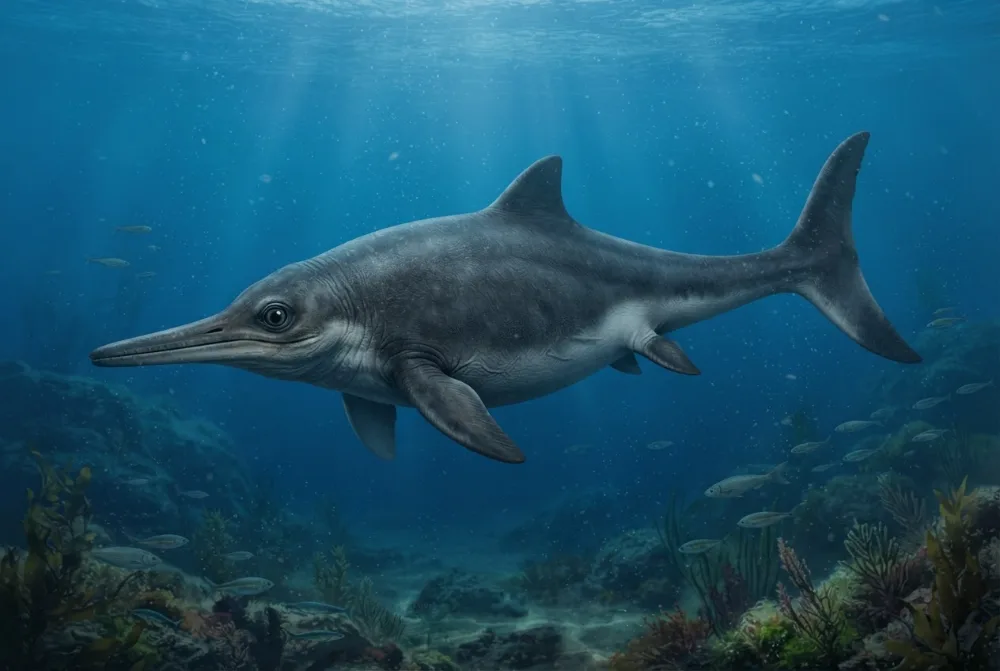
Acamptonectes was a fast-swimming marine reptile that lived in the Early Cretaceous seas. It had a stiff body and large eyes, perfect for hunting fish and squid in the deep ocean.12
Berɛ bɛn na ɛtenaa ase?
Na ne kɛseɛ yɛ sɛn?
Na ne tenten yɛ sɛn?
 ne tenten te sɛ nkraman 3 firi hwene kɔsi dua🍌ne tenten te sɛ kwadu 17 a wɔde abɔ toatoa so🏊anka ɔbɛtumi aguare nsuguarebea kɛseɛ (50 m) tenten wɔ sikɛn 3.8 mu
Acamptonectes kɛseɛ yɛ sɛn sɛ wode toto WO ho a?
Akontaa nko ara wɔ wo browser mu. Yɛnkora biribiara so, na yɛmmfa biribiara nkɔ baabiara.
Na ɛyɛ ntɛm sɛn?


Nsɛm a ɛyɛ anigye
Acamptonectes belongs to a group called ophthalmosaurids, which had very large eyes for seeing in dark, deep water.12
Its name means 'stiff swimmer' because its body was unusually rigid, helping it move fast through the water.1
Acamptonectes lived about 133 to 129 million years ago, during the Hauterivian stage of the Early Cretaceous.1
Scientists once thought most ichthyosaurs died out at the end of the Jurassic, but Acamptonectes shows they survived and thrived into the Cretaceous.21
The first Acamptonectes fossil was found in 1958 by geology students near Speeton, England, but it was not named until 2012.21
Its teeth had tiny ridges along the length, which helped it grip slippery prey like fish and squid.1
Nsɛm a wɔbisa bebree fa Acamptonectes ho
?Was Acamptonectes a dinosaur?
No, it was a marine reptile called an ichthyosaur, not a dinosaur.1
?How big was Acamptonectes?
It was about 3 metres (9.8 feet) long.1
?What did Acamptonectes eat?
It likely ate soft, fleshy prey like fish and squid, using its slender ridged teeth to impale them.1
?Why did Acamptonectes have a stiff body?
Its stiff body helped it swim fast like a tuna by making it more streamlined in the water.1
Ma dino ho animdefoɔ
- Nyansahu din
- Acamptonectes
- Obi a ɔtoo din
- Fischer et al. 20123
- Kuo
- Iktiosɔɔ
- Abusua / kuo kɛseɛ
- Ophthalmosauridae3
- Nkyekyɛmu
- Ichthyosauria > Ichthyosauromorpha3
- Abotan no mfeɛ
- mfeɛ ɔpepem 133 kɔsi 126 (Hauterivian)3
- Abotan nhyehyɛeɛ
- Speeton Clay3
- Aman
- Engiresi, Gyaaman3
- Fɔsil nkyerɛwee
- 3 wɔ The Paleobiology Database mu3
- Nhunumu
- Acamptonectes was named in 2012 by a team of scientists including V. Fischer, M. W. Maisch, and D. Naish. The first specimen was collected in 1958 by geology students in Speeton, England, but it took decades to study and describe.23
- Wɔda so gye ho akyinnye
- Scientists are still debating whether Acamptonectes had a different diet or lifestyle from other Cretaceous ichthyosaurs because of its unusual shallow snout and tooth shape.1
Baabi a nsɛm no firi
- Acamptonectes (en.wikipedia.org)
- New Ophthalmosaurid Ichthyosaurs from the European Lower Cretaceous Demonstrate Extensive Ichthyosaur Survival across the Jurassic, Cretaceous Boundary (pmc.ncbi.nlm.nih.gov)
- Acamptonectes in The Paleobiology Database (CC BY 4.0): mfeɛ, mmeaeɛ, abotan nhyehyɛeɛ, nkyekyɛmu.
Asɛm biara a ɛwɔ krataafa yi so wɔ nɔma a ɛkyerɛ baabi a ɛfiri. Sɛ yɛfom biribi a, kafra, yɛyɛ dino dɔfoɔ, yɛnyɛ nyansahu nsɛmma krataa. Ka kyerɛ yɛn wɔ [email protected] na yɛbɛsiesie.
 Ɔkɔm de Rex! Dino Wiki yɛ agya bi adwuma a ɔyɛɛ maa ne babarima a ɔdɔ dino. Ɛyɛ kwa, dawurubɔ biara nni mu, akyidifoɔ biara nni mu. Mpanimfoɔ bɛtumi ama Rex aduane kakra, na aboa ama Dino Wiki atena intanɛt so.Ma Rex aduane
 Ichthyosaurus
 Platypterygius
 Stenopterygius
 Khudiakovia
 Ophthalmosaurus
 Chonespondylus
 Stegosaurus
 Iguanodon
 Archaeopteryx
 Giganotosaurus
 Microraptor
 Deinonychus