 Woyɛ dino bɛn? Nsɛmmisa agoro
 Dino ko
 Dino mmirikatuo
 Dino agodie nketewa
 Stika nwoma
 Dino TOP nhyehyɛeɛ
 Ma me nwanwa!
Berɛ bɛn na ɛtenaa ase?

Na ne kɛseɛ yɛ sɛn?
Na ne tenten yɛ sɛn?
Na ne korɔn yɛ sɛn?
nsusuiɛ
 ne tenten te sɛ nkraman 4 firi hwene kɔsi dua🍌ne tenten te sɛ kwadu 23 a wɔde abɔ toatoa so🏃anka ɔbɛtumi atu mmirika mita 100 wɔ sikɛn 5.8 mu (onipa a ɔyɛ ntɛm sen biara hia 9.6)
Afromimus kɛseɛ yɛ sɛn sɛ wode toto WO ho a?
Akontaa nko ara wɔ wo browser mu. Yɛnkora biribiara so, na yɛmmfa biribiara nkɔ baabiara.
Na ɛyɛ ntɛm sɛn?


Nsɛm a ɛyɛ anigye
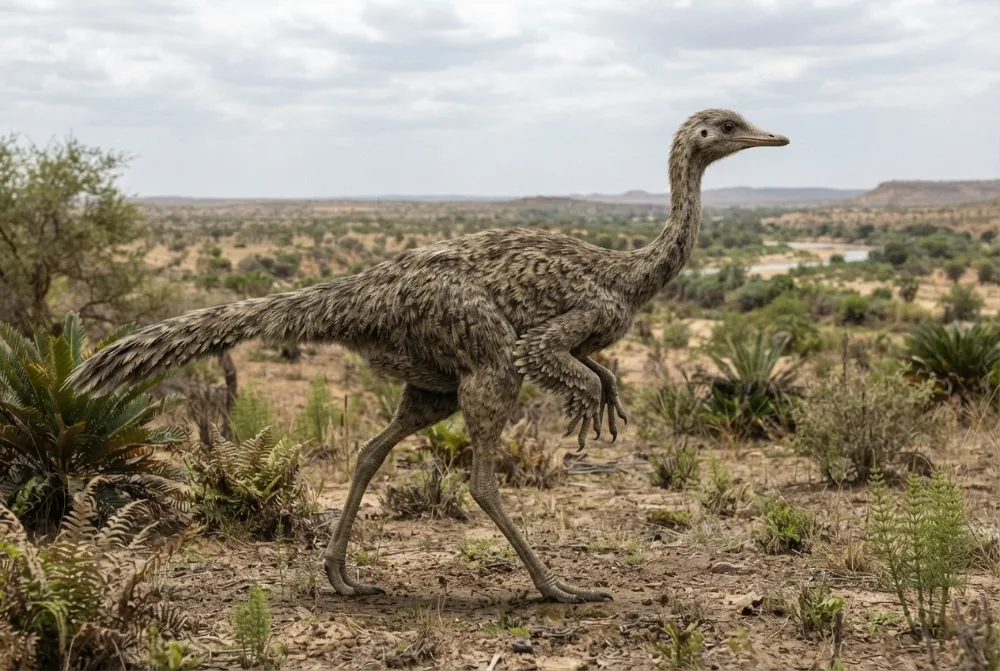
Afromimus is one of the oldest ornithomimosaurs found in Africa, showing that these ostrich-like dinosaurs lived on southern continents early in their evolution.2
The only known skeleton of Afromimus includes tail bones, chevrons, and parts of the right hind leg.2
Its tail vertebrae have broad, peanut-shaped joints that helped the tail bend and flex.2
Afromimus lived about 113 to 100 million years ago, during the Albian age of the Early Cretaceous.1
The name Afromimus means 'African mimic', because it looks like other ornithomimosaurs but comes from Africa.1
Scientists think Afromimus was a ground-dwelling dinosaur that laid eggs.1
Nsɛm a wɔbisa bebree fa Afromimus ho
?How big was Afromimus?
About 4.14 metres long, based on its tibia length and its classification as a noasaurid. It was half the size of Gallimimus and twice the size of Shenzhousaurus.4
?What did Afromimus eat?
Scientists are not sure, but its toothless beak suggests it may have eaten plants, small animals, or eggs. No direct evidence of its diet has been found.4
?Is Afromimus a dinosaur?
Yes, Afromimus is a theropod dinosaur. It was originally thought to be an ornithomimosaur, but later studies suggest it was a ceratosaurian related to abelisauroids.4
?When did Afromimus live?
Afromimus lived during the Early Cretaceous, about 113 to 100 million years ago. That is the Albian age.4
?Could Afromimus run fast?
Probably yes. It had long legs and a light body, like modern ostriches, so it was likely a fast runner. No exact speed has been calculated.4
?Where was Afromimus found?
Its only skeleton was found in the Ténéré Desert of Niger, Africa. It was discovered in 1997 at a place called Gadoufaoua.4
Ma dino ho animdefoɔ
- Nyansahu din
- Afromimus
- Obi a ɔtoo din
- Sereno 20175
- Kuo
- Ɔstrik dino
- Abusua / kuo kɛseɛ
- Ornithomimosauria5
- Nkyekyɛmu
- Theropoda > Ornithomimosauria5
- Abotan no mfeɛ
- mfeɛ ɔpepem 113 kɔsi 100 (Albian)5
- Abotan nhyehyɛeɛ
- Elrhaz5
- Aman
- Naigya5
- Fɔsil nkyerɛwee
- 1 wɔ The Paleobiology Database mu5
- Nhunumu
- Afromimus was named by paleontologist Paul Sereno in 2017, based on a fragmentary skeleton found in the El Rhaz Formation of Niger.12
- Wɔda so gye ho akyinnye
- Scientists are not sure exactly how big Afromimus was, because only a partial skeleton has been found.2
Baabi a nsɛm no firi
- PBDB Taxon (paleobiodb.org)
- Early Cretaceous Ornithomimosaurs (Dinosauria: Coelurosauria) from Africa (exa.ai)
- Afromimus (Wikipedia) (Wikipedia)
- Afromimus - Wikipedia (en-wp.org)
- Afromimus in The Paleobiology Database (CC BY 4.0): mfeɛ, mmeaeɛ, abotan nhyehyɛeɛ, nkyekyɛmu.
Asɛm biara a ɛwɔ krataafa yi so wɔ nɔma a ɛkyerɛ baabi a ɛfiri. Sɛ yɛfom biribi a, kafra, yɛyɛ dino dɔfoɔ, yɛnyɛ nyansahu nsɛmma krataa. Ka kyerɛ yɛn wɔ [email protected] na yɛbɛsiesie.
 Ɔkɔm de Rex! Dino Wiki yɛ agya bi adwuma a ɔyɛɛ maa ne babarima a ɔdɔ dino. Ɛyɛ kwa, dawurubɔ biara nni mu, akyidifoɔ biara nni mu. Mpanimfoɔ bɛtumi ama Rex aduane kakra, na aboa ama Dino Wiki atena intanɛt so.Ma Rex aduane
 Gallimimus
 Ornithomimus
 Struthiomimus
 Deinocheirus
 Dromiceiomimus
 Archaeornithomimus
 Stegosaurus
 Iguanodon
 Archaeopteryx
 Giganotosaurus
 Microraptor
 Deinonychus