 Woyɛ dino bɛn? Nsɛmmisa agoro
 Dino ko
 Dino mmirikatuo
 Dino agodie nketewa
 Stika nwoma
 Dino TOP nhyehyɛeɛ
 Ma me nwanwa!
Agilisaurus
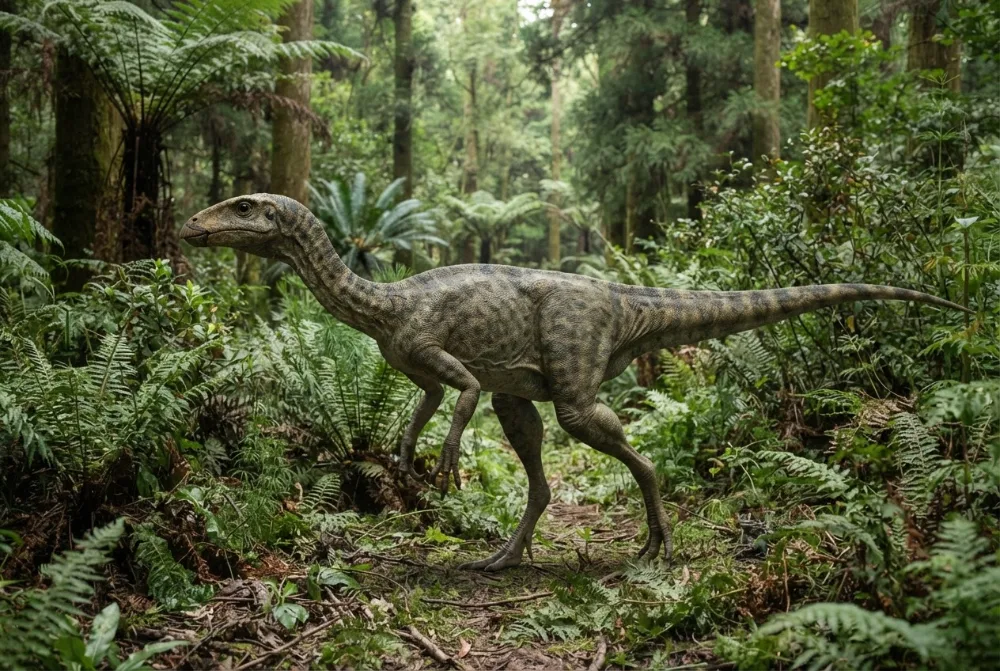
Agilisaurus was a tiny, speedy plant-eater that darted through the forests of ancient China. It had a beak for snipping plants and long legs for running fast. This little dinosaur is one of the most complete small ornithischian skeletons ever found.2
Berɛ bɛn na ɛtenaa ase?
Na ne kɛseɛ yɛ sɛn?
Na ne tenten yɛ sɛn?
Na ne korɔn yɛ sɛn?
Na ne mu yɛ duru sɛn?

 ne tenten te sɛ fie agyinamoa 3 firi hwene kɔsi dua🍌ne tenten te sɛ kwadu 9 a wɔde abɔ toatoa sone mu duru te sɛ fie agyinamoa 10🍉ne mu duru te sɛ watamɛlɔn 8🧸ne mu duru te sɛ nkɔkɔaa sukuu mmofra 2🎒ne mu duru te sɛ sukuu mmofra 1🏃anka ɔbɛtumi atu mmirika mita 100 wɔ sikɛn 8.2 mu (onipa a ɔyɛ ntɛm sen biara hia 9.6)
Agilisaurus kɛseɛ yɛ sɛn sɛ wode toto WO ho a?
Akontaa nko ara wɔ wo browser mu. Yɛnkora biribiara so, na yɛmmfa biribiara nkɔ baabiara.
Na ɛyɛ ntɛm sɛn?


Nsɛm a ɛyɛ anigye
Agilisaurus had a lower leg bone (tibia) that was longer than its upper leg bone (femur), which made it an extremely fast runner.2
Its skeleton is one of the most complete small ornithischian skeletons ever found, missing only a few parts of the left forelimb and hind limb.2
The wavy enamel on its teeth was once thought to be unique to hadrosaurs, but Agilisaurus had it too.2
Agilisaurus may have been a burrow dweller because its tail lacked stiffening bony struts.2
Based on its scleral rings (eye bones), scientists think Agilisaurus was active during the day, unlike many larger herbivorous dinosaurs.2
The only known skeleton was discovered in 1984 while workers were building the Zigong Dinosaur Museum, where it now lives.2
Nsɛm a wɔbisa bebree fa Agilisaurus ho
?How big was Agilisaurus?
Agilisaurus was about 1.2 to 1.7 metres (3.9 to 5.6 feet) long, 60 centimetres (2.0 feet) tall at the hip, and weighed around 40 kilograms (88 pounds).2
?What did Agilisaurus eat?
Agilisaurus was a plant-eater. It had leaf-shaped teeth for chewing tough plants and a beak to snip off leaves.21
?How fast could Agilisaurus run?
Agilisaurus was an extremely fast runner. Its lower leg bone was longer than its upper leg bone, which helped it sprint on two legs.2
Atosɛm sɛefoɔ
Atosɛm: Some people think Agilisaurus was a slow, clumsy plant-eater.
Nokorɛ: Actually, its long legs and lightweight skeleton show it was one of the fastest small dinosaurs, able to sprint quickly.2
Ma dino ho animdefoɔ
- Nyansahu din
- Agilisaurus
- Obi a ɔtoo din
- Peng 19903
- Kuo
- Ahabandifoɔ a wɔwɔ anomaa ano
- Abusua / kuo kɛseɛ
- Neornithischia3
- Nkyekyɛmu
- Ornithischia3
- Abotan no mfeɛ
- mfeɛ ɔpepem 171 kɔsi 155 (Bajocian / Oxfordian)3
- Abotan nhyehyɛeɛ
- Shaximiao3
- Aman
- Kyaena3
- Fɔsil nkyerɛwee
- 1 wɔ The Paleobiology Database mu3
- Nhunumu
- Agilisaurus was named by Chinese paleontologist Peng Guangzhou in 1990. The only skeleton was found in 1984 during construction of the Zigong Dinosaur Museum in Sichuan, China.2
- Wɔda so gye ho akyinnye
- Scientists still debate exactly where Agilisaurus fits in the dinosaur family tree. It has been placed in several different groups over the years.2
Baabi a nsɛm no firi
- Agilisaurus (nhm.ac.uk)
- Agilisaurus (en.wikipedia.org)
- Agilisaurus in The Paleobiology Database (CC BY 4.0): mfeɛ, mmeaeɛ, abotan nhyehyɛeɛ, nkyekyɛmu.
Asɛm biara a ɛwɔ krataafa yi so wɔ nɔma a ɛkyerɛ baabi a ɛfiri. Sɛ yɛfom biribi a, kafra, yɛyɛ dino dɔfoɔ, yɛnyɛ nyansahu nsɛmma krataa. Ka kyerɛ yɛn wɔ [email protected] na yɛbɛsiesie.
 Ɔkɔm de Rex! Dino Wiki yɛ agya bi adwuma a ɔyɛɛ maa ne babarima a ɔdɔ dino. Ɛyɛ kwa, dawurubɔ biara nni mu, akyidifoɔ biara nni mu. Mpanimfoɔ bɛtumi ama Rex aduane kakra, na aboa ama Dino Wiki atena intanɛt so.Ma Rex aduane
 Iguanodon
 Tenontosaurus
 Thescelosaurus
 Zalmoxes
 Camptosaurus
 Rhabdodon
 Ichthyosaurus
 Khudiakovia
 Ophthalmosaurus
 Pterodactylus
 Peloneustes
 Rhamphocephalus