 Woyɛ dino bɛn? Nsɛmmisa agoro
 Dino ko
 Dino mmirikatuo
 Dino agodie nketewa
 Stika nwoma
 Dino TOP nhyehyɛeɛ
 Ma me nwanwa!
Berɛ bɛn na ɛtenaa ase?

Na ɛyɛ ntɛm sɛn?


Nsɛm a ɛyɛ anigye
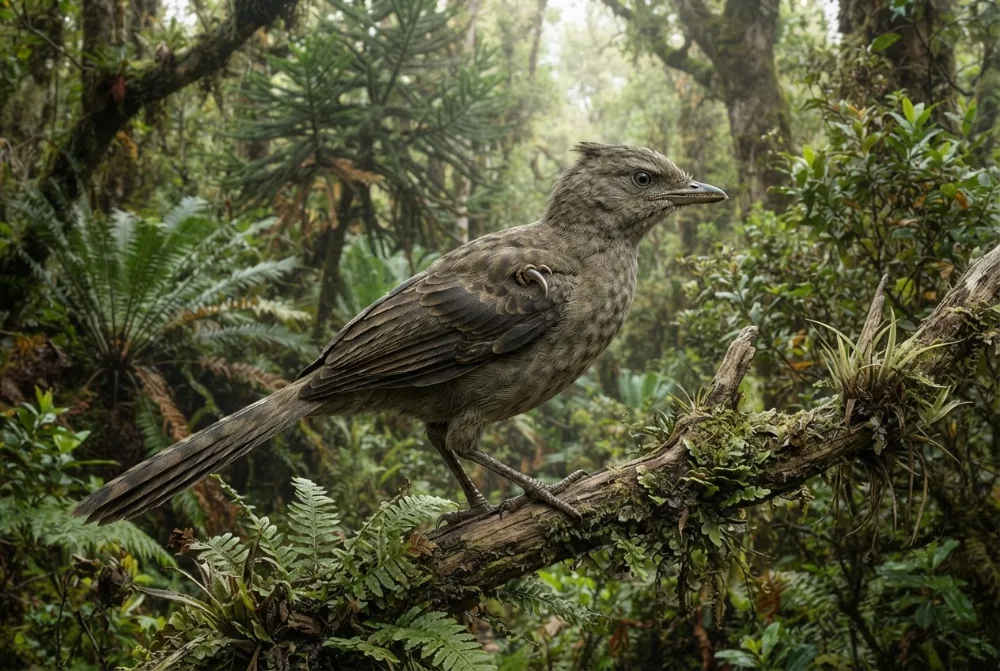
Apsaravis is one of the best-preserved fossil birds from the Mesozoic Era, with a nearly complete skeleton found.1
It lived about 83 to 72 million years ago, during the Campanian stage of the Late Cretaceous.5
The only known fossil of Apsaravis was discovered in the Djadokhta Formation of Mongolia, a famous area for dinosaur fossils.51
Apsaravis had a strong tubercle on its upper arm bone, which may have helped with powerful wing muscles for flight.2
This bird is important because it helps scientists understand how modern birds evolved from their dinosaur ancestors.1
Apsaravis is the only avialan (bird-like dinosaur) found at Ukhaa Tolgod besides the controversial alvarezsaurids.1
Nsɛm a wɔbisa bebree fa Apsaravis ho
?Was Apsaravis a dinosaur?
Yes, Apsaravis was a dinosaur. It belongs to the group Avialae, which includes all birds.31
?How big was Apsaravis?
Apsaravis was about the size of a pigeon. Its nearly complete skeleton shows it was a small, flying bird.34
?What did Apsaravis eat?
Scientists think Apsaravis used its wings to hunt for food on the ground, but its exact diet is not known.3
Ma dino ho animdefoɔ
- Nyansahu din
- Apsaravis
- Obi a ɔtoo din
- Norell and Clarke 20015
- Kuo
- Nnomaa a wɔdii kan
- Abusua / kuo kɛseɛ
- Ornithuromorpha5
- Nkyekyɛmu
- Theropoda > Avialae5
- Abotan no mfeɛ
- mfeɛ ɔpepem 84 kɔsi 72 (Campanian)5
- Abotan nhyehyɛeɛ
- Djadokhta5
- Aman
- Mongolia5
- Fɔsil nkyerɛwee
- 1 wɔ The Paleobiology Database mu5
- Nhunumu
- Apsaravis was named by Mark Norell and Julia Clarke in 2001, based on a nearly complete skeleton found at Ukhaa Tolgod in Mongolia.51
- Wɔda so gye ho akyinnye
- Scientists are still debating exactly where Apsaravis fits on the bird family tree, especially whether it is more closely related to modern birds or to ancient diving birds like Hesperornis.12
Baabi a nsɛm no firi
- Fossil that fills a critical gap in avian evolution | Nature (nature.com)
- The morphology and phylogenetic position of Apsaravis ukhaana from the late Cretaceous of Mongolia. American Museum novitates ; no. 3387 (digitallibrary.amnh.org)
- Apsaravis (en.wikipedia.org)
- The Morphology and Phylogenetic Position of Apsaravis ukhaana from the Late Cretaceous of Mongolia (digitallibrary.amnh.org)
- Apsaravis in The Paleobiology Database (CC BY 4.0): mfeɛ, mmeaeɛ, abotan nhyehyɛeɛ, nkyekyɛmu.
Asɛm biara a ɛwɔ krataafa yi so wɔ nɔma a ɛkyerɛ baabi a ɛfiri. Sɛ yɛfom biribi a, kafra, yɛyɛ dino dɔfoɔ, yɛnyɛ nyansahu nsɛmma krataa. Ka kyerɛ yɛn wɔ [email protected] na yɛbɛsiesie.
 Ɔkɔm de Rex! Dino Wiki yɛ agya bi adwuma a ɔyɛɛ maa ne babarima a ɔdɔ dino. Ɛyɛ kwa, dawurubɔ biara nni mu, akyidifoɔ biara nni mu. Mpanimfoɔ bɛtumi ama Rex aduane kakra, na aboa ama Dino Wiki atena intanɛt so.Ma Rex aduane
 Archaeopteryx
 Hesperornis
 Ichthyornis
 Baptornis
 Jurapteryx
 Gobipteryx
 Tyrannosaurus
 Triceratops
 Velociraptor
 Spinosaurus
 Ankylosaurus
 Parasaurolophus