 Woyɛ dino bɛn? Nsɛmmisa agoro
 Dino ko
 Dino mmirikatuo
 Dino agodie nketewa
 Stika nwoma
 Dino TOP nhyehyɛeɛ
 Ma me nwanwa!
Campananeyen
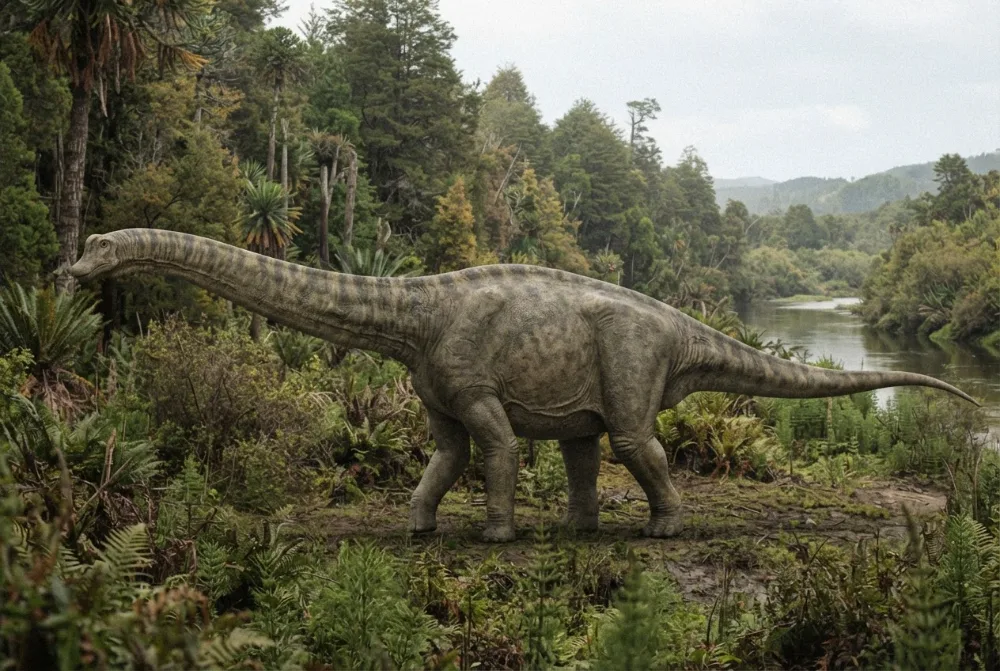
Campananeyen was a long-necked sauropod that lived in a huge desert in what is now Argentina. Its bones were so full of air pockets that scientists named it after the Mapuche word for 'air'. This dinosaur had a very thin and fragile hip bone, which is why its species name means 'the most fragile'.1
Berɛ bɛn na ɛtenaa ase?
Na ne kɛseɛ yɛ sɛn?
Na ne tenten yɛ sɛn?
Na ne korɔn yɛ sɛn?
nsusuiɛ
Na ne mu yɛ duru sɛn?
 ne tenten te sɛ kaa 2.5 a wɔde agyina toatoa so🍌ne tenten te sɛ kwadu 58 a wɔde abɔ toatoa so
 ne mu duru te sɛ nkraman 120🍉ne mu duru te sɛ watamɛlɔn 500🎒ne mu duru te sɛ sukuu klaas mũ 3 mu mmofra🐻❄️ne mu duru te sɛ polar bea 6🏃anka ɔbɛtumi atu mmirika mita 100 wɔ sikɛn 16 mu (onipa a ɔyɛ ntɛm sen biara hia 9.6)
Campananeyen kɛseɛ yɛ sɛn sɛ wode toto WO ho a?
Akontaa nko ara wɔ wo browser mu. Yɛnkora biribiara so, na yɛmmfa biribiara nkɔ baabiara.
Na ɛyɛ ntɛm sɛn?


Nsɛm a ɛyɛ anigye
Campananeyen had a very thin and fragile ilium (hip bone), so thin that scientists gave it the species name fragilissimus, meaning 'the most fragile'.1
Its bones were extremely pneumatized, meaning they were filled with air pockets, which made the skeleton lighter. The name Campananeyen comes from the Mapuche word for 'air'.1
The quadrate fossa, a large pit on the back of the skull's cheek bone, was 30 to 70 percent larger in Campananeyen than in any other known rebbachisaurid.1
Unlike most rebbachisaurids, Campananeyen had hyposphene-hypantrum joints between its vertebrae, which helped lock the backbone together. Its hyposphene was hollow and ovoid, like in Nigersaurus.1
The sacral ribs of Campananeyen had a unique 'dorsal alar arm' that helped support the leg muscles, especially the muscle that pulls the thigh forward.1
Campananeyen lived in the Kokorkom Desert, a huge sandy desert with some oases, alongside other dinosaurs like the giant predator Giganotosaurus and the long-necked Limaysaurus.1
The first fossils of Campananeyen were found in 2016 but were not named until 2024, when scientists realized they belonged to a new species.1
Nsɛm a wɔbisa bebree fa Campananeyen ho
?What did Campananeyen eat?
Campananeyen was a herbivore, meaning it ate plants. It likely used its many closely aligned teeth to eat leaves and other vegetation.4
?How big was Campananeyen?
Scientists do not know exactly how big Campananeyen was because only a fragmentary skeleton has been found. It was a sauropod, so it had a long neck, a large body, and strong limbs.14
?When did Campananeyen live?
Campananeyen lived during the Early Cretaceous Period, about 111 to 106 million years ago. It lived in a desert environment in what is now Argentina.1
?Why is Campananeyen called 'the most fragile'?
Its species name, fragilissimus, means 'the most fragile' in Latin. This is because its hip bone (ilium) was very thin and delicate, filled with air pockets.1
Ma dino ho animdefoɔ
- Nyansahu din
- Campananeyen
- Obi a ɔtoo din
- Lerzo et al. 20245
- Kuo
- Kɔn tenten
- Abusua / kuo kɛseɛ
- Rebbachisauridae5
- Nkyekyɛmu
- Sauropodomorpha > Sauropoda > Diplodocoidea5
- Abotan no mfeɛ
- mfeɛ ɔpepem 113 kɔsi 110 (Albian)5
- Abotan nhyehyɛeɛ
- Candeleros5
- Aman
- Argentina5
- Fɔsil nkyerɛwee
- 1 wɔ The Paleobiology Database mu5
- Nhunumu
- The Campananeyen holotype specimen was discovered in the Candeleros Formation near Villa El Chocón, Neuquén Province, Argentina. It was first described in 2016 but left unnamed, and then in 2024 scientists Lerzo et al. named it Campananeyen fragilissimus.1
- Wɔda so gye ho akyinnye
- Scientists are still debating exactly how Campananeyen is related to other rebbachisaurids, because its fossils are fragmentary and incomplete.2
Baabi a nsɛm no firi
- Campananeyen (en.wikipedia.org)
- They all floated in the cretaceous: new rebbachisaurid (Sauropoda, Diplodocoidea) with a highly pneumatized skeleton from the Upper Cretaceous (lower Cenomanian) of Patagonia, Argentina: Historical Biology: Vol 37 , No 8 - Get Access (tandfonline.com)
- Campananeyen fragilissimus | Dinosaur Database by DinoAnimals.com (dinoanimals.com)
- Campananeyen | The Lightweight Sauropod of Late Cretaceous (thedinosaurs.org)
- Campananeyen in The Paleobiology Database (CC BY 4.0): mfeɛ, mmeaeɛ, abotan nhyehyɛeɛ, nkyekyɛmu.
Asɛm biara a ɛwɔ krataafa yi so wɔ nɔma a ɛkyerɛ baabi a ɛfiri. Sɛ yɛfom biribi a, kafra, yɛyɛ dino dɔfoɔ, yɛnyɛ nyansahu nsɛmma krataa. Ka kyerɛ yɛn wɔ [email protected] na yɛbɛsiesie.
 Ɔkɔm de Rex! Dino Wiki yɛ agya bi adwuma a ɔyɛɛ maa ne babarima a ɔdɔ dino. Ɛyɛ kwa, dawurubɔ biara nni mu, akyidifoɔ biara nni mu. Mpanimfoɔ bɛtumi ama Rex aduane kakra, na aboa ama Dino Wiki atena intanɛt so.Ma Rex aduane
 Brachiosaurus
 Diplodocus
 Brontosaurus
 Argentinosaurus
 Camarasaurus
 Morosaurus
 Stegosaurus
 Iguanodon
 Archaeopteryx
 Giganotosaurus
 Microraptor
 Deinonychus