 Woyɛ dino bɛn? Nsɛmmisa agoro
 Dino ko
 Dino mmirikatuo
 Dino agodie nketewa
 Stika nwoma
 Dino TOP nhyehyɛeɛ
 Ma me nwanwa!
Dryosaurus
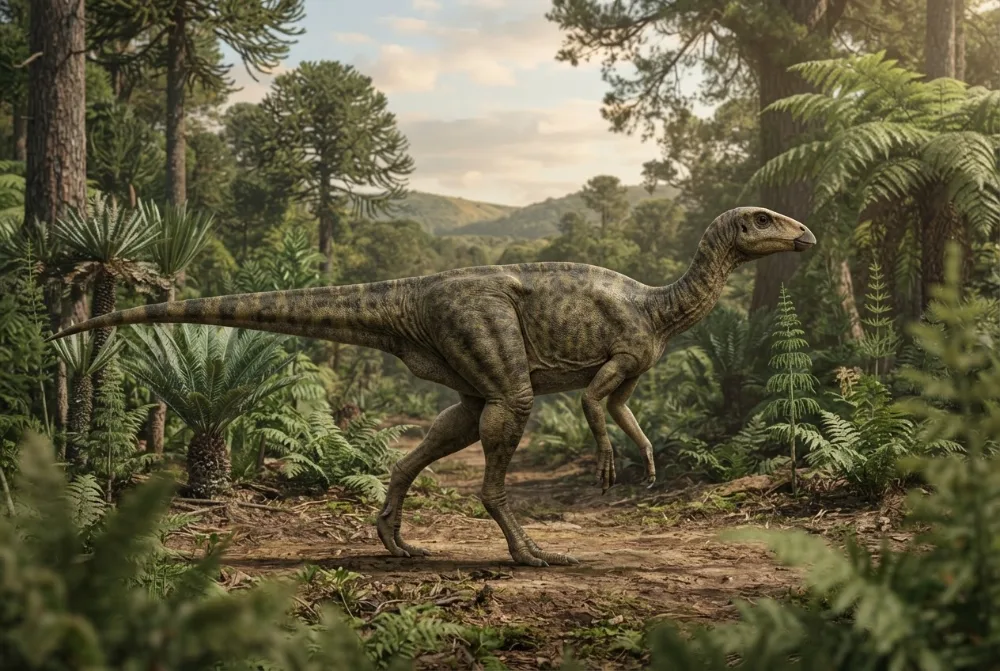
Dryosaurus was a speedy, plant-eating dinosaur that lived in the Late Jurassic period. It had a long neck, strong legs, and a stiff tail that helped it balance while running. It probably used its speed to escape from big predators like Allosaurus.2
Berɛ bɛn na ɛtenaa ase?
Na ne kɛseɛ yɛ sɛn?
Na ne tenten yɛ sɛn?
Na ne korɔn yɛ sɛn?
Na ne mu yɛ duru sɛn?
 ne tenten te sɛ nkraman 4 firi hwene kɔsi dua🍌ne tenten te sɛ kwadu 22 a wɔde abɔ toatoa so🍉ne mu duru te sɛ watamɛlɔn 20🧸ne mu duru te sɛ nkɔkɔaa sukuu mmofra 5🎒ne mu duru te sɛ sukuu mmofra 3🏃anka ɔbɛtumi atu mmirika mita 100 wɔ sikɛn 7.8 mu (onipa a ɔyɛ ntɛm sen biara hia 9.6)
Dryosaurus kɛseɛ yɛ sɛn sɛ wode toto WO ho a?
Akontaa nko ara wɔ wo browser mu. Yɛnkora biribiara so, na yɛmmfa biribiara nkɔ baabiara.
Na ɛyɛ ntɛm sɛn?


Nsɛm a ɛyɛ anigye
Dryosaurus had five fingers on each hand, but its arms were short. Its long legs and stiff tail made it a fast runner.2
The name Dryosaurus means 'oak lizard', but it was named after the forest where it lived, not because its teeth looked like oak leaves.2
Some scientists think Dryosaurus had cheek-like structures to keep food in its mouth while chewing.2
Dryosaurus lived alongside giant sauropods like Diplodocus and Brachiosaurus, as well as predators like Allosaurus and Ceratosaurus.2
The largest Dryosaurus specimen was later identified as a different species, so the true adult size of Dryosaurus is still unknown.2
Dryosaurus fossils have been found in the Morrison Formation, which is famous for the 'Bone Wars' rivalry between paleontologists Marsh and Cope.2
Nsɛm a wɔbisa bebree fa Dryosaurus ho
?How big was Dryosaurus?
Based on known specimens, Dryosaurus reached up to 3 metres (9.8 ft) long and weighed up to 100 kilograms (220 lb). As no fully mature specimens have been found, the true adult size remains unknown.2
?What did Dryosaurus eat?
Dryosaurus was a plant-eating dinosaur. It ate low-growing vegetation in ancient floodplains, using its beak and cheek teeth.21
?When did Dryosaurus live?
Dryosaurus lived during the Late Jurassic period, about 155 to 145 million years ago.1
?Where was Dryosaurus found?
Dryosaurus fossils have been found in the western United States, including Wyoming, Utah, and Colorado. Fossils have also been identified in Tanzania.21
?How fast could Dryosaurus run?
Maybe up to about 46 km/h (29 mph). This is an estimate from its size. It was a quick, agile runner with strong legs and escaped predators with speed.2
?Did Dryosaurus have feathers?
The sources do not mention feathers on Dryosaurus. It is described as having a horny beak and cheek teeth, but no feather impressions have been found.2
?Was Dryosaurus bigger than a human?
Dryosaurus was about 3 metres (9.8 ft) long, which is longer than a human is tall, but it weighed up to 100 kilograms (220 lb), which is comparable to a large adult human.2
Atosɛm sɛefoɔ
Atosɛm: Some people think Dryosaurus was named because its teeth looked like oak leaves.
Nokorɛ: Actually, the name comes from the Greek word for 'oak' because it lived in forests, not because of its teeth.2
Ma dino ho animdefoɔ
- Nyansahu din
- Dryosaurus
- Obi a ɔtoo din
- Marsh 18945
- Kuo
- Ahabandifoɔ a wɔwɔ anomaa ano
- Abusua / kuo kɛseɛ
- Dryosauridae5
- Nkyekyɛmu
- Ornithischia > Ornithopoda > Iguanodontia5
- Abotan no mfeɛ
- mfeɛ ɔpepem 155 kɔsi 143 (Kimmeridgian / Tithonian)5
- Abotan nhyehyɛeɛ
- Morrison, Marnes de Bléville, Lourinhã5
- Aman
- Amerika, Frɛnse, Pɔtugal, Gyaaman5
- Fɔsil nkyerɛwee
- 24 wɔ The Paleobiology Database mu5
- Nhunumu
- The first Dryosaurus fossils were found in 1876 by Samuel Wendell Williston in Wyoming, USA. Othniel Charles Marsh named it Laosaurus altus in 1878, then gave it its own genus, Dryosaurus, in 1894.2
- Wɔda so gye ho akyinnye
- Scientists are still debating the true adult size of Dryosaurus because no adult specimens have been found yet.2
Baabi a nsɛm no firi
- Dryosaurus | Natural History Museum (nhm.ac.uk)
- Dryosaurus (en.wikipedia.org)
- Dryosaurus Fact Sheet (enchantedlearning.com)
- Dryosaurus altus (U.S. National Park Service) (home.nps.gov)
- Dryosaurus in The Paleobiology Database (CC BY 4.0): mfeɛ, mmeaeɛ, abotan nhyehyɛeɛ, nkyekyɛmu.
Asɛm biara a ɛwɔ krataafa yi so wɔ nɔma a ɛkyerɛ baabi a ɛfiri. Sɛ yɛfom biribi a, kafra, yɛyɛ dino dɔfoɔ, yɛnyɛ nyansahu nsɛmma krataa. Ka kyerɛ yɛn wɔ [email protected] na yɛbɛsiesie.
 Ɔkɔm de Rex! Dino Wiki yɛ agya bi adwuma a ɔyɛɛ maa ne babarima a ɔdɔ dino. Ɛyɛ kwa, dawurubɔ biara nni mu, akyidifoɔ biara nni mu. Mpanimfoɔ bɛtumi ama Rex aduane kakra, na aboa ama Dino Wiki atena intanɛt so.Ma Rex aduane
 Iguanodon
 Tenontosaurus
 Thescelosaurus
 Zalmoxes
 Camptosaurus
 Rhabdodon
 Brachiosaurus
 Diplodocus
 Allosaurus
 Brontosaurus
 Compsognathus
 Camarasaurus