 Woyɛ dino bɛn? Nsɛmmisa agoro
 Dino ko
 Dino mmirikatuo
 Dino agodie nketewa
 Stika nwoma
 Dino TOP nhyehyɛeɛ
 Ma me nwanwa!
Berɛ bɛn na ɛtenaa ase?

Na ne kɛseɛ yɛ sɛn?
Na ne tenten yɛ sɛn?
Na ne korɔn yɛ sɛn?
Na ne mu yɛ duru sɛn?
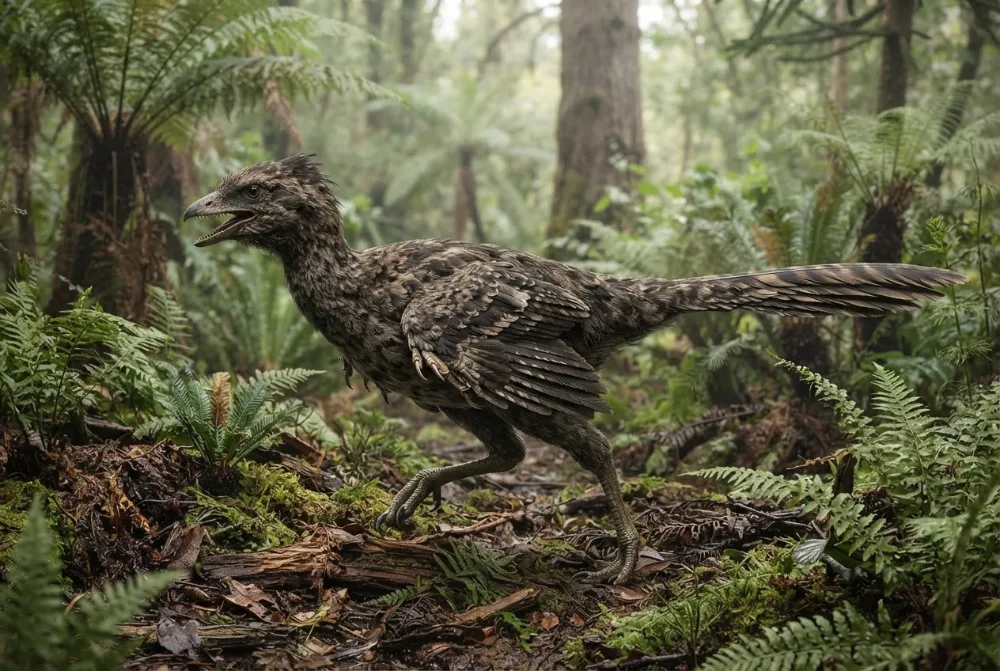
 ne tenten te sɛ fie agyinamoa 2 firi hwene kɔsi dua🍌ne tenten te sɛ kwadu 6 a wɔde abɔ toatoa sone mu duru bɛyɛ sɛ fie agyinamoa🍌ne mu duru te sɛ kwadu 56🪑ketewa ara ma ɔbɛtumi afa akonnwa ase⚽anka ɔbɛtumi atu atwa bɔɔlobɔ prama mũ wɔ sikɛn 8.4 mu
Enantiornis kɛseɛ yɛ sɛn sɛ wode toto WO ho a?
Akontaa nko ara wɔ wo browser mu. Yɛnkora biribiara so, na yɛmmfa biribiara nkɔ baabiara.
Na ɛyɛ ntɛm sɛn?


Nsɛm a ɛyɛ anigye
Enantiornis is one of the earliest known birds, living from about 94 to 66 million years ago.4
It had a special shoulder joint that worked differently from modern birds, which is why it is called an 'opposite bird'.1
Fossils of Enantiornis have been found in both South America and Central Asia, showing it lived in warm, wet environments.4
This bird was about the size of a crow, with a wingspan of roughly half a meter.2
Enantiornis had teeth in its beak, which helped it catch and eat prey.1
It lived on the ground and could fly, but probably spent a lot of time walking or running.4
Nsɛm a wɔbisa bebree fa Enantiornis ho
?How big was Enantiornis?
About 78.5 cm long, with a wingspan of roughly 1.2 m, and it weighed around 6.75 kg. That is larger than a herring gull or a crow.3
?Did Enantiornis have teeth?
Yes, Enantiornis had teeth in its beak, which helped it catch and eat prey.3
?When did Enantiornis live?
Enantiornis lived during the Late Cretaceous, from about 94 to 66 million years ago.3
?Where were Enantiornis fossils found?
Fossils of Enantiornis have been found in Argentina (South America) and also in Central Asia.3
Ma dino ho animdefoɔ
- Nyansahu din
- Enantiornis
- Obi a ɔtoo din
- Walker 19814
- Kuo
- Nnomaa a wɔdii kan
- Abusua / kuo kɛseɛ
- Euenantiornithes4
- Nkyekyɛmu
- Theropoda > Avialae4
- Abotan no mfeɛ
- mfeɛ ɔpepem 94 kɔsi 66 (Turonian / Maastrichtian)4
- Abotan nhyehyɛeɛ
- Lecho, Bissekty4
- Aman
- Argentina, Usbekistan4
- Fɔsil nkyerɛwee
- 4 wɔ The Paleobiology Database mu4
- Nhunumu
- Enantiornis was named by Cyril Walker in 1981 based on fossils found in Argentina. The first species described was Enantiornis leali.42
- Wɔda so gye ho akyinnye
- Scientists are still debating exactly how Enantiornis is related to other ancient birds, because its skeleton is different from both modern birds and other extinct groups.4
Baabi a nsɛm no firi
- Enantiornis Walker 1981 - Encyclopedia of Life (eol.org)
- PBDB Taxon (paleobiodb.org)
- Enantiornis (Wikipedia) (Wikipedia)
- Enantiornis in The Paleobiology Database (CC BY 4.0): mfeɛ, mmeaeɛ, abotan nhyehyɛeɛ, nkyekyɛmu.
Asɛm biara a ɛwɔ krataafa yi so wɔ nɔma a ɛkyerɛ baabi a ɛfiri. Sɛ yɛfom biribi a, kafra, yɛyɛ dino dɔfoɔ, yɛnyɛ nyansahu nsɛmma krataa. Ka kyerɛ yɛn wɔ [email protected] na yɛbɛsiesie.
 Ɔkɔm de Rex! Dino Wiki yɛ agya bi adwuma a ɔyɛɛ maa ne babarima a ɔdɔ dino. Ɛyɛ kwa, dawurubɔ biara nni mu, akyidifoɔ biara nni mu. Mpanimfoɔ bɛtumi ama Rex aduane kakra, na aboa ama Dino Wiki atena intanɛt so.Ma Rex aduane
 Archaeopteryx
 Hesperornis
 Ichthyornis
 Baptornis
 Jurapteryx
 Gobipteryx
 Tyrannosaurus
 Triceratops
 Velociraptor
 Spinosaurus
 Ankylosaurus
 Parasaurolophus