 Woyɛ dino bɛn? Nsɛmmisa agoro
 Dino ko
 Dino mmirikatuo
 Dino agodie nketewa
 Stika nwoma
 Dino TOP nhyehyɛeɛ
 Ma me nwanwa!
Berɛ bɛn na ɛtenaa ase?

Na ne kɛseɛ yɛ sɛn?
Na ne tenten yɛ sɛn?
Na ne mu yɛ duru sɛn?
Eoalulavis kɛseɛ yɛ sɛn sɛ wode toto WO ho a?
Akontaa nko ara wɔ wo browser mu. Yɛnkora biribiara so, na yɛmmfa biribiara nkɔ baabiara.
Na ɛyɛ ntɛm sɛn?


Nsɛm a ɛyɛ anigye
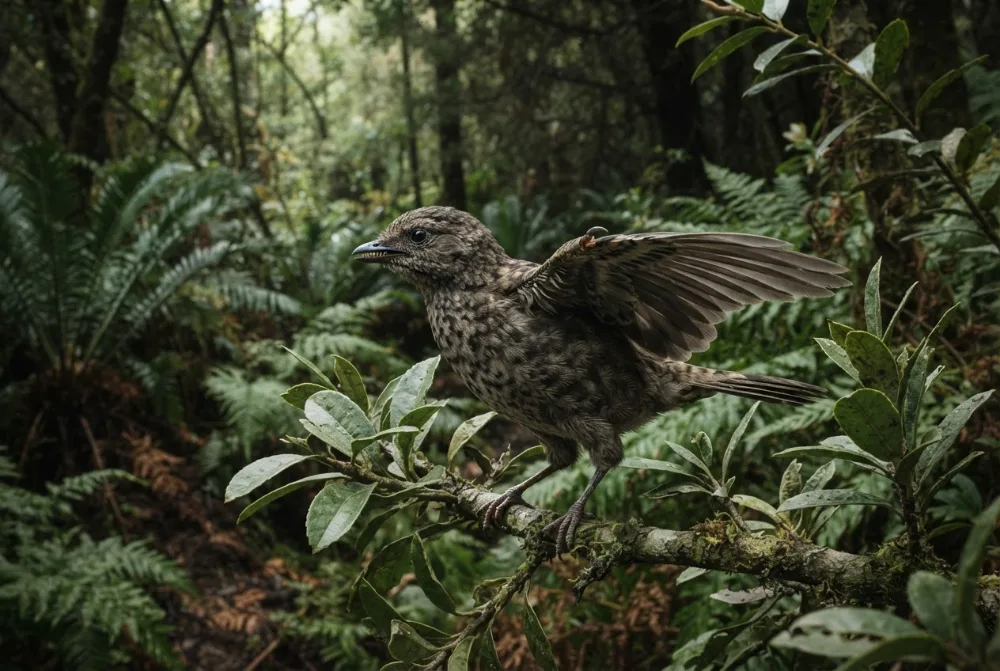
Eoalulavis was about the size of a European goldfinch, weighing only about 45 grams (1.6 ounces).1
Its wingspan, including feathers, was only about 26 centimeters (10 inches), similar to a modern kingfisher.1
The name Eoalulavis means 'dawn alula bird' because it is one of the earliest birds known to have an alula, or 'bastard wing'.1
Scientists found the remains of its last meal inside the fossil: concentrated pieces of crustacean shells.1
Eoalulavis had a very thin, spear-shaped breastbone, unlike the wide breastbones of most early birds.1
It likely flew in a bounding style, flapping hard then tucking its wings to dive, like modern songbirds and woodpeckers.1
The fossil was preserved with feathers and soft tissues because it was buried quickly in a lake with special conditions.1
Nsɛm a wɔbisa bebree fa Eoalulavis ho
?What did Eoalulavis eat?
It ate small crustaceans. Scientists found pieces of crustacean shells in its fossilized belly, its last meal.1
?How big was Eoalulavis?
It was tiny, about the size of a European goldfinch. It weighed about 45 grams and had a wingspan of about 26 centimeters.1
?Could Eoalulavis fly well?
Yes, it was a good flier. It had an alula for slow, sharp turns and likely used bounding flight, flapping hard then diving with wings folded, like modern songbirds.1
?Is Eoalulavis a dinosaur?
Yes, it is a bird, and birds are a type of dinosaur called avialan dinosaurs. It lived about 125 million years ago.1
Ma dino ho animdefoɔ
- Nyansahu din
- Eoalulavis
- Obi a ɔtoo din
- Sanz et al. 19962
- Kuo
- Nnomaa a wɔdii kan
- Abusua / kuo kɛseɛ
- Enantiornithes2
- Nkyekyɛmu
- Theropoda > Avialae2
- Abotan no mfeɛ
- mfeɛ ɔpepem 126 kɔsi 121 (Barremian)2
- Abotan nhyehyɛeɛ
- La Huérguina2
- Aman
- Spania2
- Fɔsil nkyerɛwee
- 1 wɔ The Paleobiology Database mu2
- Nhunumu
- Eoalulavis was named in 1996 by Sanz and colleagues based on a single fossil skeleton found at Las Hoyas in Spain.12
- Wɔda so gye ho akyinnye
- Scientists are not sure what its hind legs looked like because no leg bones have been found.1
Baabi a nsɛm no firi
- Eoalulavis (en.wikipedia.org)
- Eoalulavis in The Paleobiology Database (CC BY 4.0): mfeɛ, mmeaeɛ, abotan nhyehyɛeɛ, nkyekyɛmu.
Asɛm biara a ɛwɔ krataafa yi so wɔ nɔma a ɛkyerɛ baabi a ɛfiri. Sɛ yɛfom biribi a, kafra, yɛyɛ dino dɔfoɔ, yɛnyɛ nyansahu nsɛmma krataa. Ka kyerɛ yɛn wɔ [email protected] na yɛbɛsiesie.
 Ɔkɔm de Rex! Dino Wiki yɛ agya bi adwuma a ɔyɛɛ maa ne babarima a ɔdɔ dino. Ɛyɛ kwa, dawurubɔ biara nni mu, akyidifoɔ biara nni mu. Mpanimfoɔ bɛtumi ama Rex aduane kakra, na aboa ama Dino Wiki atena intanɛt so.Ma Rex aduane
 Archaeopteryx
 Hesperornis
 Ichthyornis
 Baptornis
 Jurapteryx
 Gobipteryx
 Stegosaurus
 Iguanodon
 Giganotosaurus
 Microraptor
 Deinonychus
 Baryonyx