 Woyɛ dino bɛn? Nsɛmmisa agoro
 Dino ko
 Dino mmirikatuo
 Dino agodie nketewa
 Stika nwoma
 Dino TOP nhyehyɛeɛ
 Ma me nwanwa!
Europasaurus
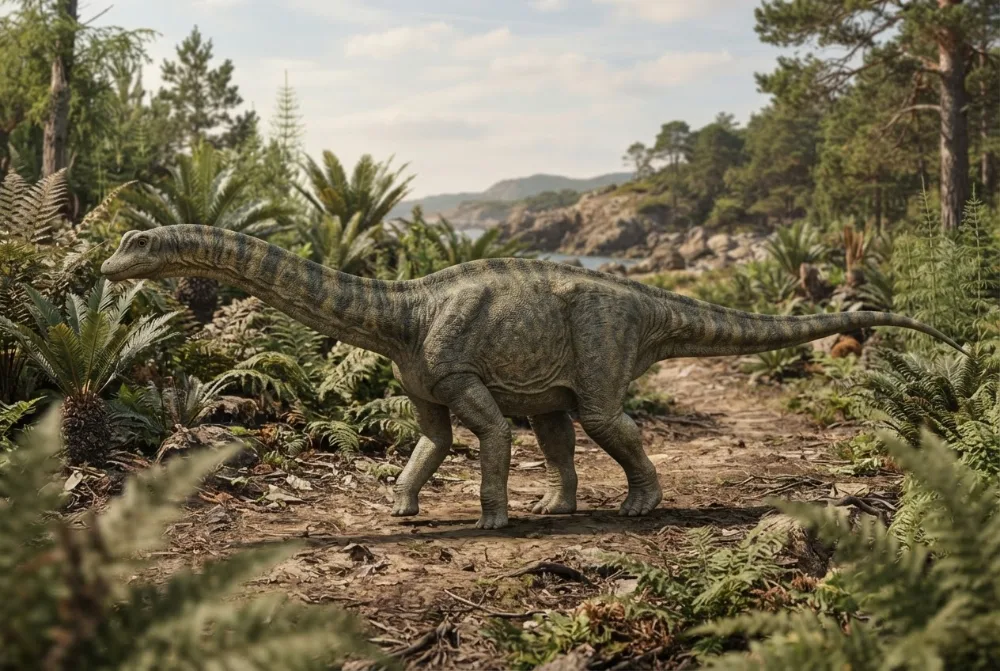
Europasaurus was a tiny sauropod dinosaur that lived on an island in what is now Germany. It was a dwarf, much smaller than its giant relatives like Brachiosaurus. Scientists think it shrank because food was limited on its island home.21
Berɛ bɛn na ɛtenaa ase?
Na ne kɛseɛ yɛ sɛn?
Na ne tenten yɛ sɛn?
Na ne korɔn yɛ sɛn?
nsusuiɛ
Na ne mu yɛ duru sɛn?

 ne tenten te sɛ nkraman 6 firi hwene kɔsi dua🍌ne tenten te sɛ kwadu 34 a wɔde abɔ toatoa sone mu duru te sɛ nkraman 100🍉ne mu duru te sɛ watamɛlɔn 420🎒ne mu duru te sɛ sukuu klaas mũ 2.5 mu mmofra🐻❄️ne mu duru te sɛ polar bea 5🏃anka ɔbɛtumi atu mmirika mita 100 wɔ sikɛn 13 mu (onipa a ɔyɛ ntɛm sen biara hia 9.6)
Europasaurus kɛseɛ yɛ sɛn sɛ wode toto WO ho a?
Akontaa nko ara wɔ wo browser mu. Yɛnkora biribiara so, na yɛmmfa biribiara nkɔ baabiara.
Na ɛyɛ ntɛm sɛn?


Nsɛm a ɛyɛ anigye
Europasaurus is one of the smallest known sauropods, only about as long as a car.1
It lived during the Late Jurassic, about 154 to 151 million years ago.1
The first fossil was a single tooth found by a private collector named Holger Lüdtke in 1998.1
Bone studies show that Europasaurus grew more slowly than its giant relatives, a sign of island dwarfism.2
About one third of the Europasaurus bones found have tooth marks, probably from fish or crocodile-like scavengers.1
Young Europasaurus had well-developed inner ears, meaning they could probably hear well and may have stayed close to adults for protection.1
Nsɛm a wɔbisa bebree fa Europasaurus ho
?How big was Europasaurus?
About 5.7 to 6.2 metres long, weighing 750 to 2,100 kilograms as an adult. That is roughly as long as a car.13
?Why was Europasaurus so small?
It was a dwarf species due to insular dwarfism, meaning it shrank because it lived on an island with limited food. Bone studies show it grew more slowly than its giant relatives.21
?What did Europasaurus eat?
It was herbivorous, meaning it ate plants. Conifer cones and twigs from araucarian trees (like modern monkey puzzle trees) have been found at its fossil site.31
?Did Europasaurus live in herds?
Yes, fossils of at least 11 individuals were found together, suggesting they lived in groups. Scientists think a herd might have drowned while crossing a tidal zone.1
?When did Europasaurus live?
It lived during the Late Jurassic Period, about 154 to 151 million years ago.13
?Where was Europasaurus found?
Its fossils were found in a quarry at Langenberg Mountain in northern Germany. It lived on an island in the Lower Saxony basin.1
Ma dino ho animdefoɔ
- Nyansahu din
- Europasaurus
- Obi a ɔtoo din
- Sander et al. 20064
- Kuo
- Kɔn tenten
- Abusua / kuo kɛseɛ
- Camarasauromorpha4
- Nkyekyɛmu
- Sauropodomorpha > Sauropoda > Macronaria4
- Abotan no mfeɛ
- mfeɛ ɔpepem 152 kɔsi 149 (Kimmeridgian)4
- Abotan nhyehyɛeɛ
- Süntel4
- Aman
- Gyaaman4
- Fɔsil nkyerɛwee
- 1 wɔ The Paleobiology Database mu4
- Nhunumu
- The first fossils were found in 1998 by Holger Lüdtke in a quarry in Germany. After more bones were found, the species was named Europasaurus holgeri in 2006 by Sander and colleagues.1
- Wɔda so gye ho akyinnye
- Scientists are not sure exactly why Europasaurus became so small, but they think it was because it lived on an island with limited food.2
Baabi a nsɛm no firi
- Europasaurus (en.wikipedia.org)
- nature.com (nature.com)
- Europasaurus | Natural History Museum (nhm.ac.uk)
- Europasaurus in The Paleobiology Database (CC BY 4.0): mfeɛ, mmeaeɛ, abotan nhyehyɛeɛ, nkyekyɛmu.
Asɛm biara a ɛwɔ krataafa yi so wɔ nɔma a ɛkyerɛ baabi a ɛfiri. Sɛ yɛfom biribi a, kafra, yɛyɛ dino dɔfoɔ, yɛnyɛ nyansahu nsɛmma krataa. Ka kyerɛ yɛn wɔ [email protected] na yɛbɛsiesie.
 Ɔkɔm de Rex! Dino Wiki yɛ agya bi adwuma a ɔyɛɛ maa ne babarima a ɔdɔ dino. Ɛyɛ kwa, dawurubɔ biara nni mu, akyidifoɔ biara nni mu. Mpanimfoɔ bɛtumi ama Rex aduane kakra, na aboa ama Dino Wiki atena intanɛt so.Ma Rex aduane
 Brachiosaurus
 Diplodocus
 Brontosaurus
 Argentinosaurus
 Camarasaurus
 Morosaurus
 Allosaurus
 Compsognathus
 Camptosaurus
 Nanosaurus
 Rhamphorhynchus
 Ceratosaurus