 Woyɛ dino bɛn? Nsɛmmisa agoro
 Dino ko
 Dino mmirikatuo
 Dino agodie nketewa
 Stika nwoma
 Dino TOP nhyehyɛeɛ
 Ma me nwanwa!
Giraffatitan
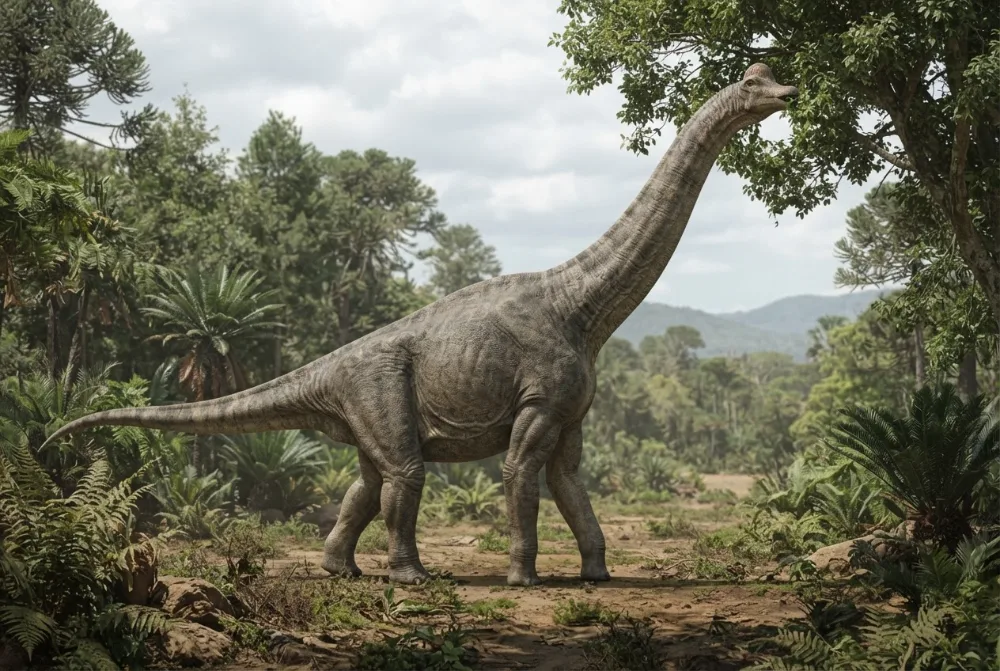
Giraffatitan was a giant, long-necked plant-eater that lived in what is now Tanzania. It had a giraffe-like shape with very long front legs and a tall skull. This dinosaur could reach high into the trees to munch on leaves that other dinosaurs couldn't reach.1
Berɛ bɛn na ɛtenaa ase?
Na ne kɛseɛ yɛ sɛn?
Na ne tenten yɛ sɛn?
Na ne korɔn yɛ sɛn?
Na ne mu yɛ duru sɛn?

 ne tenten te sɛ kaa 6 a wɔde agyina toatoa so🍌ne tenten te sɛ kwadu 140 a wɔde abɔ toatoa so🍉ne mu duru te sɛ watamɛlɔn 9600🦒ne korɔn te sɛ gyiraf 3 a wɔgyina wɔn ho wɔn ho so🎒ne mu duru te sɛ sukuu klaas mũ 60 mu mmofra🐻❄️ne mu duru te sɛ polar bea 110🏢ne korɔn bɛtumi ahwɛ mfɛnsere mu wɔ abansoro 6 so🏃anka ɔbɛtumi atu mmirika mita 100 wɔ sikɛn 40 mu (onipa a ɔyɛ ntɛm sen biara hia 9.6)
Giraffatitan kɛseɛ yɛ sɛn sɛ wode toto WO ho a?
Akontaa nko ara wɔ wo browser mu. Yɛnkora biribiara so, na yɛmmfa biribiara nkɔ baabiara.
Na ɛyɛ ntɛm sɛn?


Nsɛm a ɛyɛ anigye
Giraffatitan was first thought to be an African species of Brachiosaurus, but scientists now think it is a separate genus because of many differences in its bones.1
The name Giraffatitan means 'titanic giraffe' because its long neck and sloping body reminded scientists of a giraffe.1
Most size estimates come from a subadult skeleton called HMN SII, but a larger leg bone suggests some Giraffatitan grew even bigger, up to 26 metres long.1
Its nostrils were once thought to be on top of its head, like a snorkel, but modern studies show they were near the tip of the snout.1
Giraffatitan lived about 150 to 145 million years ago, during the Late Jurassic period, in a warm, seasonal climate with forests and coastal lagoons.1
It had a very long neck that could only move up and down a little, so it probably fed on treetop leaves without swinging its head sideways much.1
Nsɛm a wɔbisa bebree fa Giraffatitan ho
?How big was Giraffatitan?
About 23 metres (75 feet) long and 12 metres (39 feet) tall. The largest individuals may have reached 26 metres (85 feet) and weighed up to 48 tonnes (53 tons).12
?What did Giraffatitan eat?
It was a plant-eater (herbivore) that ate leaves from the tops of trees. Its long neck and chisel-like teeth helped it reach and bite off foliage that other dinosaurs couldn't.12
?When did Giraffatitan live?
It lived during the Late Jurassic Period, about 154 to 142 million years ago.2
?Where was Giraffatitan found?
Its fossils were discovered in Tanzania, Africa, at a place called Tendaguru.12
?Was Giraffatitan bigger than T. rex?
Yes, much bigger. Giraffatitan was about 23 metres long and weighed up to 48 tonnes, while T. rex was only about 12 metres long and weighed around 8 tonnes.1
?Is Giraffatitan a dinosaur?
Yes, it is a dinosaur. It is a sauropod, a group of four-legged, long-necked plant-eating dinosaurs.12
?Why did Giraffatitan have a long neck?
Its long neck helped it reach high into trees to eat leaves that other dinosaurs could not reach. Its neck could only move up and down a little, so it probably fed on treetop leaves without swinging its head sideways much.1
?Could Giraffatitan swim?
No, scientists now think it was a fully land animal. Water pressure would have made it hard to breathe if it was submerged, and its feet were too narrow for swimming.1
Atosɛm sɛefoɔ
Atosɛm: Some people think Giraffatitan spent most of its time in water to support its heavy body.
Nokorɛ: Scientists now believe it was fully land-living, because water pressure would have made breathing difficult and its feet were not good for swimming.1
Ma dino ho animdefoɔ
- Nyansahu din
- Giraffatitan
- Obi a ɔtoo din
- (Paul 1988)3
- Kuo
- Kɔn tenten
- Abusua / kuo kɛseɛ
- Brachiosauridae3
- Nkyekyɛmu
- Sauropodomorpha > Sauropoda > Macronaria3
- Abotan no mfeɛ
- mfeɛ ɔpepem 162 kɔsi 143 (Oxfordian / Tithonian)3
- Abotan nhyehyɛeɛ
- Tendaguru3
- Aman
- Tanzania3
- Fɔsil nkyerɛwee
- 42 wɔ The Paleobiology Database mu3
- Nhunumu
- Giraffatitan was discovered in Tanzania by a German expedition led by Werner Janensch, who first named it Brachiosaurus brancai in 1914. It was later given its own genus name Giraffatitan by Gregory S. Paul in 1988.1
- Wɔda so gye ho akyinnye
- Scientists still debate whether Giraffatitan should be a separate genus from Brachiosaurus or just a close relative.1
Baabi a nsɛm no firi
- Giraffatitan (en.wikipedia.org)
- Giraffatitan | Natural History Museum (nhm.ac.uk)
- Giraffatitan in The Paleobiology Database (CC BY 4.0): mfeɛ, mmeaeɛ, abotan nhyehyɛeɛ, nkyekyɛmu.
Asɛm biara a ɛwɔ krataafa yi so wɔ nɔma a ɛkyerɛ baabi a ɛfiri. Sɛ yɛfom biribi a, kafra, yɛyɛ dino dɔfoɔ, yɛnyɛ nyansahu nsɛmma krataa. Ka kyerɛ yɛn wɔ [email protected] na yɛbɛsiesie.
 Ɔkɔm de Rex! Dino Wiki yɛ agya bi adwuma a ɔyɛɛ maa ne babarima a ɔdɔ dino. Ɛyɛ kwa, dawurubɔ biara nni mu, akyidifoɔ biara nni mu. Mpanimfoɔ bɛtumi ama Rex aduane kakra, na aboa ama Dino Wiki atena intanɛt so.Ma Rex aduane
 Brachiosaurus
 Diplodocus
 Brontosaurus
 Argentinosaurus
 Camarasaurus
 Morosaurus
 Allosaurus
 Compsognathus
 Camptosaurus
 Nanosaurus
 Rhamphorhynchus
 Ceratosaurus