 Woyɛ dino bɛn? Nsɛmmisa agoro
 Dino ko
 Dino mmirikatuo
 Dino agodie nketewa
 Stika nwoma
 Dino TOP nhyehyɛeɛ
 Ma me nwanwa!
Gondwananectes
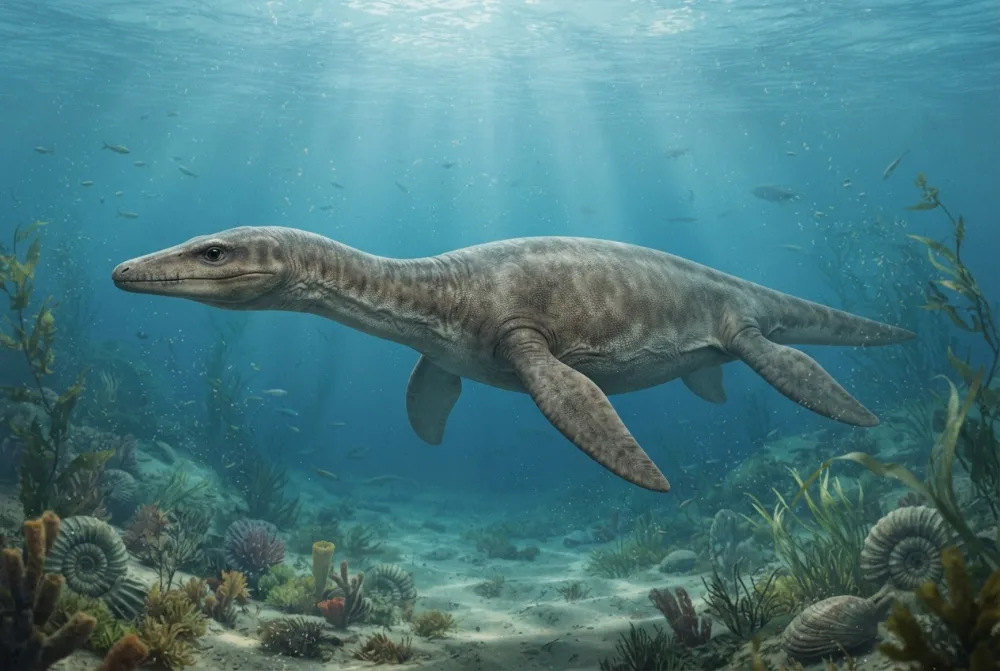
Gondwananectes was a medium-sized plesiosaur that swam in the warm seas of the Jurassic period. It had a long neck, a short tail, and four flippers that helped it glide through the water like a sea turtle. This marine reptile lived about 170 million years ago in what is now Chile.13
Berɛ bɛn na ɛtenaa ase?
Na ne kɛseɛ yɛ sɛn?
Na ne tenten yɛ sɛn?
 ne tenten te sɛ fie agyinamoa 4 firi hwene kɔsi dua🍌ne tenten te sɛ kwadu 11 a wɔde abɔ toatoa so🏊anka ɔbɛtumi aguare nsuguarebea kɛseɛ (50 m) tenten wɔ sikɛn 7.8 mu
Gondwananectes kɛseɛ yɛ sɛn sɛ wode toto WO ho a?
Akontaa nko ara wɔ wo browser mu. Yɛnkora biribiara so, na yɛmmfa biribiara nkɔ baabiara.
Na ɛyɛ ntɛm sɛn?


Nsɛm a ɛyɛ anigye
Gondwananectes is one of the oldest plesiosaurs ever found in the southern supercontinent Gondwana, which is why it got its name.1
The only known fossil of Gondwananectes was discovered in 2014 by Osvaldo Rojas, a museum director, and his team.1
Scientists originally thought some of its bones were part of the hips, but later preparation showed they were actually from the shoulder area.1
Gondwananectes had heart-shaped neck vertebrae, which is a unique feature not seen in other plesiosaurs.2
The fossil of Gondwananectes was found scattered in pieces, but scientists were able to put it back together to study it.1
Gondwananectes lived during the Bajocian age of the Middle Jurassic, about 170 to 168 million years ago.3
Nsɛm a wɔbisa bebree fa Gondwananectes ho
?How big was Gondwananectes?
It was about 1.5 to 2 metres (4.9 to 6.6 feet) long, which is roughly the size of a small dolphin.1
?What did Gondwananectes eat?
It was a carnivore, meaning it ate meat, probably fish and other small sea creatures.3
?Is Gondwananectes a dinosaur?
No, it is not a dinosaur. It is a plesiosaur, a type of marine reptile that lived in the ocean.1
Ma dino ho animdefoɔ
- Nyansahu din
- Gondwananectes
- Obi a ɔtoo din
- Otero et al. 20263
- Kuo
- Plesiosɔɔ
- Abusua / kuo kɛseɛ
- Plesiosauroidea3
- Nkyekyɛmu
- Plesiosauria > Sauropterygia3
- Abotan no mfeɛ
- mfeɛ ɔpepem 171 kɔsi 168 (Bajocian)3
- Abotan nhyehyɛeɛ
- Quehuita3
- Aman
- Kyili3
- Fɔsil nkyerɛwee
- 1 wɔ The Paleobiology Database mu3
- Nhunumu
- Gondwananectes was named in 2026 by Rodrigo Otero and colleagues. The fossil was found in 2014 by Osvaldo Rojas near Calama, Chile, and is now kept at the Museum of Natural and Cultural History of the Atacama Desert.1
- Wɔda so gye ho akyinnye
- Scientists are still unsure about the exact size of Gondwananectes because only a partial skeleton has been found. The total length is estimated between 1.5 and 2 metres.1
Baabi a nsɛm no firi
- Gondwananectes (en.wikipedia.org)
- PBDB Taxon (paleobiodb.org)
- Gondwananectes in The Paleobiology Database (CC BY 4.0): mfeɛ, mmeaeɛ, abotan nhyehyɛeɛ, nkyekyɛmu.
Asɛm biara a ɛwɔ krataafa yi so wɔ nɔma a ɛkyerɛ baabi a ɛfiri. Sɛ yɛfom biribi a, kafra, yɛyɛ dino dɔfoɔ, yɛnyɛ nyansahu nsɛmma krataa. Ka kyerɛ yɛn wɔ [email protected] na yɛbɛsiesie.
 Ɔkɔm de Rex! Dino Wiki yɛ agya bi adwuma a ɔyɛɛ maa ne babarima a ɔdɔ dino. Ɛyɛ kwa, dawurubɔ biara nni mu, akyidifoɔ biara nni mu. Mpanimfoɔ bɛtumi ama Rex aduane kakra, na aboa ama Dino Wiki atena intanɛt so.Ma Rex aduane
 Elasmosaurus
 Pliosaurus
 Plesiosaurus
 Cimoliasaurus
 Colymbosaurus
 Trinacromerum
 Ichthyosaurus
 Khudiakovia
 Ophthalmosaurus
 Pterodactylus
 Rhamphocephalus
 Gongbusaurus