 Woyɛ dino bɛn? Nsɛmmisa agoro
 Dino ko
 Dino mmirikatuo
 Dino agodie nketewa
 Stika nwoma
 Dino TOP nhyehyɛeɛ
 Ma me nwanwa!
Hongshanornis
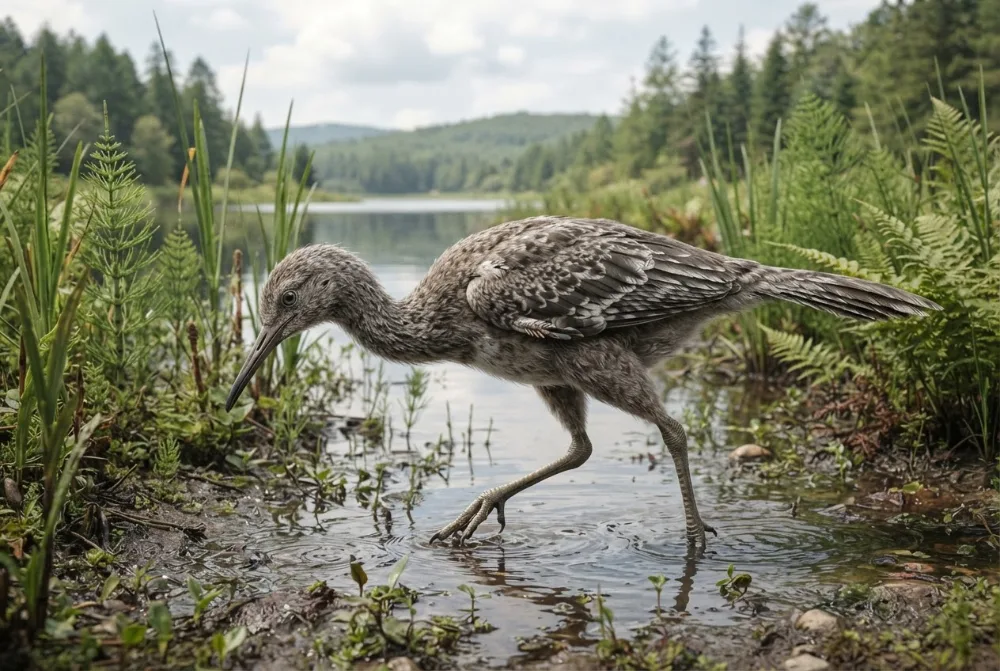
Hongshanornis was a small, beaked bird that lived near lakes and marshes in Early Cretaceous China. It had long legs for wading in shallow water and a slender beak for catching fish or bugs. This bird is one of the earliest known beaked ornithurine birds, a group that includes modern birds.1
Berɛ bɛn na ɛtenaa ase?
Na ne kɛseɛ yɛ sɛn?
Na ne tenten yɛ sɛn?
Na ne korɔn yɛ sɛn?
nsusuiɛ
Na ne mu yɛ duru sɛn?
Hongshanornis kɛseɛ yɛ sɛn sɛ wode toto WO ho a?
Akontaa nko ara wɔ wo browser mu. Yɛnkora biribiara so, na yɛmmfa biribiara nkɔ baabiara.
Na ɛyɛ ntɛm sɛn?


Nsɛm a ɛyɛ anigye
Hongshanornis had a beak in both its upper and lower jaws, making it the earliest known beaked ornithurine bird.1
This bird had a predentary bone in its lower jaw, a feature once thought unique to ornithischian dinosaurs.1
Hongshanornis lived about 125 to 120 million years ago, during the Early Cretaceous period.2
Its long legs and short, less curved claws show it was a wading bird, not a tree-dweller.1
One fossil of Hongshanornis preserved gizzard stones (gastroliths), which helped it grind up food.3
Hongshanornis was originally thought to be toothless, but later studies found it had small teeth in both jaws.3
Atosɛm sɛefoɔ
Atosɛm: Hongshanornis was completely toothless like modern birds.
Nokorɛ: Scientists now know it had small teeth in both upper and lower jaws, though it also had a beak.3
Ma dino ho animdefoɔ
- Nyansahu din
- Hongshanornis
- Obi a ɔtoo din
- Zhou and Zhang 20055
- Kuo
- Nnomaa a wɔdii kan
- Abusua / kuo kɛseɛ
- Hongshanornithidae5
- Nkyekyɛmu
- Theropoda > Avialae5
- Abotan no mfeɛ
- mfeɛ ɔpepem 126 kɔsi 120 (Barremian / Aptian)5
- Abotan nhyehyɛeɛ
- Yixian5
- Aman
- Kyaena5
- Fɔsil nkyerɛwee
- 2 wɔ The Paleobiology Database mu5
- Nhunumu
- Hongshanornis was named by Zhou and Zhang in 2005. The first fossil, a nearly complete skeleton with feathers, was found in the Yixian Formation at Shifo, Ningcheng, Inner Mongolia, China.12
- Wɔda so gye ho akyinnye
- Scientists still debate whether Hongshanornis was more closely related to modern birds than toothed ornithurines, or if teeth were lost several times in early bird evolution.1
Baabi a nsɛm no firi
- Discovery of an ornithurine bird and its implication for Early Cretaceous avian radiation | PNAS (pnas.org)
- PBDB Taxon (paleobiodb.org)
- Hongshanornis (en.wikipedia.org)
- PeerJ A new specimen of the Early Cretaceous bird Hongshanornis longicresta: insights into the aerodynamics and diet of a basal ornithuromorph (peerj.com)
- Hongshanornis in The Paleobiology Database (CC BY 4.0): mfeɛ, mmeaeɛ, abotan nhyehyɛeɛ, nkyekyɛmu.
Asɛm biara a ɛwɔ krataafa yi so wɔ nɔma a ɛkyerɛ baabi a ɛfiri. Sɛ yɛfom biribi a, kafra, yɛyɛ dino dɔfoɔ, yɛnyɛ nyansahu nsɛmma krataa. Ka kyerɛ yɛn wɔ [email protected] na yɛbɛsiesie.
 Ɔkɔm de Rex! Dino Wiki yɛ agya bi adwuma a ɔyɛɛ maa ne babarima a ɔdɔ dino. Ɛyɛ kwa, dawurubɔ biara nni mu, akyidifoɔ biara nni mu. Mpanimfoɔ bɛtumi ama Rex aduane kakra, na aboa ama Dino Wiki atena intanɛt so.Ma Rex aduane
 Archaeopteryx
 Hesperornis
 Ichthyornis
 Baptornis
 Jurapteryx
 Gobipteryx
 Stegosaurus
 Iguanodon
 Giganotosaurus
 Microraptor
 Deinonychus
 Baryonyx