 Woyɛ dino bɛn? Nsɛmmisa agoro
 Dino ko
 Dino mmirikatuo
 Dino agodie nketewa
 Stika nwoma
 Dino TOP nhyehyɛeɛ
 Ma me nwanwa!
Houornis
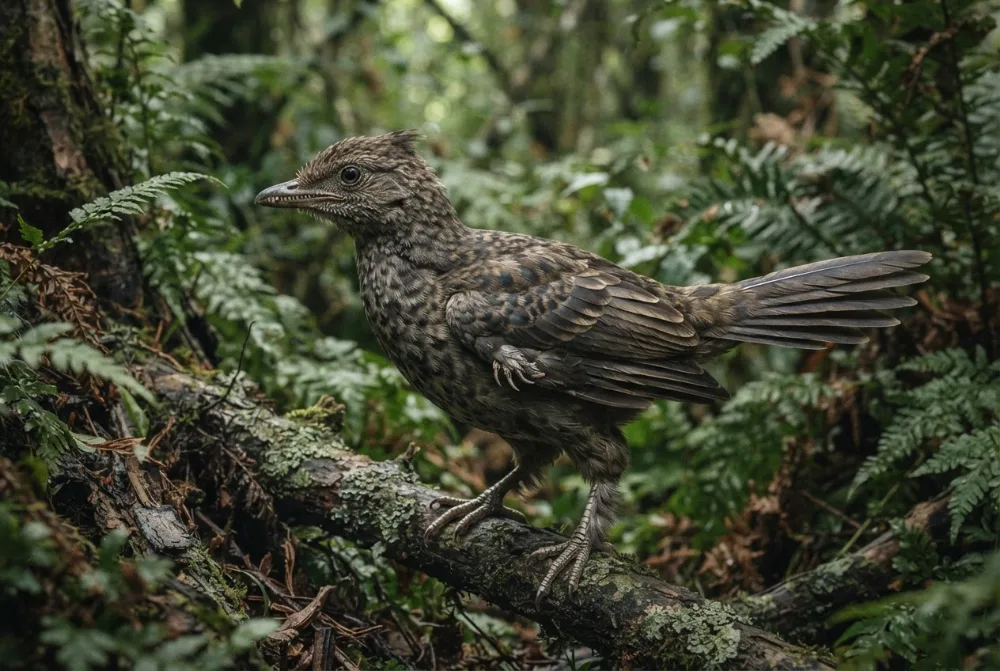
Houornis was a tiny, toothy bird that lived in China about 120 million years ago. It had perching feet and a surprisingly long tail made of fused bones. This little bird was an enantiornithean, a group of early birds that went extinct with the dinosaurs.1
Berɛ bɛn na ɛtenaa ase?
Na ɛyɛ ntɛm sɛn?


Nsɛm a ɛyɛ anigye
Houornis is known from only one main fossil, which is not preserved as bones but as impressions left in the rock.1
Its tail was originally thought to be long and bony like Archaeopteryx, but scientists later realized it had a long pygostyle, a fused tail bone.1
The upper arm bone of Houornis is less than 30 millimeters (1.2 inches) long, making it a very small bird.1
Houornis was once classified as a species of Cathayornis, but in 2015 it was given its own genus because of unique features like its large pygostyle.1
Some scientists have considered Houornis a doubtful species because the fossil is poorly preserved, but a 2015 study found it was distinct enough to keep.1
Atosɛm sɛefoɔ
Atosɛm: Houornis had a long, bony tail like a dinosaur.
Nokorɛ: Houornis actually had a short tail with a long pygostyle (fused tail vertebrae), not a long bony tail. The original mistake came from misidentifying hip bones as tail vertebrae.1
Ma dino ho animdefoɔ
- Nyansahu din
- Houornis
- Obi a ɔtoo din
- Wang and Liu 20152
- Kuo
- Nnomaa a wɔdii kan
- Abusua / kuo kɛseɛ
- Enantiornithes2
- Nkyekyɛmu
- Theropoda > Avialae2
- Abotan no mfeɛ
- mfeɛ ɔpepem 121 kɔsi 113 (Aptian)2
- Abotan nhyehyɛeɛ
- Jiufotang2
- Aman
- Kyaena2
- Fɔsil nkyerɛwee
- 1 wɔ The Paleobiology Database mu2
- Nhunumu
- The only known fossil of Houornis was found in 1993 by Zhou Zhonghe near Boluochi, China. It was first named Cathayornis caudatus by Hou Lianhu in 1997, and then renamed Houornis by Wang and Liu in 2015.1
- Wɔda so gye ho akyinnye
- Scientists are not sure exactly how Houornis is related to other enantiornithean birds, because its fossil is too incomplete for a detailed family tree analysis.1
Baabi a nsɛm no firi
- Houornis (en.wikipedia.org)
- Houornis in The Paleobiology Database (CC BY 4.0): mfeɛ, mmeaeɛ, abotan nhyehyɛeɛ, nkyekyɛmu.
Asɛm biara a ɛwɔ krataafa yi so wɔ nɔma a ɛkyerɛ baabi a ɛfiri. Sɛ yɛfom biribi a, kafra, yɛyɛ dino dɔfoɔ, yɛnyɛ nyansahu nsɛmma krataa. Ka kyerɛ yɛn wɔ [email protected] na yɛbɛsiesie.
 Ɔkɔm de Rex! Dino Wiki yɛ agya bi adwuma a ɔyɛɛ maa ne babarima a ɔdɔ dino. Ɛyɛ kwa, dawurubɔ biara nni mu, akyidifoɔ biara nni mu. Mpanimfoɔ bɛtumi ama Rex aduane kakra, na aboa ama Dino Wiki atena intanɛt so.Ma Rex aduane
 Archaeopteryx
 Hesperornis
 Ichthyornis
 Baptornis
 Jurapteryx
 Gobipteryx
 Stegosaurus
 Iguanodon
 Giganotosaurus
 Microraptor
 Deinonychus
 Baryonyx