 Woyɛ dino bɛn? Nsɛmmisa agoro
 Dino ko
 Dino mmirikatuo
 Dino agodie nketewa
 Stika nwoma
 Dino TOP nhyehyɛeɛ
 Ma me nwanwa!
Hudiesaurus
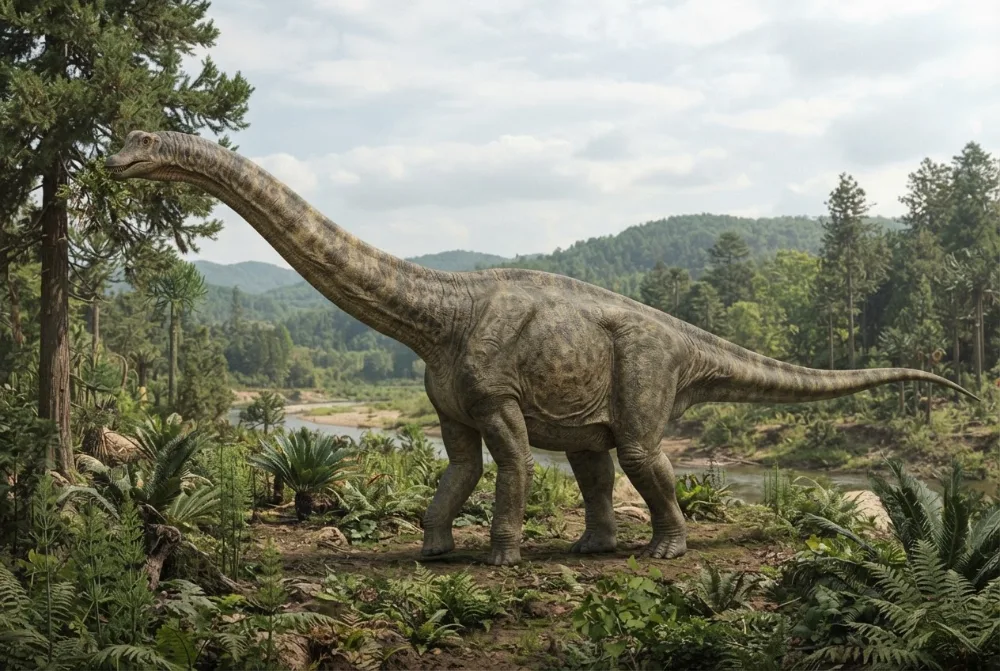
Hudiesaurus was a gigantic, long-necked plant-eater that stomped through Late Jurassic China. It was one of the biggest dinosaurs ever, with a neck so long it could probably reach high into the treetops. Its name comes from the butterfly-like split on its backbone spines.1
Berɛ bɛn na ɛtenaa ase?
Na ne kɛseɛ yɛ sɛn?
Na ne tenten yɛ sɛn?
Na ne korɔn yɛ sɛn?
Na ne mu yɛ duru sɛn?

 ne tenten te sɛ kaa 7 a wɔde agyina toatoa so🍌ne tenten te sɛ kwadu 180 a wɔde abɔ toatoa so🍉ne mu duru te sɛ watamɛlɔn 11000🎒ne mu duru te sɛ sukuu klaas mũ 69 mu mmofra🐻❄️ne mu duru te sɛ polar bea 120🏢ne korɔn bɛtumi ahwɛ mfɛnsere mu wɔ abansoro 2 so🏃anka ɔbɛtumi atu mmirika mita 100 wɔ sikɛn 40 mu (onipa a ɔyɛ ntɛm sen biara hia 9.6)
Hudiesaurus kɛseɛ yɛ sɛn sɛ wode toto WO ho a?
Akontaa nko ara wɔ wo browser mu. Yɛnkora biribiara so, na yɛmmfa biribiara nkɔ baabiara.
Na ɛyɛ ntɛm sɛn?


Nsɛm a ɛyɛ anigye
Hudiesaurus might have been as long as three school buses parked end to end, reaching up to 32 metres (105 feet).1
Its backbone had a split spine at the top, which helped strong neck muscles attach. This gave it extra control over its long neck.1
The only definite fossil is a single backbone, but it was huge, measuring 55 centimetres (22 inches) long.1
Hudiesaurus lived about 154 to 143 million years ago, during the Late Jurassic period.1
Some bones that were once thought to be Hudiesaurus are now given to another dinosaur called Rhomaleopakhus.1
It had air-filled cavities in its backbone, which made its huge bones lighter, like a bird's bones.1
Nsɛm a wɔbisa bebree fa Hudiesaurus ho
?How big was Hudiesaurus?
It was one of the largest dinosaurs, possibly reaching 32 metres in length and weighing 55 tonnes. Some estimates put it at 30.5 metres and 44 tonnes.1
?What did Hudiesaurus eat?
It was a plant-eater, eating leaves and other vegetation. As a sauropod with a long neck, it could reach high into trees or browse low plants.1
?When did Hudiesaurus live?
It lived during the Late Jurassic period, about 154 to 143 million years ago.1
Atosɛm sɛefoɔ
Atosɛm: Hudiesaurus is sometimes said to be a meat-eater because of its big teeth.
Nokorɛ: Actually, Hudiesaurus was a plant-eater. Its teeth were for stripping leaves, not for hunting.1
Ma dino ho animdefoɔ
- Nyansahu din
- Hudiesaurus
- Obi a ɔtoo din
- Dong 19972
- Kuo
- Kɔn tenten
- Abusua / kuo kɛseɛ
- Mamenchisauridae2
- Nkyekyɛmu
- Sauropodomorpha > Sauropoda2
- Abotan no mfeɛ
- mfeɛ ɔpepem 152 kɔsi 143 (Kimmeridgian / Tithonian)2
- Abotan nhyehyɛeɛ
- Kalazha2
- Aman
- Kyaena2
- Fɔsil nkyerɛwee
- 1 wɔ The Paleobiology Database mu2
- Nhunumu
- Hudiesaurus was named by Chinese paleontologist Dong Zhiming in 1997, after the Sino-Japanese Silk Road Expedition found its fossils in 1993 near Qiketai, China.1
- Wɔda so gye ho akyinnye
- Scientists still debate whether the single backbone came from the neck or the back, which changes the size estimate.1
Baabi a nsɛm no firi
- Hudiesaurus (en.wikipedia.org)
- Hudiesaurus in The Paleobiology Database (CC BY 4.0): mfeɛ, mmeaeɛ, abotan nhyehyɛeɛ, nkyekyɛmu.
Asɛm biara a ɛwɔ krataafa yi so wɔ nɔma a ɛkyerɛ baabi a ɛfiri. Sɛ yɛfom biribi a, kafra, yɛyɛ dino dɔfoɔ, yɛnyɛ nyansahu nsɛmma krataa. Ka kyerɛ yɛn wɔ [email protected] na yɛbɛsiesie.
 Ɔkɔm de Rex! Dino Wiki yɛ agya bi adwuma a ɔyɛɛ maa ne babarima a ɔdɔ dino. Ɛyɛ kwa, dawurubɔ biara nni mu, akyidifoɔ biara nni mu. Mpanimfoɔ bɛtumi ama Rex aduane kakra, na aboa ama Dino Wiki atena intanɛt so.Ma Rex aduane
 Brachiosaurus
 Diplodocus
 Brontosaurus
 Argentinosaurus
 Camarasaurus
 Morosaurus
 Allosaurus
 Compsognathus
 Camptosaurus
 Nanosaurus
 Rhamphorhynchus
 Ceratosaurus