 Woyɛ dino bɛn? Nsɛmmisa agoro
 Dino ko
 Dino mmirikatuo
 Dino agodie nketewa
 Stika nwoma
 Dino TOP nhyehyɛeɛ
 Ma me nwanwa!
Jingiella
Jingiella was a long-necked sauropod dinosaur that lived in what is now southern China. It munched on plants and walked on four sturdy legs. This dinosaur was first thought to be called Jingia, but that name was already taken by a moth, so scientists changed it to Jingiella.1
Berɛ bɛn na ɛtenaa ase?
Na ne kɛseɛ yɛ sɛn?
Na ne tenten yɛ sɛn?
Na ne korɔn yɛ sɛn?
nsusuiɛ
Na ne mu yɛ duru sɛn?
 ne tenten te sɛ kaa 3 a wɔde agyina toatoa so🍌ne tenten te sɛ kwadu 83 a wɔde abɔ toatoa so
 ne mu duru bɛyɛ sɛ ɔsono🍉ne mu duru te sɛ watamɛlɔn 1100🎒ne mu duru te sɛ sukuu klaas mũ 7 mu mmofra🐻❄️ne mu duru te sɛ polar bea 12🏃anka ɔbɛtumi atu mmirika mita 100 wɔ sikɛn 20 mu (onipa a ɔyɛ ntɛm sen biara hia 9.6)
Jingiella kɛseɛ yɛ sɛn sɛ wode toto WO ho a?
Akontaa nko ara wɔ wo browser mu. Yɛnkora biribiara so, na yɛmmfa biribiara nkɔ baabiara.
Na ɛyɛ ntɛm sɛn?


Nsɛm a ɛyɛ anigye
Jingiella lived about 154 to 149 million years ago, during the Late Jurassic period.2
Its fossils include parts of the backbone, hip bones, arm bones, and a thigh bone.1
Jingiella belongs to a group of sauropods called mamenchisaurids, which are known for their very long necks.1
The first name for this dinosaur, Jingia, was already used for a moth, so scientists renamed it Jingiella in 2024.1
Jingiella had tall and narrow spines on its back vertebrae, similar to its relative Mamenchisaurus.1
The tail vertebrae of Jingiella were concave on both ends, like in more primitive sauropods, but different from Mamenchisaurus.1
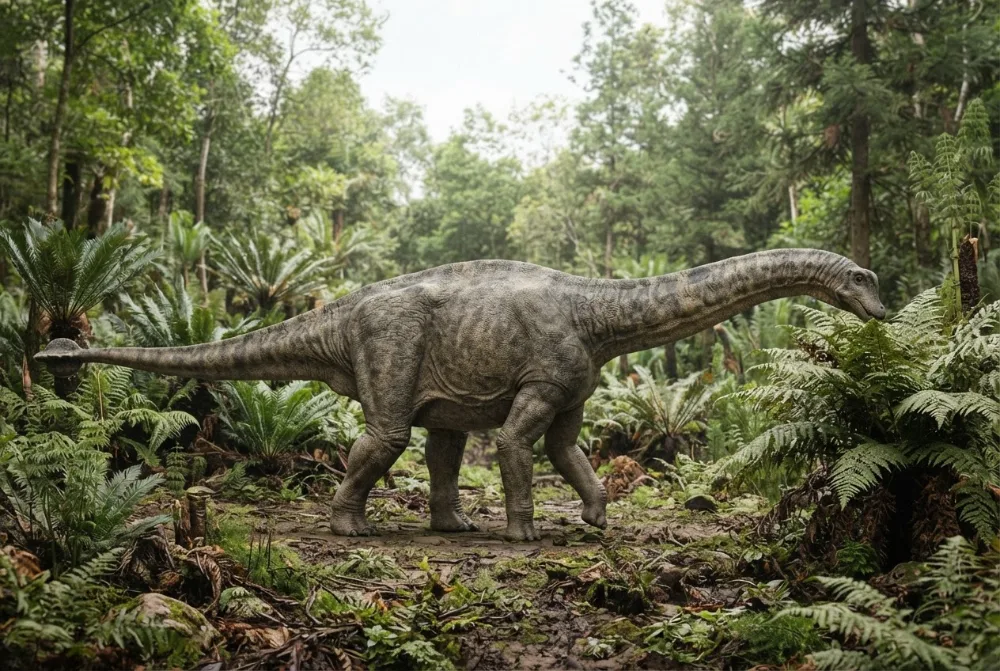
Ma dino ho animdefoɔ
- Nyansahu din
- Jingiella
- Obi a ɔtoo din
- Ren et al. 20244
- Kuo
- Kɔn tenten
- Abusua / kuo kɛseɛ
- Mamenchisauridae4
- Nkyekyɛmu
- Sauropodomorpha > Sauropoda4
- Abotan no mfeɛ
- mfeɛ ɔpepem 155 kɔsi 149 (Kimmeridgian)4
- Abotan nhyehyɛeɛ
- Dongxing4
- Aman
- Kyaena4
- Fɔsil nkyerɛwee
- 1 wɔ The Paleobiology Database mu4
- Nhunumu
- Jingiella was named in 2024 by Ren and colleagues based on fossils found in Dongxing, Guangxi, China. The bones were restored at the Chongzhou Tianyan Museum.1
- Wɔda so gye ho akyinnye
- Scientists are not sure exactly how long Jingiella's neck was, because only a few neck bones have been found.1
Baabi a nsɛm no firi
- Jingiella (en.wikipedia.org)
- PBDB Taxon (paleobiodb.org)
- Jingiella dongxingensis | Dinosaur Database by DinoAnimals.com (dinoanimals.com)
- Jingiella in The Paleobiology Database (CC BY 4.0): mfeɛ, mmeaeɛ, abotan nhyehyɛeɛ, nkyekyɛmu.
Asɛm biara a ɛwɔ krataafa yi so wɔ nɔma a ɛkyerɛ baabi a ɛfiri. Sɛ yɛfom biribi a, kafra, yɛyɛ dino dɔfoɔ, yɛnyɛ nyansahu nsɛmma krataa. Ka kyerɛ yɛn wɔ [email protected] na yɛbɛsiesie.
 Ɔkɔm de Rex! Dino Wiki yɛ agya bi adwuma a ɔyɛɛ maa ne babarima a ɔdɔ dino. Ɛyɛ kwa, dawurubɔ biara nni mu, akyidifoɔ biara nni mu. Mpanimfoɔ bɛtumi ama Rex aduane kakra, na aboa ama Dino Wiki atena intanɛt so.Ma Rex aduane
 Brachiosaurus
 Diplodocus
 Brontosaurus
 Argentinosaurus
 Camarasaurus
 Morosaurus
 Allosaurus
 Compsognathus
 Camptosaurus
 Nanosaurus
 Rhamphorhynchus
 Ceratosaurus