 Woyɛ dino bɛn? Nsɛmmisa agoro
 Dino ko
 Dino mmirikatuo
 Dino agodie nketewa
 Stika nwoma
 Dino TOP nhyehyɛeɛ
 Ma me nwanwa!
Jiuquanornis
Jiuquanornis was a small, bird-like dinosaur that lived about 120 million years ago. It had a U-shaped wishbone and a sternum that looked like those of some modern ground birds. Scientists think it might have been a fast runner that ate meat.12
Berɛ bɛn na ɛtenaa ase?
Na ɛyɛ ntɛm sɛn?


Nsɛm a ɛyɛ anigye
Jiuquanornis is known from a single fossil that was first described in 2013. The fossil includes parts of the sternum, furcula, and forelimb.1
Its sternum had long, thin projections called trabeculae, which are also seen in modern ground-dwelling birds like chickens and tinamous.1
Jiuquanornis had a U-shaped furcula (wishbone) with a low angle of about 36 degrees, and it lacked a hypocleidium, a small projection found in some birds.1
Scientists think Jiuquanornis was a basal ornithuromorph, meaning it was an early relative of modern birds but not a direct ancestor.1
The fossil of Jiuquanornis was found in the Xiagou Formation, which is about 121 to 113 million years old, from the Early Cretaceous period.21
Jiuquanornis was named after the city of Jiuquan, which is near the fossil site. The species name niui honors Professor Shao-Wu Niu for his geological work.1
The fossil of Jiuquanornis was originally thought to be too incomplete to name, but scientists later decided it was different enough from other birds to be a new species.1
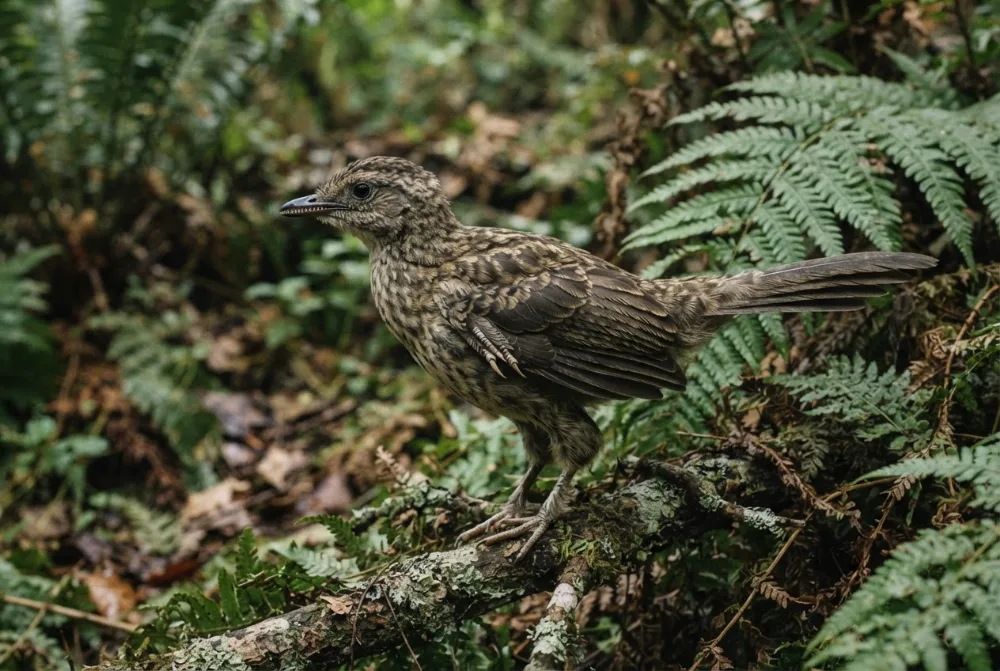
Ma dino ho animdefoɔ
- Nyansahu din
- Jiuquanornis
- Obi a ɔtoo din
- Wang et al. 20132
- Kuo
- Nnomaa a wɔdii kan
- Abusua / kuo kɛseɛ
- Ornithuromorpha2
- Nkyekyɛmu
- Theropoda > Avialae2
- Abotan no mfeɛ
- mfeɛ ɔpepem 121 kɔsi 113 (Aptian)2
- Abotan nhyehyɛeɛ
- Xiagou2
- Aman
- Kyaena2
- Fɔsil nkyerɛwee
- 1 wɔ The Paleobiology Database mu2
- Nhunumu
- Jiuquanornis was named in 2013 by Wang and colleagues. The fossil, specimen GSGM-05-CM-021, was found in the Xiagou Formation near Changma in Gansu Province, China. It was first described as an unnamed bird in 2005, but later recognized as a new species.12
- Wɔda so gye ho akyinnye
- Scientists are not sure whether Jiuquanornis lived on the ground or in the water, because its fossil is too incomplete to tell. Its sternum shape suggests it might have been a fast runner, but more fossils are needed.1
Baabi a nsɛm no firi
- Previously Unrecognized Ornithuromorph Bird Diversity in the Early Cretaceous Changma Basin, Gansu Province, Northwestern China (journals.plos.org)
- Jiuquanornis in The Paleobiology Database (CC BY 4.0): mfeɛ, mmeaeɛ, abotan nhyehyɛeɛ, nkyekyɛmu.
Asɛm biara a ɛwɔ krataafa yi so wɔ nɔma a ɛkyerɛ baabi a ɛfiri. Sɛ yɛfom biribi a, kafra, yɛyɛ dino dɔfoɔ, yɛnyɛ nyansahu nsɛmma krataa. Ka kyerɛ yɛn wɔ [email protected] na yɛbɛsiesie.
 Ɔkɔm de Rex! Dino Wiki yɛ agya bi adwuma a ɔyɛɛ maa ne babarima a ɔdɔ dino. Ɛyɛ kwa, dawurubɔ biara nni mu, akyidifoɔ biara nni mu. Mpanimfoɔ bɛtumi ama Rex aduane kakra, na aboa ama Dino Wiki atena intanɛt so.Ma Rex aduane
 Archaeopteryx
 Hesperornis
 Ichthyornis
 Baptornis
 Jurapteryx
 Gobipteryx
 Stegosaurus
 Iguanodon
 Giganotosaurus
 Microraptor
 Deinonychus
 Baryonyx