 Woyɛ dino bɛn? Nsɛmmisa agoro
 Dino ko
 Dino mmirikatuo
 Dino agodie nketewa
 Stika nwoma
 Dino TOP nhyehyɛeɛ
 Ma me nwanwa!
Berɛ bɛn na ɛtenaa ase?

Na ne kɛseɛ yɛ sɛn?
Na ne tenten yɛ sɛn?
Na ne korɔn yɛ sɛn?
nsusuiɛ
Na ne mu yɛ duru sɛn?
 ne tenten te sɛ fie agyinamoa 3 firi hwene kɔsi dua🍌ne tenten te sɛ kwadu 8 a wɔde abɔ toatoa sone mu duru bɛyɛ sɛ fie agyinamoa🍌ne mu duru te sɛ kwadu 17🏃anka ɔbɛtumi atu mmirika mita 100 wɔ sikɛn 16 mu (onipa a ɔyɛ ntɛm sen biara hia 9.6)
Kulindadromeus kɛseɛ yɛ sɛn sɛ wode toto WO ho a?
Akontaa nko ara wɔ wo browser mu. Yɛnkora biribiara so, na yɛmmfa biribiara nkɔ baabiara.
Na ɛyɛ ntɛm sɛn?


Nsɛm a ɛyɛ anigye
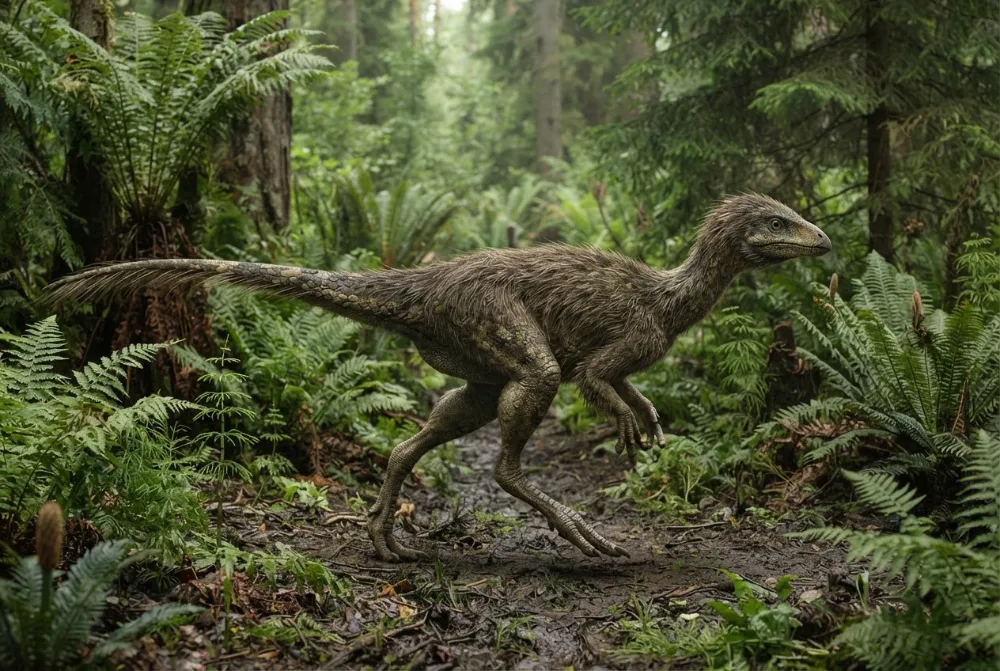
Kulindadromeus had three types of feather-like structures on its body, including simple filaments and more complex tufts.1
It also had three types of scales, showing that this dinosaur had a mix of scales and fuzzy coverings.1
Kulindadromeus lived about 168 to 166 million years ago, during the Middle Jurassic, making it the oldest known dinosaur with feather-like structures.2
It was a small, bipedal herbivore about 1.5 meters (5 feet) long, with short forelimbs, long hind limbs, and a long tail.1
The fossils were found in a lake environment, alongside plants, insect larvae, and freshwater crustaceans.1
Scientists think that feather-like structures might have been common in all dinosaurs, not just the meat-eating ones.1
Kulindadromeus is a basal neornithischian, meaning it is an early relative of plant-eating dinosaurs like Triceratops and Parasaurolophus.1
Nsɛm a wɔbisa bebree fa Kulindadromeus ho
?What did Kulindadromeus eat?
It was a herbivore, eating plants. Its teeth were adapted for eating plants.3
?How big was Kulindadromeus?
It was about 1 to 1.5 metres long and weighed about 2 kilograms.3
?Did Kulindadromeus have feathers?
Yes, it had three types of feather-like structures on its body, including simple filaments and more complex tufts, along with scales.3
?When did Kulindadromeus live?
It lived about 168 to 166 million years ago, during the Middle Jurassic period.3
?Where was Kulindadromeus found?
Its fossils were found in Siberia, Russia, in a place called the Kulinda site.3
?Could Kulindadromeus run fast?
Yes, it was a bipedal runner with long hindlimbs and a long tail, built for speed.3
Atosɛm sɛefoɔ
Atosɛm: Only meat-eating dinosaurs like Velociraptor had feathers.
Nokorɛ: Kulindadromeus was a plant-eating dinosaur that also had feather-like filaments, showing that fuzzy coverings were widespread among dinosaurs.1
Ma dino ho animdefoɔ
- Nyansahu din
- Kulindadromeus
- Obi a ɔtoo din
- Godefroit et al. 20144
- Kuo
- Ahabandifoɔ a wɔwɔ anomaa ano
- Abusua / kuo kɛseɛ
- Pyrodontia4
- Nkyekyɛmu
- Ornithischia4
- Abotan no mfeɛ
- mfeɛ ɔpepem 168 kɔsi 165 (Bathonian)4
- Abotan nhyehyɛeɛ
- Ukureyskaya4
- Aman
- Rɔhyea4
- Fɔsil nkyerɛwee
- 3 wɔ The Paleobiology Database mu4
- Nhunumu
- Kulindadromeus was named in 2014 by Pascal Godefroit and colleagues based on fossils found at the Kulinda locality in Siberia, Russia. The site yielded several partial skulls and hundreds of disarticulated bones.41
- Wɔda so gye ho akyinnye
- Scientists are still debating whether the feather-like structures of Kulindadromeus are true feathers or just similar-looking filaments that evolved independently.1
Baabi a nsɛm no firi
- and scales (biblio.naturalsciences.be)
- The rise of feathered dinosaurs: Kulindadromeus zabaikalicus , the oldest dinosaur with ‘feather-like’ structures (pmc.ncbi.nlm.nih.gov)
- Kulindadromeus (en.wikipedia.org)
- Kulindadromeus in The Paleobiology Database (CC BY 4.0): mfeɛ, mmeaeɛ, abotan nhyehyɛeɛ, nkyekyɛmu.
Asɛm biara a ɛwɔ krataafa yi so wɔ nɔma a ɛkyerɛ baabi a ɛfiri. Sɛ yɛfom biribi a, kafra, yɛyɛ dino dɔfoɔ, yɛnyɛ nyansahu nsɛmma krataa. Ka kyerɛ yɛn wɔ [email protected] na yɛbɛsiesie.
 Ɔkɔm de Rex! Dino Wiki yɛ agya bi adwuma a ɔyɛɛ maa ne babarima a ɔdɔ dino. Ɛyɛ kwa, dawurubɔ biara nni mu, akyidifoɔ biara nni mu. Mpanimfoɔ bɛtumi ama Rex aduane kakra, na aboa ama Dino Wiki atena intanɛt so.Ma Rex aduane
 Iguanodon
 Tenontosaurus
 Thescelosaurus
 Zalmoxes
 Camptosaurus
 Rhabdodon
 Ichthyosaurus
 Khudiakovia
 Ophthalmosaurus
 Pterodactylus
 Peloneustes
 Rhamphocephalus