 Woyɛ dino bɛn? Nsɛmmisa agoro
 Dino ko
 Dino mmirikatuo
 Dino agodie nketewa
 Stika nwoma
 Dino TOP nhyehyɛeɛ
 Ma me nwanwa!
Kulindapteryx
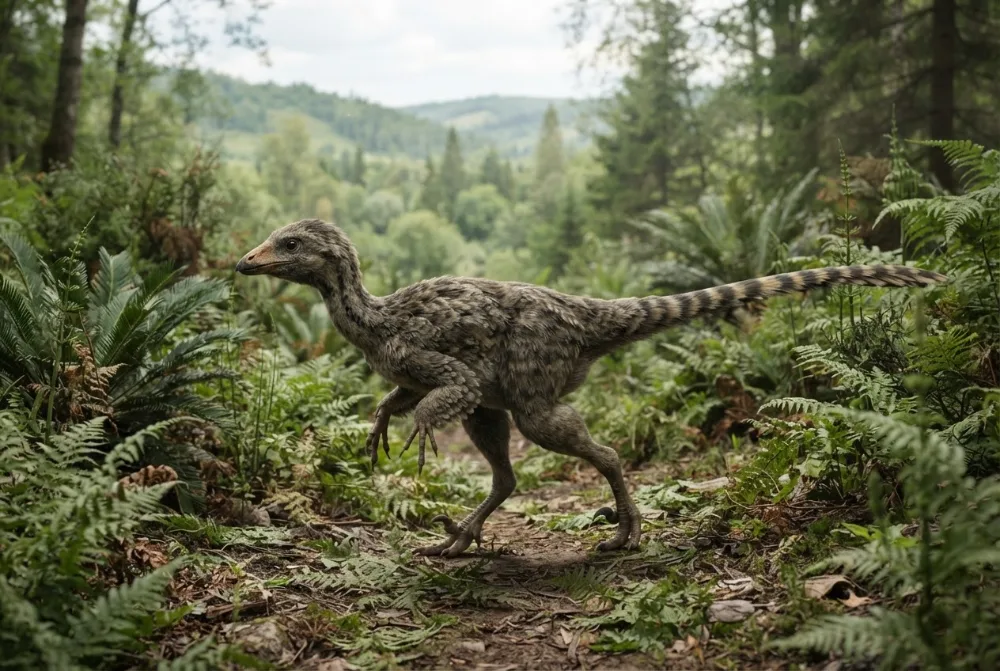
Kulindapteryx was a tiny, plant-eating dinosaur that lived in what is now Russia. It had a beak and may have had bristly scales that looked a bit like feathers. This little dinosaur ran on two legs and was only as long as a bicycle.61
Berɛ bɛn na ɛtenaa ase?
Na ne kɛseɛ yɛ sɛn?
Na ne tenten yɛ sɛn?
Na ne korɔn yɛ sɛn?
nsusuiɛ
Na ne mu yɛ duru sɛn?
 ne tenten te sɛ fie agyinamoa 3 firi hwene kɔsi dua🍌ne tenten te sɛ kwadu 8 a wɔde abɔ toatoa sone mu duru bɛyɛ sɛ fie agyinamoa🍌ne mu duru te sɛ kwadu 17🏃anka ɔbɛtumi atu mmirika mita 100 wɔ sikɛn 16 mu (onipa a ɔyɛ ntɛm sen biara hia 9.6)
Kulindapteryx kɛseɛ yɛ sɛn sɛ wode toto WO ho a?
Akontaa nko ara wɔ wo browser mu. Yɛnkora biribiara so, na yɛmmfa biribiara nkɔ baabiara.
Na ɛyɛ ntɛm sɛn?


Nsɛm a ɛyɛ anigye
Kulindapteryx lived about 168 to 166 million years ago, during the Middle Jurassic period.6
This dinosaur had special skin scales that split into bristles, which scientists think might be an early step toward feathers.1
Kulindapteryx is known from hundreds of bones found in two bone beds, including skulls and skeletons of young and adult animals.2
It was a small ornithischian dinosaur, about 1 to 1.5 metres (3.3 to 4.9 feet) long and weighed around 2 kilograms (4.4 pounds).2
The name Kulindapteryx means 'Kulinda wing', because it was found at the Kulinda site and had wing-like bristle scales.61
Some scientists think Kulindapteryx might be the same animal as another dinosaur called Kulindadromeus, but others disagree.2
Nsɛm a wɔbisa bebree fa Kulindapteryx ho
?How big was Kulindapteryx?
It was about 1 to 1.5 metres (3.3 to 4.9 feet) long and weighed around 2 kilograms (4.4 pounds). That is about as long as a bicycle.32
?Did Kulindapteryx have feathers?
It had bristly scales that split into filaments, which scientists think might be an early step toward feathers. These feather-like structures were found on its arms and legs.34
?What did Kulindapteryx eat?
It was a plant-eater. Its teeth show clear adaptations for eating plants.4
?When did Kulindapteryx live?
It lived about 168 to 166 million years ago, during the Middle Jurassic period.35
?Is Kulindapteryx a dinosaur?
Yes, it is a small ornithischian dinosaur, a plant-eating dinosaur that walked on two legs.32
?Could Kulindapteryx run fast?
It was a bipedal runner with long hindlimbs and a long tail, so it could run quickly. Its exact speed is not known.3
Ma dino ho animdefoɔ
- Nyansahu din
- Kulindapteryx
- Obi a ɔtoo din
- Alifanov and Saveliev 20146
- Kuo
- Ahabandifoɔ a wɔwɔ anomaa ano
- Abusua / kuo kɛseɛ
- Jeholosauridae6
- Nkyekyɛmu
- Ornithischia6
- Abotan no mfeɛ
- mfeɛ ɔpepem 168 kɔsi 165 (Bathonian)6
- Abotan nhyehyɛeɛ
- Ukureyskaya6
- Aman
- Rɔhyea6
- Fɔsil nkyerɛwee
- 1 wɔ The Paleobiology Database mu6
- Nhunumu
- Kulindapteryx was named in 2014 by Russian paleontologists Vladimir Alifanov and S. V. Saveliev, based on fossils from the Kulinda site in Transbaikalia, Russia.61
- Wɔda so gye ho akyinnye
- Scientists are not sure if Kulindapteryx is a separate species from Kulindadromeus, or if all the Kulinda fossils belong to just one dinosaur.2
Baabi a nsɛm no firi
- Two new ornithischian dinosaurs (Hypsilophodontia, Ornithopoda) from the Late Jurassic of Russia (researchgate.net)
- Kulindadromeus (en.wikipedia.org)
- Kulindadromeus (en.wikipedia.org)
- July: Fossils found in Siberia suggest all dinosaurs had feathers | News and features | University of Bristol (bristol.ac.uk)
- The rise of feathered dinosaurs: Kulindadromeus zabaikalicus , the oldest dinosaur with ‘feather-like’ structures (pmc.ncbi.nlm.nih.gov)
- Kulindapteryx in The Paleobiology Database (CC BY 4.0): mfeɛ, mmeaeɛ, abotan nhyehyɛeɛ, nkyekyɛmu.
Asɛm biara a ɛwɔ krataafa yi so wɔ nɔma a ɛkyerɛ baabi a ɛfiri. Sɛ yɛfom biribi a, kafra, yɛyɛ dino dɔfoɔ, yɛnyɛ nyansahu nsɛmma krataa. Ka kyerɛ yɛn wɔ [email protected] na yɛbɛsiesie.
 Ɔkɔm de Rex! Dino Wiki yɛ agya bi adwuma a ɔyɛɛ maa ne babarima a ɔdɔ dino. Ɛyɛ kwa, dawurubɔ biara nni mu, akyidifoɔ biara nni mu. Mpanimfoɔ bɛtumi ama Rex aduane kakra, na aboa ama Dino Wiki atena intanɛt so.Ma Rex aduane
 Iguanodon
 Tenontosaurus
 Thescelosaurus
 Zalmoxes
 Camptosaurus
 Rhabdodon
 Ichthyosaurus
 Khudiakovia
 Ophthalmosaurus
 Pterodactylus
 Peloneustes
 Rhamphocephalus