 Woyɛ dino bɛn? Nsɛmmisa agoro
 Dino ko
 Dino mmirikatuo
 Dino agodie nketewa
 Stika nwoma
 Dino TOP nhyehyɛeɛ
 Ma me nwanwa!
Leptonectes
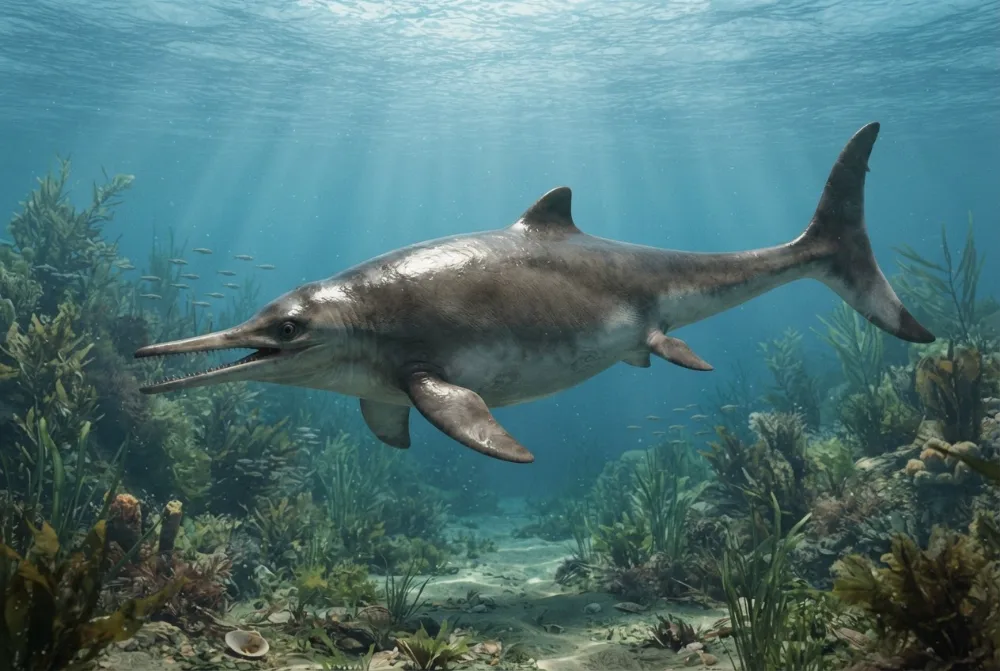
Leptonectes was a sleek, long-snouted marine reptile that swam in the seas during the time of the dinosaurs. It was not a dinosaur, but a type of ichthyosaur, with a body shaped like a fish and flippers for steering. It hunted small sea creatures with its slender jaws.12
Berɛ bɛn na ɛtenaa ase?
Na ne kɛseɛ yɛ sɛn?
Na ne tenten yɛ sɛn?
 ne tenten te sɛ nkraman 6 firi hwene kɔsi dua🍌ne tenten te sɛ kwadu 33 a wɔde abɔ toatoa so🏊anka ɔbɛtumi aguare nsuguarebea kɛseɛ (50 m) tenten wɔ sikɛn 4.2 mu
Leptonectes kɛseɛ yɛ sɛn sɛ wode toto WO ho a?
Akontaa nko ara wɔ wo browser mu. Yɛnkora biribiara so, na yɛmmfa biribiara nkɔ baabiara.
Na ɛyɛ ntɛm sɛn?


Nsɛm a ɛyɛ anigye
Leptonectes had a very long and slender snout, which is why its name means 'slender swimmer'.1
The name Leptonectes was proposed in 1996 to replace the older name Leptopterygius, because that name was already used for another animal.1
Leptonectes lived from about 205.7 to 182.9 million years ago, during the Late Triassic and Early Jurassic periods.2
Its front flippers were longer than its back flippers, but not twice as long.2
Leptonectes had large eyes and a slightly raised area on its skull near the cheekbones.2
The bones in its flippers were rounded and spaced apart, which may have made its flippers flexible.2
Leptonectes gave birth to live young, just like other ichthyosaurs, instead of laying eggs.2
Nsɛm a wɔbisa bebree fa Leptonectes ho
?How big was Leptonectes?
The biggest species, Leptonectes solei, was about 5 to 6 metres (16 to 20 ft) long. The type species, L. tenuirostris, reached 4 metres (13 ft), and L. moorei was about 3 metres (9.8 ft).3
?Was Leptonectes a dinosaur?
No, Leptonectes was not a dinosaur. It was an ichthyosaur, a marine reptile that lived in the sea at the same time as dinosaurs.3
?What did Leptonectes eat?
Leptonectes hunted small sea creatures with its long, slender jaws. Its sharp teeth helped it catch fish and other marine animals.3
Atosɛm sɛefoɔ
Atosɛm: Some people think Leptonectes was a dinosaur because it lived during the time of dinosaurs.
Nokorɛ: Leptonectes was not a dinosaur. It was a marine reptile called an ichthyosaur, which lived in the ocean.2
Ma dino ho animdefoɔ
- Nyansahu din
- Leptonectes
- Obi a ɔtoo din
- McGowan 19964
- Kuo
- Iktiosɔɔ
- Abusua / kuo kɛseɛ
- Neoichthyosauria4
- Nkyekyɛmu
- Ichthyosauria > Ichthyosauromorpha4
- Abotan no mfeɛ
- mfeɛ ɔpepem 206 kɔsi 183 (Rhaetian / Toarcian)4
- Abotan nhyehyɛeɛ
- Charmouth Mudstone, Blue Lias, Posidonia Shale4
- Aman
- Engiresi, Swizaland, Gyaaman, Bɛlgyium, Ɔstria4
- Fɔsil nkyerɛwee
- 12 wɔ The Paleobiology Database mu4
- Wɔsan frɛ no
- Leptopterygius (din dada no nso, yɛkan no sɛ aboa korɔ no ara)4
- Nhunumu
- The name Leptonectes was created by Chris McGowan in 1996 to replace the old name Leptopterygius. The first species, Leptonectes tenuirostris, was originally named by Conybeare in 1822.1
- Wɔda so gye ho akyinnye
- Scientists still debate exactly which species belong to Leptonectes and how they are related to other ichthyosaurs.1
Baabi a nsɛm no firi
- The taxonomic status of Leptopterygius Huene, 1922 (Reptilia: Ichthyosauria) (cdnsciencepub.com)
- PBDB Taxon (paleobiodb.org)
- Leptonectes (en.wikipedia.org)
- Leptonectes in The Paleobiology Database (CC BY 4.0): mfeɛ, mmeaeɛ, abotan nhyehyɛeɛ, nkyekyɛmu.
Asɛm biara a ɛwɔ krataafa yi so wɔ nɔma a ɛkyerɛ baabi a ɛfiri. Sɛ yɛfom biribi a, kafra, yɛyɛ dino dɔfoɔ, yɛnyɛ nyansahu nsɛmma krataa. Ka kyerɛ yɛn wɔ [email protected] na yɛbɛsiesie.
 Ɔkɔm de Rex! Dino Wiki yɛ agya bi adwuma a ɔyɛɛ maa ne babarima a ɔdɔ dino. Ɛyɛ kwa, dawurubɔ biara nni mu, akyidifoɔ biara nni mu. Mpanimfoɔ bɛtumi ama Rex aduane kakra, na aboa ama Dino Wiki atena intanɛt so.Ma Rex aduane
 Ichthyosaurus
 Platypterygius
 Stenopterygius
 Khudiakovia
 Ophthalmosaurus
 Chonespondylus
 Dilophosaurus
 Dorygnathus
 Lufengosaurus
 Scutellosaurus
 Yunnanosaurus
 Sinosaurus