 Woyɛ dino bɛn? Nsɛmmisa agoro
 Dino ko
 Dino mmirikatuo
 Dino agodie nketewa
 Stika nwoma
 Dino TOP nhyehyɛeɛ
 Ma me nwanwa!
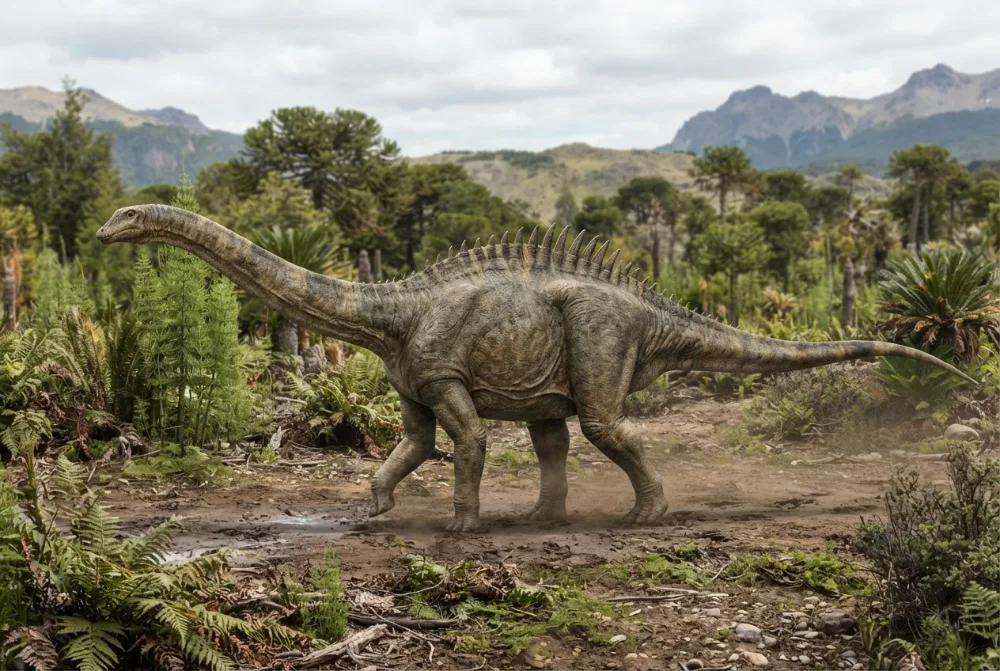
Limaysaurus
Limaysaurus was a huge, long-necked plant-eater that stomped through South America about 110 million years ago. It had tall spines on its back and used stones in its belly to help grind up food.1
Berɛ bɛn na ɛtenaa ase?
Na ne kɛseɛ yɛ sɛn?
Na ne tenten yɛ sɛn?
Na ne korɔn yɛ sɛn?
nsusuiɛ
Na ne mu yɛ duru sɛn?
 ne tenten te sɛ kaa 3 a wɔde agyina toatoa so🍌ne tenten te sɛ kwadu 83 a wɔde abɔ toatoa so
 ne mu duru bɛyɛ sɛ ɔsono🍉ne mu duru te sɛ watamɛlɔn 1400🎒ne mu duru te sɛ sukuu klaas mũ 9 mu mmofra🐻❄️ne mu duru te sɛ polar bea 16🏃anka ɔbɛtumi atu mmirika mita 100 wɔ sikɛn 21 mu (onipa a ɔyɛ ntɛm sen biara hia 9.6)
Limaysaurus kɛseɛ yɛ sɛn sɛ wode toto WO ho a?
Akontaa nko ara wɔ wo browser mu. Yɛnkora biribiara so, na yɛmmfa biribiara nkɔ baabiara.
Na ɛyɛ ntɛm sɛn?


Nsɛm a ɛyɛ anigye
Limaysaurus is one of the most complete Cretaceous sauropods ever found in South America, with one skeleton 80% complete.1
Its teeth were curved, unlike the pencil-shaped teeth of Diplodocus.1
The neural spines on its back vertebrae were tall and I-shaped, not V-shaped like some other sauropods.1
Limaysaurus is closely related to Rebbachisaurus from Africa, which suggests a land bridge once connected South America and Africa.1
It lived alongside the giant predator Giganotosaurus and the sauropod Andesaurus.1
The first fossil was found in 1988 by Lieto Tessone, who the species is named after.1
Nsɛm a wɔbisa bebree fa Limaysaurus ho
?How big was Limaysaurus?
About 15 metres (49 feet) long and weighed around 7 tonnes. That is roughly as long as a bus and as heavy as a large elephant.1
?Where was Limaysaurus found?
In Argentina, specifically in northwestern Patagonia, about 15 km southwest of Villa El Chocón in Neuquén Province.1
?When did Limaysaurus live?
It lived during the Early Cretaceous Period, about 111 to 106 million years ago.1
Ma dino ho animdefoɔ
- Nyansahu din
- Limaysaurus
- Obi a ɔtoo din
- Salgado et al. 20043
- Kuo
- Kɔn tenten
- Abusua / kuo kɛseɛ
- Rebbachisauridae3
- Nkyekyɛmu
- Sauropodomorpha > Sauropoda > Diplodocoidea3
- Abotan no mfeɛ
- mfeɛ ɔpepem 113 kɔsi 94 (Albian / Cenomanian)3
- Abotan nhyehyɛeɛ
- Candeleros, Alcântara, Huincul3
- Aman
- Argentina, Brazil3
- Fɔsil nkyerɛwee
- 6 wɔ The Paleobiology Database mu3
- Nhunumu
- The first fossils were found in 1988 by Lieto Tessone in Patagonia, Argentina. Scientists originally named it Rebbachisaurus tessonei in 1995, but later gave it its own genus Limaysaurus in 2004.1
- Wɔda so gye ho akyinnye
- Scientists still debate the exact age of the rocks where Limaysaurus was found, with estimates ranging from the early Albian to the Cenomanian.1
Baabi a nsɛm no firi
- Limaysaurus (en.wikipedia.org)
- Limaysaurus Salgado, Garrido, Cocca & Cocca, 2004 (gbif.org)
- Limaysaurus in The Paleobiology Database (CC BY 4.0): mfeɛ, mmeaeɛ, abotan nhyehyɛeɛ, nkyekyɛmu.
Asɛm biara a ɛwɔ krataafa yi so wɔ nɔma a ɛkyerɛ baabi a ɛfiri. Sɛ yɛfom biribi a, kafra, yɛyɛ dino dɔfoɔ, yɛnyɛ nyansahu nsɛmma krataa. Ka kyerɛ yɛn wɔ [email protected] na yɛbɛsiesie.
 Ɔkɔm de Rex! Dino Wiki yɛ agya bi adwuma a ɔyɛɛ maa ne babarima a ɔdɔ dino. Ɛyɛ kwa, dawurubɔ biara nni mu, akyidifoɔ biara nni mu. Mpanimfoɔ bɛtumi ama Rex aduane kakra, na aboa ama Dino Wiki atena intanɛt so.Ma Rex aduane
 Brachiosaurus
 Diplodocus
 Brontosaurus
 Argentinosaurus
 Camarasaurus
 Morosaurus
 Stegosaurus
 Iguanodon
 Archaeopteryx
 Giganotosaurus
 Microraptor
 Deinonychus