 Woyɛ dino bɛn? Nsɛmmisa agoro
 Dino ko
 Dino mmirikatuo
 Dino agodie nketewa
 Stika nwoma
 Dino TOP nhyehyɛeɛ
 Ma me nwanwa!
Berɛ bɛn na ɛtenaa ase?

Na ne kɛseɛ yɛ sɛn?
Na ne tenten yɛ sɛn?
Na ne korɔn yɛ sɛn?
nsusuiɛ
Na ne mu yɛ duru sɛn?

 ne tenten te sɛ kaa 6 a wɔde agyina toatoa so🍌ne tenten te sɛ kwadu 140 a wɔde abɔ toatoa so🍉ne mu duru te sɛ watamɛlɔn 9400🎒ne mu duru te sɛ sukuu klaas mũ 59 mu mmofra🐻❄️ne mu duru te sɛ polar bea 100🏢ne korɔn bɛtumi ahwɛ mfɛnsere mu wɔ abansoro 2 so🏃anka ɔbɛtumi atu mmirika mita 100 wɔ sikɛn 33 mu (onipa a ɔyɛ ntɛm sen biara hia 9.6)
Losillasaurus kɛseɛ yɛ sɛn sɛ wode toto WO ho a?
Akontaa nko ara wɔ wo browser mu. Yɛnkora biribiara so, na yɛmmfa biribiara nkɔ baabiara.
Na ɛyɛ ntɛm sɛn?


Nsɛm a ɛyɛ anigye
Losillasaurus had a very long humerus (upper arm bone) that measured 143 centimetres (56 inches) long, even though the specimen was not fully grown.1
The neural spines on its tail vertebrae were shaped like cutlasses, a unique feature that helps scientists identify this dinosaur.2
Losillasaurus lived during the Late Jurassic and possibly into the Early Cretaceous, about 157 to 145 million years ago.1
The largest Losillasaurus individuals may have weighed as much as 47 tonnes (52 short tons), similar to several elephants combined.1
Losillasaurus belongs to a group of sauropods called Turiasauria, which includes other giants like Turiasaurus.3
The first fossils of Losillasaurus were discovered near the village of Losilla in Valencia, Spain, by a local teacher who was also an amateur archaeologist.2
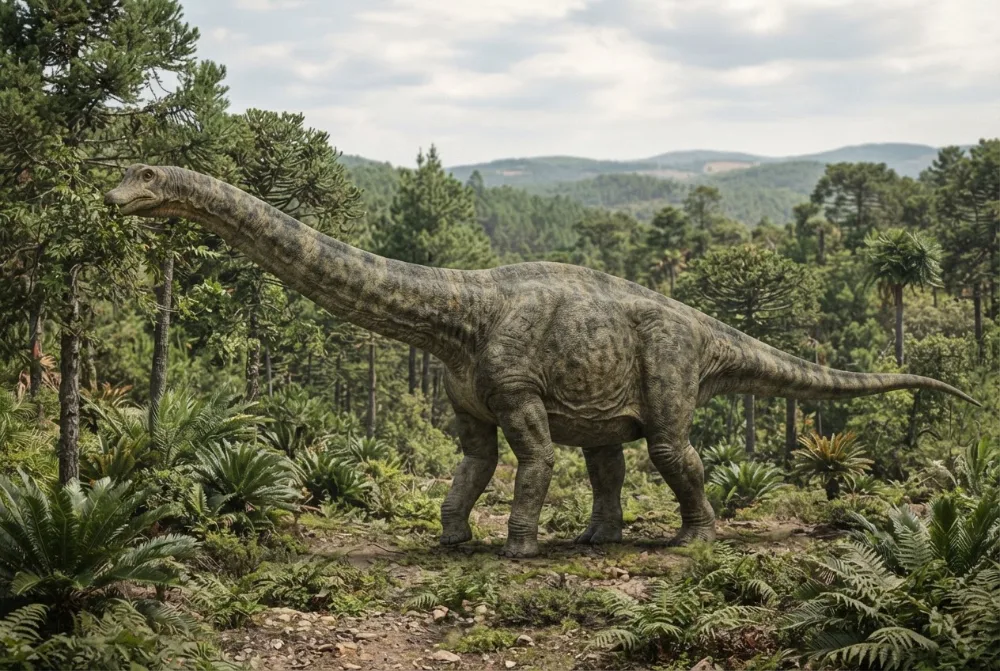
Nsɛm a wɔbisa bebree fa Losillasaurus ho
?How big was Losillasaurus?
Estimates vary. One study suggests 15 to 18 metres (49 to 59 ft) long and 12 to 15 tonnes (13 to 17 short tons). But the largest adults may have reached 25 metres (82 ft) and weighed about 47 tonnes (52 short tons).1
?What did Losillasaurus eat?
It was a plant-eater. Its heart-shaped teeth helped it eat tough plants.1
?When did Losillasaurus live?
It lived during the Late Jurassic and possibly into the Early Cretaceous, about 157 to 145 million years ago.1
?Where was Losillasaurus found?
Its fossils were discovered near the village of Losilla in Valencia, Spain, and also in the Lourinhã Formation of Portugal.1
Ma dino ho animdefoɔ
- Nyansahu din
- Losillasaurus
- Obi a ɔtoo din
- Casanovas et al. 20013
- Kuo
- Kɔn tenten
- Abusua / kuo kɛseɛ
- Turiasauria3
- Nkyekyɛmu
- Sauropodomorpha > Sauropoda3
- Abotan no mfeɛ
- mfeɛ ɔpepem 155 kɔsi 143 (Kimmeridgian / Tithonian)3
- Abotan nhyehyɛeɛ
- Villar del Arzobispo, Praia da Amoreira-Porto Novo3
- Aman
- Spania, Pɔtugal3
- Fɔsil nkyerɛwee
- 3 wɔ The Paleobiology Database mu3
- Nhunumu
- Losillasaurus was named in 2001 by Casanovas, Santafé, and Sanz based on fossils found near Losilla, Spain. The fossils were excavated between 1989 and 1995.12
- Wɔda so gye ho akyinnye
- Scientists are not sure exactly how big adult Losillasaurus could grow, because the best-known specimen is a subadult.1
Baabi a nsɛm no firi
- Losillasaurus (en.wikipedia.org)
- Losillasaurus giganteus, a new sauropod from the transitional Jurassic Cretaceous of the Los Serranos basin (Valencia, Spain) (naturalhistory.si.edu)
- Losillasaurus in The Paleobiology Database (CC BY 4.0): mfeɛ, mmeaeɛ, abotan nhyehyɛeɛ, nkyekyɛmu.
Asɛm biara a ɛwɔ krataafa yi so wɔ nɔma a ɛkyerɛ baabi a ɛfiri. Sɛ yɛfom biribi a, kafra, yɛyɛ dino dɔfoɔ, yɛnyɛ nyansahu nsɛmma krataa. Ka kyerɛ yɛn wɔ [email protected] na yɛbɛsiesie.
 Ɔkɔm de Rex! Dino Wiki yɛ agya bi adwuma a ɔyɛɛ maa ne babarima a ɔdɔ dino. Ɛyɛ kwa, dawurubɔ biara nni mu, akyidifoɔ biara nni mu. Mpanimfoɔ bɛtumi ama Rex aduane kakra, na aboa ama Dino Wiki atena intanɛt so.Ma Rex aduane
 Brachiosaurus
 Diplodocus
 Brontosaurus
 Argentinosaurus
 Camarasaurus
 Morosaurus
 Allosaurus
 Compsognathus
 Camptosaurus
 Nanosaurus
 Rhamphorhynchus
 Ceratosaurus