 Woyɛ dino bɛn? Nsɛmmisa agoro
 Dino ko
 Dino mmirikatuo
 Dino agodie nketewa
 Stika nwoma
 Dino TOP nhyehyɛeɛ
 Ma me nwanwa!
Luskhan
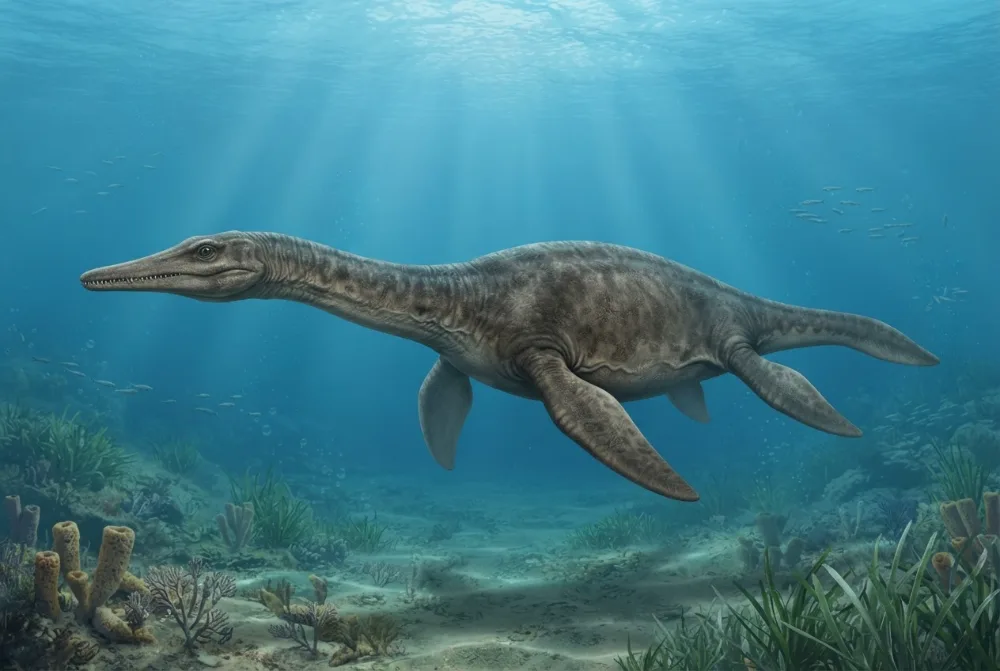
Luskhan was a plesiosaur, a marine reptile that lived in the ancient seas of what is now Russia. It had a long, slender snout and small teeth, perfect for catching soft, squishy prey like squid. Unlike many other pliosaurs, Luskhan was not a giant apex predator but a specialized hunter of small animals.12
Berɛ bɛn na ɛtenaa ase?
Na ne kɛseɛ yɛ sɛn?
Na ne tenten yɛ sɛn?
 ne tenten te sɛ nkraman 6 firi hwene kɔsi dua🍌ne tenten te sɛ kwadu 36 a wɔde abɔ toatoa so🏊anka ɔbɛtumi aguare nsuguarebea kɛseɛ (50 m) tenten wɔ sikɛn 6.9 mu
Luskhan kɛseɛ yɛ sɛn sɛ wode toto WO ho a?
Akontaa nko ara wɔ wo browser mu. Yɛnkora biribiara so, na yɛmmfa biribiara nkɔ baabiara.
Na ɛyɛ ntɛm sɛn?


Nsɛm a ɛyɛ anigye
Luskhan is known from a nearly complete, three-dimensionally preserved skeleton, which is rare for pliosaurids.12
Its name comes from Mongolian and Turkic mythology: 'luus' means water spirit and 'khan' means chief.1
Luskhan lived about 128 million years ago, during the Hauterivian stage of the Early Cretaceous.1
Unlike most other pliosaurs, Luskhan had a long, slender snout and small teeth, similar to the distantly related polycotylid plesiosaurs.12
Luskhan evolved its fish-eating features independently from polycotylids, more than 10 million years later.1
The only known specimen was discovered in 2002 by Russian paleontologist Gleb N. Uspensky on the banks of the Volga River.1
Nsɛm a wɔbisa bebree fa Luskhan ho
?How big was Luskhan?
Luskhan was about 6.5 metres (21 feet) long, which is roughly the length of a large boat.1
?What did Luskhan eat?
Luskhan ate small, soft prey like squid. Its slender snout and small teeth were perfect for catching soft animals, not large prey.13
?Was Luskhan a dinosaur?
No, Luskhan was a plesiosaur, a marine reptile that lived in the sea. It was not a dinosaur.1
Ma dino ho animdefoɔ
- Nyansahu din
- Luskhan
- Obi a ɔtoo din
- Fischer et al. 20174
- Kuo
- Plesiosɔɔ
- Abusua / kuo kɛseɛ
- Pliosauridae4
- Nkyekyɛmu
- Plesiosauria > Pliosauridae > Sauropterygia4
- Abotan no mfeɛ
- mfeɛ ɔpepem 133 kɔsi 126 (Hauterivian)4
- Aman
- Rɔhyea4
- Fɔsil nkyerɛwee
- 1 wɔ The Paleobiology Database mu4
- Nhunumu
- Luskhan was named in 2017 by a team led by Valentin Fischer, based on a skeleton found in 2002 by Gleb N. Uspensky in western Russia.14
- Wɔda so gye ho akyinnye
- Scientists are not sure exactly how large Luskhan grew, because no complete length estimate has been published.1
Baabi a nsɛm no firi
- Luskhan (en.wikipedia.org)
- Anatomy and relationships of the bizarre Early Cretaceous pliosaurid Luskhan itilensis | Zoological Journal of the Linnean Society | Oxford Academic (academic.oup.com)
- Plasticity and Convergence in the Evolution of Short-Necked Plesiosaurs: Current Biology (cell.com)
- Luskhan in The Paleobiology Database (CC BY 4.0): mfeɛ, mmeaeɛ, abotan nhyehyɛeɛ, nkyekyɛmu.
Asɛm biara a ɛwɔ krataafa yi so wɔ nɔma a ɛkyerɛ baabi a ɛfiri. Sɛ yɛfom biribi a, kafra, yɛyɛ dino dɔfoɔ, yɛnyɛ nyansahu nsɛmma krataa. Ka kyerɛ yɛn wɔ [email protected] na yɛbɛsiesie.
 Ɔkɔm de Rex! Dino Wiki yɛ agya bi adwuma a ɔyɛɛ maa ne babarima a ɔdɔ dino. Ɛyɛ kwa, dawurubɔ biara nni mu, akyidifoɔ biara nni mu. Mpanimfoɔ bɛtumi ama Rex aduane kakra, na aboa ama Dino Wiki atena intanɛt so.Ma Rex aduane
 Elasmosaurus
 Pliosaurus
 Plesiosaurus
 Cimoliasaurus
 Colymbosaurus
 Trinacromerum
 Stegosaurus
 Iguanodon
 Archaeopteryx
 Giganotosaurus
 Microraptor
 Deinonychus