 Woyɛ dino bɛn? Nsɛmmisa agoro
 Dino ko
 Dino mmirikatuo
 Dino agodie nketewa
 Stika nwoma
 Dino TOP nhyehyɛeɛ
 Ma me nwanwa!
Lusonectes
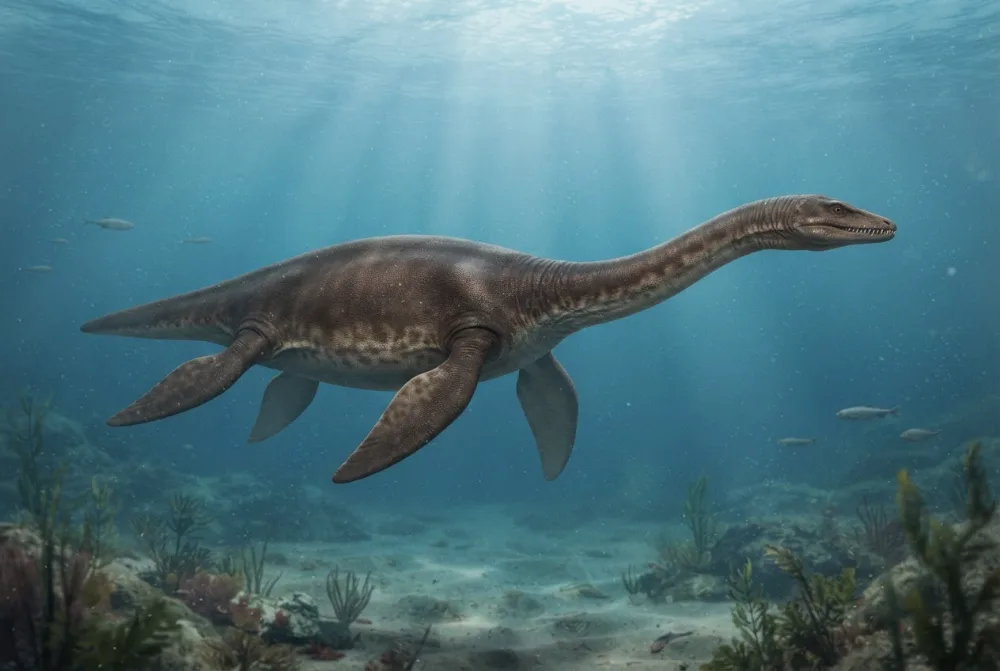
Lusonectes was a marine reptile that swam in the warm Jurassic seas near what is now Portugal. It had a long snout and sharp teeth to catch fish and other slippery prey.2
Berɛ bɛn na ɛtenaa ase?
Na ɛyɛ ntɛm sɛn?


Nsɛm a ɛyɛ anigye
Lusonectes is the only plesiosaur from Portugal that scientists can identify as a distinct species.1
Its name comes from Latin and Greek words meaning 'Portuguese swimmer'.1
The only fossil found is a partial skull, which is about 127 millimeters (5 inches) long.1
Lusonectes lived about 184 to 175 million years ago, during the Early Jurassic period.3
It was first described in 1897 by French paleontologist Henri Émile Sauvage, who thought it was a Plesiosaurus.2
Lusonectes is one of the few plesiosaurs from the Early Jurassic found outside the United Kingdom and Germany.2
Ma dino ho animdefoɔ
- Nyansahu din
- Lusonectes
- Obi a ɔtoo din
- Smith et al. 20123
- Kuo
- Plesiosɔɔ
- Abusua / kuo kɛseɛ
- Plesiosauridae3
- Nkyekyɛmu
- Plesiosauria > Sauropterygia3
- Abotan no mfeɛ
- mfeɛ ɔpepem 184 kɔsi 175 (Toarcian)3
- Abotan nhyehyɛeɛ
- São Gião3
- Aman
- Pɔtugal3
- Fɔsil nkyerɛwee
- 1 wɔ The Paleobiology Database mu3
- Nhunumu
- The fossil was first described in 1897 by French paleontologist Henri Émile Sauvage, who called it Plesiosaurus sp. In 2012, scientists Smith, Araújo, and Mateus gave it the new name Lusonectes sauvagei.2
- Wɔda so gye ho akyinnye
- Scientists are not sure whether Lusonectes was an early pliosaurid or a plesiosauroid, because the only fossil is a poorly preserved partial skull.2
Baabi a nsɛm no firi
- A new plesiosauroid from the Toarcian (Lower Jurassic) (app.pan.pl)
- The osteology, taxonomy, and phylogenetic affinities of the Early Jurassic plesiosaur Lusonectes sauvagei - PMC (pmc.ncbi.nlm.nih.gov)
- Lusonectes in The Paleobiology Database (CC BY 4.0): mfeɛ, mmeaeɛ, abotan nhyehyɛeɛ, nkyekyɛmu.
Asɛm biara a ɛwɔ krataafa yi so wɔ nɔma a ɛkyerɛ baabi a ɛfiri. Sɛ yɛfom biribi a, kafra, yɛyɛ dino dɔfoɔ, yɛnyɛ nyansahu nsɛmma krataa. Ka kyerɛ yɛn wɔ [email protected] na yɛbɛsiesie.
 Ɔkɔm de Rex! Dino Wiki yɛ agya bi adwuma a ɔyɛɛ maa ne babarima a ɔdɔ dino. Ɛyɛ kwa, dawurubɔ biara nni mu, akyidifoɔ biara nni mu. Mpanimfoɔ bɛtumi ama Rex aduane kakra, na aboa ama Dino Wiki atena intanɛt so.Ma Rex aduane
 Elasmosaurus
 Pliosaurus
 Plesiosaurus
 Cimoliasaurus
 Colymbosaurus
 Trinacromerum
 Dilophosaurus
 Stenopterygius
 Dorygnathus
 Lufengosaurus
 Scutellosaurus
 Yunnanosaurus