 Woyɛ dino bɛn? Nsɛmmisa agoro
 Dino ko
 Dino mmirikatuo
 Dino agodie nketewa
 Stika nwoma
 Dino TOP nhyehyɛeɛ
 Ma me nwanwa!
Berɛ bɛn na ɛtenaa ase?

Na ne kɛseɛ yɛ sɛn?
Na ne tenten yɛ sɛn?
Na ne korɔn yɛ sɛn?
nsusuiɛ
 ne tenten te sɛ fie agyinamoa 2.5 firi hwene kɔsi dua🍌ne tenten te sɛ kwadu 7 a wɔde abɔ toatoa so🪑ketewa ara ma ɔbɛtumi afa akonnwa ase🏃anka ɔbɛtumi atu mmirika mita 100 wɔ sikɛn 12 mu (onipa a ɔyɛ ntɛm sen biara hia 9.6)
Lycorhinus kɛseɛ yɛ sɛn sɛ wode toto WO ho a?
Akontaa nko ara wɔ wo browser mu. Yɛnkora biribiara so, na yɛmmfa biribiara nkɔ baabiara.
Na ɛyɛ ntɛm sɛn?


Nsɛm a ɛyɛ anigye
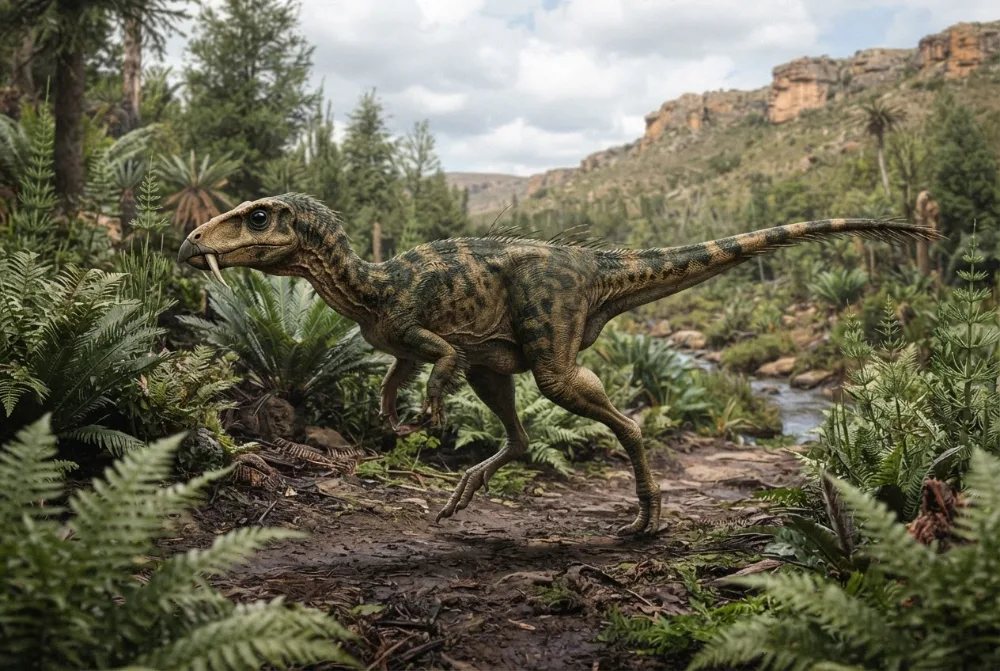
Lycorhinus was first thought to be a mammal-like reptile called a cynodont, not a dinosaur, when it was named in 1924.1
It had a beak at the front of its mouth, like a parrot, but also had long, fang-like canine teeth.1
Lycorhinus was only about 1.2 metres (4 feet) long, about the size of a large dog.1
Scientists once thought a different dinosaur called Lanasaurus was a separate species, but now they think it was the same as Lycorhinus.13
Its fossils were found in the Upper Elliot Formation, which is made of red mudstone from ancient rivers and deserts.1
Lycorhinus lived alongside the long-necked dinosaur Massospondylus and the early crocodile relative Protosuchus.1
Nsɛm a wɔbisa bebree fa Lycorhinus ho
?What did Lycorhinus eat?
Lycorhinus was a plant-eater. Its teeth show wear from chewing tough plants, and scientists think it may have also eaten fruits, roots, and nuts, like modern peccaries do.1
?How big was Lycorhinus?
Lycorhinus was about 1.2 metres (4 feet) long, which is about the size of a large dog.12
Atosɛm sɛefoɔ
Atosɛm: Because Lycorhinus had long canine teeth, some people think it was a meat-eater.
Nokorɛ: Lycorhinus was actually a plant-eater. Its teeth show wear from chewing plants, and its beak helped it crop vegetation.1
Ma dino ho animdefoɔ
- Nyansahu din
- Lycorhinus
- Obi a ɔtoo din
- Haughton 19243
- Kuo
- Ahabandifoɔ a wɔwɔ anomaa ano
- Abusua / kuo kɛseɛ
- Heterodontosauridae3
- Nkyekyɛmu
- Ornithischia > Heterodontosauridae3
- Abotan no mfeɛ
- mfeɛ ɔpepem 201 kɔsi 184 (Hettangian / Pliensbachian)3
- Abotan nhyehyɛeɛ
- Elliot, Clarens3
- Aman
- Afrika Anaafoɔ, Lesotho3
- Fɔsil nkyerɛwee
- 5 wɔ The Paleobiology Database mu3
- Wɔsan frɛ no
- Lanasaurus (din dada no nso, yɛkan no sɛ aboa korɔ no ara)3
- Nhunumu
- Lycorhinus was named in 1924 by South African paleontologist Sidney H. Haughton, based on a partial jaw found in the Upper Elliot Formation of South Africa.13
- Wɔda so gye ho akyinnye
- Scientists are not sure exactly how Lycorhinus used its long canine teeth, whether for defense, digging, or eating tough plants.1
Baabi a nsɛm no firi
- Lycorhinus (en.wikipedia.org)
- Lycorhinus | Natural History Museum (nhm.ac.uk)
- Lycorhinus in The Paleobiology Database (CC BY 4.0): mfeɛ, mmeaeɛ, abotan nhyehyɛeɛ, nkyekyɛmu.
Asɛm biara a ɛwɔ krataafa yi so wɔ nɔma a ɛkyerɛ baabi a ɛfiri. Sɛ yɛfom biribi a, kafra, yɛyɛ dino dɔfoɔ, yɛnyɛ nyansahu nsɛmma krataa. Ka kyerɛ yɛn wɔ [email protected] na yɛbɛsiesie.
 Ɔkɔm de Rex! Dino Wiki yɛ agya bi adwuma a ɔyɛɛ maa ne babarima a ɔdɔ dino. Ɛyɛ kwa, dawurubɔ biara nni mu, akyidifoɔ biara nni mu. Mpanimfoɔ bɛtumi ama Rex aduane kakra, na aboa ama Dino Wiki atena intanɛt so.Ma Rex aduane
 Iguanodon
 Tenontosaurus
 Thescelosaurus
 Zalmoxes
 Camptosaurus
 Rhabdodon
 Dilophosaurus
 Stenopterygius
 Dorygnathus
 Lufengosaurus
 Scutellosaurus
 Yunnanosaurus