 Woyɛ dino bɛn? Nsɛmmisa agoro
 Dino ko
 Dino mmirikatuo
 Dino agodie nketewa
 Stika nwoma
 Dino TOP nhyehyɛeɛ
 Ma me nwanwa!
Makhaira
Makhaira was a fierce marine reptile that swam in the ancient seas of Russia about 130 million years ago. It had special teeth that were shaped like blades and had tiny saw-like edges, perfect for slicing through big prey.12
Berɛ bɛn na ɛtenaa ase?
Na ne kɛseɛ yɛ sɛn?
Na ne tenten yɛ sɛn?
 ne tenten te sɛ nkraman 6 firi hwene kɔsi dua🍌ne tenten te sɛ kwadu 33 a wɔde abɔ toatoa so🏊anka ɔbɛtumi aguare nsuguarebea kɛseɛ (50 m) tenten wɔ sikɛn 6.7 mu
Makhaira kɛseɛ yɛ sɛn sɛ wode toto WO ho a?
Akontaa nko ara wɔ wo browser mu. Yɛnkora biribiara so, na yɛmmfa biribiara nkɔ baabiara.
Na ɛyɛ ntɛm sɛn?


Nsɛm a ɛyɛ anigye
Makhaira's teeth had serrated edges with tiny bumps that were taller than they were wide, making them look like a saw blade.1
Its tooth sockets were arranged in pairs, which is unusual for pliosaurids.1
Makhaira is the oldest known member of the brachauchenine group of pliosaurids from the Cretaceous period.1
The teeth of Makhaira look very similar to those of metriorhynchid crocodylomorphs, which were ancient crocodile-like reptiles.2
Only a partial skeleton of Makhaira has been found, including parts of the skull, teeth, vertebrae, and hip bones.1
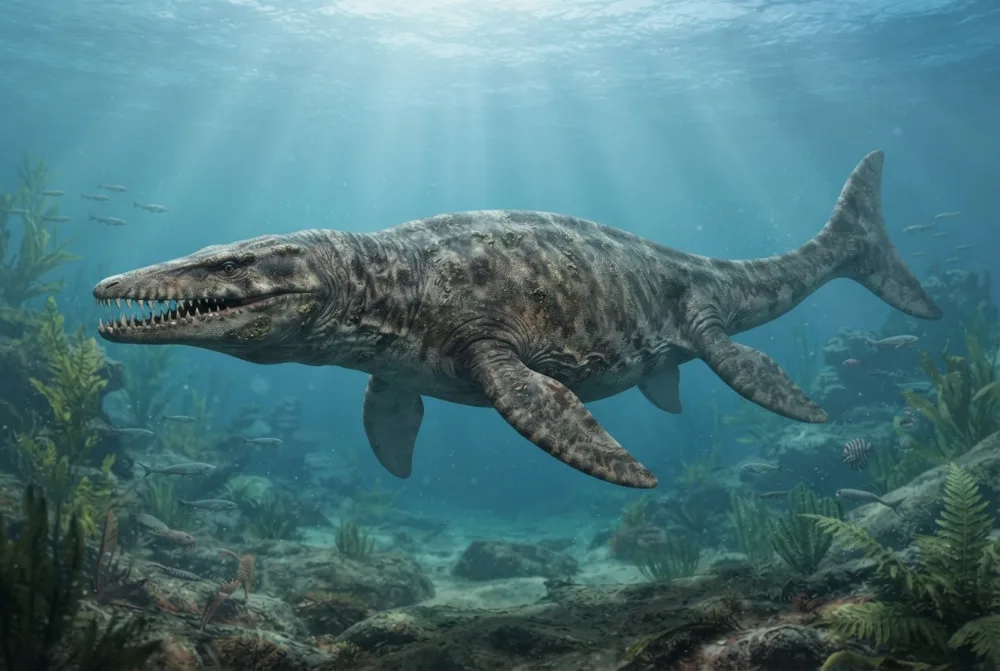
Ma dino ho animdefoɔ
- Nyansahu din
- Makhaira
- Obi a ɔtoo din
- Fischer et al. 20153
- Kuo
- Plesiosɔɔ
- Abusua / kuo kɛseɛ
- Pliosauridae3
- Nkyekyɛmu
- Plesiosauria > Pliosauridae > Sauropterygia3
- Abotan no mfeɛ
- mfeɛ ɔpepem 133 kɔsi 126 (Hauterivian)3
- Aman
- Rɔhyea3
- Fɔsil nkyerɛwee
- 1 wɔ The Paleobiology Database mu3
- Nhunumu
- Makhaira was named in 2015 by a team of scientists including V. Fischer, based on a partial skeleton found in pyrite nodules along the Volga River in Russia.31
- Wɔda so gye ho akyinnye
- Scientists are still debating whether Makhaira's serrated teeth mean it was more like Jurassic pliosaurids or if it was a unique early brachauchenine.1
Baabi a nsɛm no firi
- Peculiar macrophagous adaptations in a new Cretaceous pliosaurid (pmc.ncbi.nlm.nih.gov)
- Makhaira rossica (en.wikipedia.org)
- Makhaira in The Paleobiology Database (CC BY 4.0): mfeɛ, mmeaeɛ, abotan nhyehyɛeɛ, nkyekyɛmu.
Asɛm biara a ɛwɔ krataafa yi so wɔ nɔma a ɛkyerɛ baabi a ɛfiri. Sɛ yɛfom biribi a, kafra, yɛyɛ dino dɔfoɔ, yɛnyɛ nyansahu nsɛmma krataa. Ka kyerɛ yɛn wɔ [email protected] na yɛbɛsiesie.
 Ɔkɔm de Rex! Dino Wiki yɛ agya bi adwuma a ɔyɛɛ maa ne babarima a ɔdɔ dino. Ɛyɛ kwa, dawurubɔ biara nni mu, akyidifoɔ biara nni mu. Mpanimfoɔ bɛtumi ama Rex aduane kakra, na aboa ama Dino Wiki atena intanɛt so.Ma Rex aduane
 Elasmosaurus
 Pliosaurus
 Plesiosaurus
 Cimoliasaurus
 Colymbosaurus
 Trinacromerum
 Stegosaurus
 Iguanodon
 Archaeopteryx
 Giganotosaurus
 Microraptor
 Deinonychus