 Woyɛ dino bɛn? Nsɛmmisa agoro
 Dino ko
 Dino mmirikatuo
 Dino agodie nketewa
 Stika nwoma
 Dino TOP nhyehyɛeɛ
 Ma me nwanwa!
Berɛ bɛn na ɛtenaa ase?

Na ne kɛseɛ yɛ sɛn?
Na ne tenten yɛ sɛn?
Na ne korɔn yɛ sɛn?
nsusuiɛ
Na ne mu yɛ duru sɛn?
 ne tenten te sɛ kaa 3 a wɔde agyina toatoa so🍌ne tenten te sɛ kwadu 83 a wɔde abɔ toatoa so
 ne mu duru te sɛ asono 1.5🍉ne mu duru te sɛ watamɛlɔn 2000🎒ne mu duru te sɛ sukuu klaas mũ 12 mu mmofra🐻❄️ne mu duru te sɛ polar bea 22🏃anka ɔbɛtumi atu mmirika mita 100 wɔ sikɛn 20 mu (onipa a ɔyɛ ntɛm sen biara hia 9.6)
Malawisaurus kɛseɛ yɛ sɛn sɛ wode toto WO ho a?
Akontaa nko ara wɔ wo browser mu. Yɛnkora biribiara so, na yɛmmfa biribiara nkɔ baabiara.
Na ɛyɛ ntɛm sɛn?


Nsɛm a ɛyɛ anigye
Malawisaurus had a blunter snout than most other sauropods, which is unusual for this group.2
Its teeth were flattened, not pencil-shaped like many other sauropods. This suggests that pencil-shaped teeth evolved more than once in sauropods.2
Bony plates called ossicles have been found with Malawisaurus, which probably covered its skin like armor.1
The vertebrae in the middle of its tail were longer than those in other parts, which is a unique feature.1
Malawisaurus lived about 121 to 113 million years ago, during the Aptian stage of the Early Cretaceous.4
An isolated tooth from Brazil might belong to Malawisaurus, which would mean it also lived in South America.1
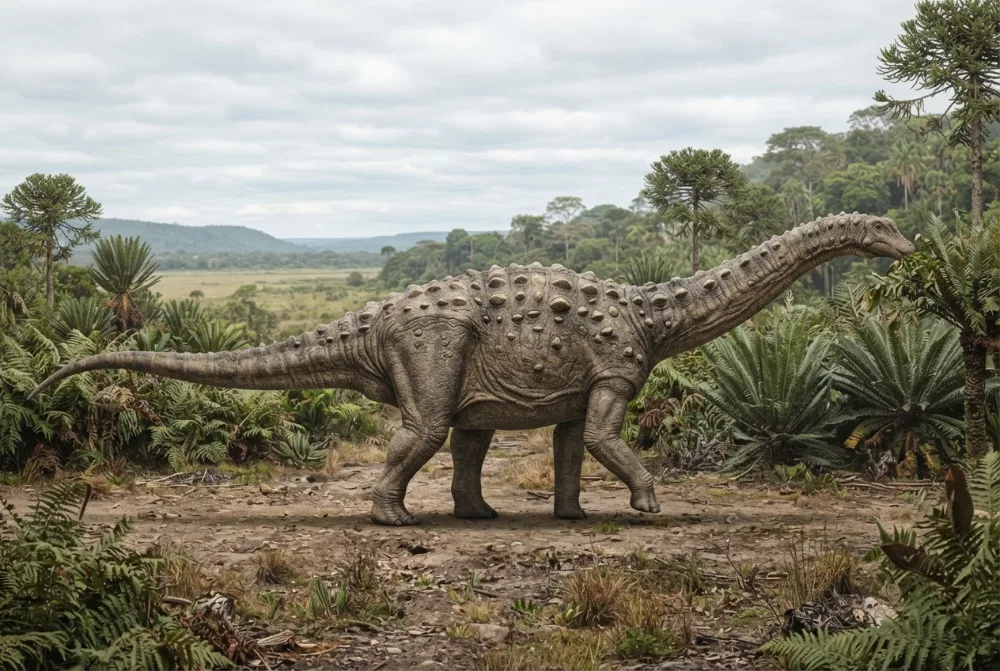
Nsɛm a wɔbisa bebree fa Malawisaurus ho
?How big was Malawisaurus?
About 15 metres (49 feet) long and weighed about 10 tonnes (11 short tons), though a 2020 estimate gave a smaller size of 11 metres (36 feet) and 2.8 tonnes (3.1 short tons).1
?Where did Malawisaurus live?
It lived in what is now northern Malawi in Africa, during the Early Cretaceous period about 121 to 112 million years ago.13
?What did Malawisaurus eat?
It was an herbivore, meaning it ate plants.3
?Did Malawisaurus have armor?
Yes, bony plates called ossicles or dermal scutes were found with the skeleton, suggesting it had armor in its skin like some other titanosaurs.1
Atosɛm sɛefoɔ
Atosɛm: Some people think Malawisaurus was a giant like Argentinosaurus.
Nokorɛ: Malawisaurus was actually one of the smaller sauropods, reaching only about 11 to 15 metres long.1
Ma dino ho animdefoɔ
- Nyansahu din
- Malawisaurus
- Obi a ɔtoo din
- Jacobs et al. 19934
- Kuo
- Kɔn tenten
- Abusua / kuo kɛseɛ
- Lithostrotia4
- Nkyekyɛmu
- Sauropodomorpha > Sauropoda > Titanosauria > Macronaria4
- Abotan no mfeɛ
- mfeɛ ɔpepem 121 kɔsi 113 (Aptian)4
- Abotan nhyehyɛeɛ
- Dinosaur Beds4
- Aman
- Malawi4
- Fɔsil nkyerɛwee
- 8 wɔ The Paleobiology Database mu4
- Nhunumu
- The first fossils were found around 1924 in Malawi, and Sidney H. Haughton named the species in 1928. In 1993, Louis L. Jacobs and colleagues gave it the new name Malawisaurus after more bones were found.1
- Wɔda so gye ho akyinnye
- Scientists are not sure if Malawisaurus lived in South America too, because only a single tooth from Brazil might belong to it.1
Baabi a nsɛm no firi
- Malawisaurus (en.wikipedia.org)
- New material of an Early Cretaceous titanosaurid sauropod dinosaur from Malawi | The Palaeontological Association (palass.org)
- Malawisaurus | Natural History Museum (nhm.ac.uk)
- Malawisaurus in The Paleobiology Database (CC BY 4.0): mfeɛ, mmeaeɛ, abotan nhyehyɛeɛ, nkyekyɛmu.
Asɛm biara a ɛwɔ krataafa yi so wɔ nɔma a ɛkyerɛ baabi a ɛfiri. Sɛ yɛfom biribi a, kafra, yɛyɛ dino dɔfoɔ, yɛnyɛ nyansahu nsɛmma krataa. Ka kyerɛ yɛn wɔ [email protected] na yɛbɛsiesie.
 Ɔkɔm de Rex! Dino Wiki yɛ agya bi adwuma a ɔyɛɛ maa ne babarima a ɔdɔ dino. Ɛyɛ kwa, dawurubɔ biara nni mu, akyidifoɔ biara nni mu. Mpanimfoɔ bɛtumi ama Rex aduane kakra, na aboa ama Dino Wiki atena intanɛt so.Ma Rex aduane
 Brachiosaurus
 Diplodocus
 Brontosaurus
 Argentinosaurus
 Camarasaurus
 Morosaurus
 Stegosaurus
 Iguanodon
 Archaeopteryx
 Giganotosaurus
 Microraptor
 Deinonychus