 Woyɛ dino bɛn? Nsɛmmisa agoro
 Dino ko
 Dino mmirikatuo
 Dino agodie nketewa
 Stika nwoma
 Dino TOP nhyehyɛeɛ
 Ma me nwanwa!
Berɛ bɛn na ɛtenaa ase?

Na ne kɛseɛ yɛ sɛn?
Na ne tenten yɛ sɛn?
Na ne korɔn yɛ sɛn?
nsusuiɛ
Na ne mu yɛ duru sɛn?
Manidens kɛseɛ yɛ sɛn sɛ wode toto WO ho a?
Akontaa nko ara wɔ wo browser mu. Yɛnkora biribiara so, na yɛmmfa biribiara nkɔ baabiara.
Na ɛyɛ ntɛm sɛn?


Nsɛm a ɛyɛ anigye
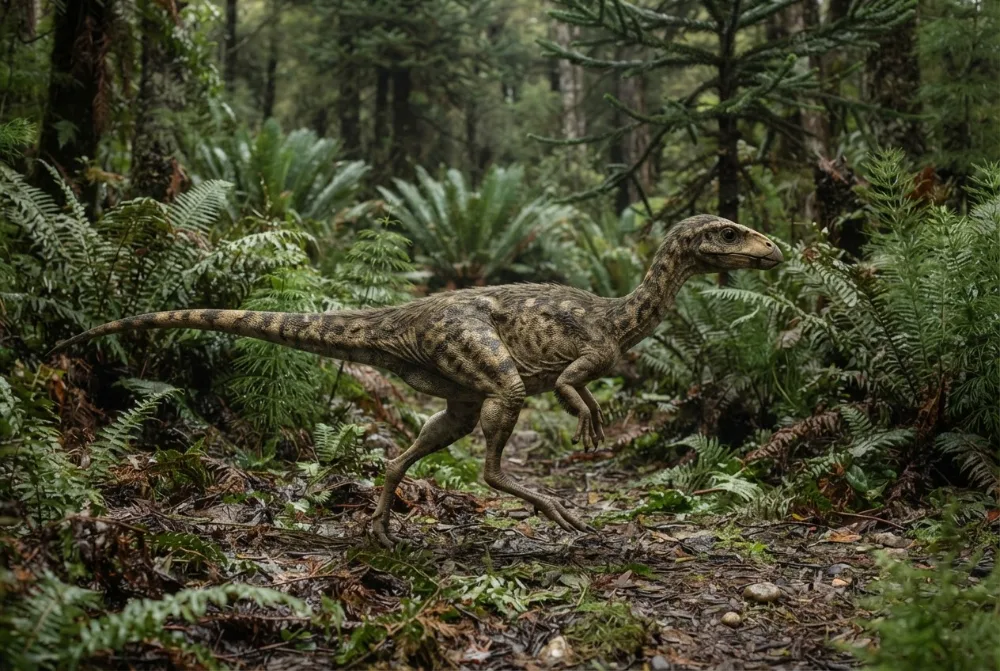
Manidens lived during the Middle Jurassic, about 171 to 167 million years ago, in a time when South America had many lakes and forests.1
Its name comes from the Latin words for 'hand' and 'tooth' because its last tooth looked like a tiny hand with fingers.1
Manidens is a heterodontosaurid, a group of small ornithischian dinosaurs that often had different types of teeth for different jobs.1
The only known skeleton of Manidens includes parts of the skull, jaws, backbone, shoulder, and hips, but not the tail or legs.1
Scientists think Manidens shows an intermediate step in the evolution of plant-eating: it had high tooth crowns but not the heavy wear facets that later relatives had.1
Manidens was one of the few ornithischian dinosaurs known from the Jurassic of South America, making it a rare find.1
Nsɛm a wɔbisa bebree fa Manidens ho
?How big was Manidens?
Manidens was about 60 cm (2.0 ft) long and weighed around 500 g (1.1 lb), smaller than later heterodontosaurids.2
?What did Manidens eat?
Manidens was a plant-eater. It had high-crowned teeth for chewing plants, but it lacked the heavy wear facets seen in more advanced relatives.21
?When did Manidens live?
Manidens lived during the Early Jurassic, about 179 to 178 million years ago, in what is now Argentina.2
?Did Manidens have feathers?
Scientists think it might have. A close relative called Tianyulong had filamentous structures, so Manidens may have had them too.2
Ma dino ho animdefoɔ
- Nyansahu din
- Manidens
- Obi a ɔtoo din
- Pol et al. 20113
- Kuo
- Ahabandifoɔ a wɔwɔ anomaa ano
- Abusua / kuo kɛseɛ
- Heterodontosauridae3
- Nkyekyɛmu
- Ornithischia > Heterodontosauridae3
- Abotan no mfeɛ
- mfeɛ ɔpepem 184 kɔsi 171 (Toarcian / Aalenian)3
- Abotan nhyehyɛeɛ
- Cañadón Asfalto3
- Aman
- Argentina3
- Fɔsil nkyerɛwee
- 2 wɔ The Paleobiology Database mu3
- Nhunumu
- Manidens was named in 2011 by Diego Pol, Oliver Rauhut, and Marcos Becerra. The fossils were found at the Queso Rallado site near Cerro Cóndor, Argentina, in the Cañadón Asfalto Formation.13
- Wɔda so gye ho akyinnye
- Scientists are still debating exactly how Manidens chewed its food, since its teeth were high and close together but lacked the heavy wear seen in more advanced plant-eaters.1
Baabi a nsɛm no firi
- A Middle Jurassic heterodontosaurid dinosaur from Patagonia and the evolution of heterodontosaurids (staff.mef.org.ar)
- Manidens (en.wikipedia.org)
- Manidens in The Paleobiology Database (CC BY 4.0): mfeɛ, mmeaeɛ, abotan nhyehyɛeɛ, nkyekyɛmu.
Asɛm biara a ɛwɔ krataafa yi so wɔ nɔma a ɛkyerɛ baabi a ɛfiri. Sɛ yɛfom biribi a, kafra, yɛyɛ dino dɔfoɔ, yɛnyɛ nyansahu nsɛmma krataa. Ka kyerɛ yɛn wɔ [email protected] na yɛbɛsiesie.
 Ɔkɔm de Rex! Dino Wiki yɛ agya bi adwuma a ɔyɛɛ maa ne babarima a ɔdɔ dino. Ɛyɛ kwa, dawurubɔ biara nni mu, akyidifoɔ biara nni mu. Mpanimfoɔ bɛtumi ama Rex aduane kakra, na aboa ama Dino Wiki atena intanɛt so.Ma Rex aduane
 Iguanodon
 Tenontosaurus
 Thescelosaurus
 Zalmoxes
 Camptosaurus
 Rhabdodon
 Dilophosaurus
 Stenopterygius
 Dorygnathus
 Lufengosaurus
 Scutellosaurus
 Yunnanosaurus