 Woyɛ dino bɛn? Nsɛmmisa agoro
 Dino ko
 Dino mmirikatuo
 Dino agodie nketewa
 Stika nwoma
 Dino TOP nhyehyɛeɛ
 Ma me nwanwa!
Microcleidus
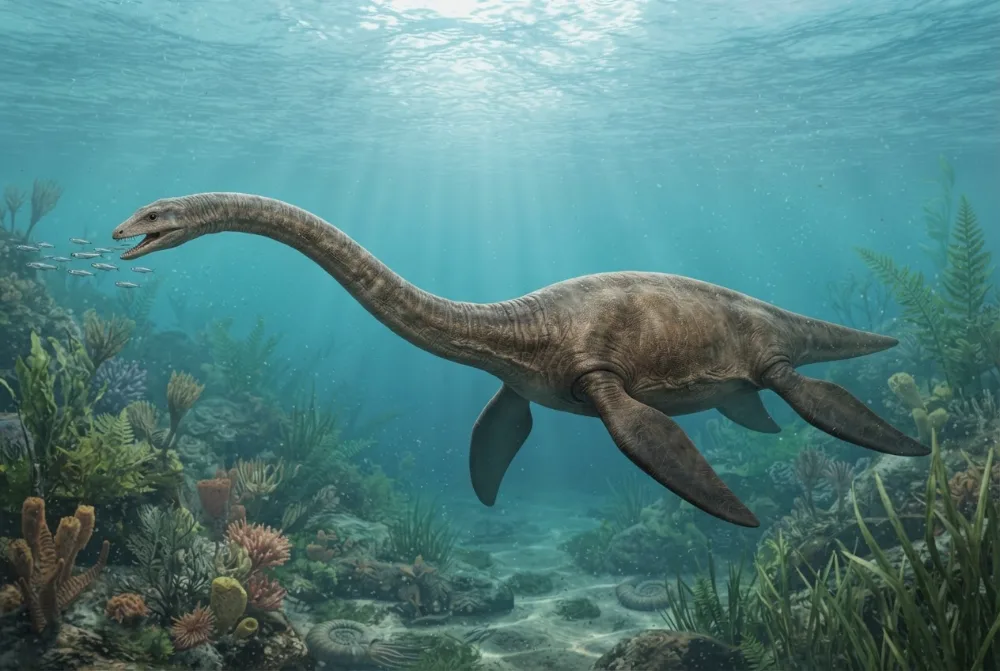
Microcleidus was a long-necked marine reptile that swam in the warm Jurassic seas. It had a small head and a very long neck with 38 to 39 bones. It used its flippers to paddle through the water and catch fish.1
Berɛ bɛn na ɛtenaa ase?
Na ne kɛseɛ yɛ sɛn?
Na ne tenten yɛ sɛn?
Na ne mu yɛ duru sɛn?
 ne tenten te sɛ nkraman 5 firi hwene kɔsi dua🍌ne tenten te sɛ kwadu 28 a wɔde abɔ toatoa so🍉ne mu duru te sɛ watamɛlɔn 130🧸ne mu duru te sɛ nkɔkɔaa sukuu mmofra 34🎒ne mu duru te sɛ sukuu mmofra 20🏊anka ɔbɛtumi aguare nsuguarebea kɛseɛ (50 m) tenten wɔ sikɛn 6.2 mu
Microcleidus kɛseɛ yɛ sɛn sɛ wode toto WO ho a?
Akontaa nko ara wɔ wo browser mu. Yɛnkora biribiara so, na yɛmmfa biribiara nkɔ baabiara.
Na ɛyɛ ntɛm sɛn?


Nsɛm a ɛyɛ anigye
Microcleidus had a small head only about 23 centimetres (9 inches) long, even though its body could reach over 5 metres.1
Its neck contained 38 to 39 vertebrae, making it a very long-necked plesiosaur.1
Scientists have named at least five species of Microcleidus, including M. homalospondylus and M. macropterus.1
One species, Microcleidus tournemirensis, was once thought to belong to a different genus called Occitanosaurus.5
Microcleidus lived during the Toarcian age of the Jurassic Period, about 184 to 175 million years ago.2
Its fossils have been found in the Alum Shale of England and the Posidonia Shale of Germany.5
The first Microcleidus fossils were originally described as Plesiosaurus homalospondylus by Richard Owen in 1865.1
Nsɛm a wɔbisa bebree fa Microcleidus ho
?How big was Microcleidus?
The largest species, Microcleidus homalospondylus, measured about 5.1 metres (17 feet) long and weighed around 650 kilograms (1,430 pounds). Other species were smaller, like M. tournemirensis at about 4 metres (13 feet) and 300 kilograms (660 pounds).3
?What did Microcleidus eat?
Microcleidus was a carnivore that likely ate fish and other small sea creatures. It used its long neck and small head to snap up prey while swimming.5
Ma dino ho animdefoɔ
- Nyansahu din
- Microcleidus
- Obi a ɔtoo din
- Watson 19095
- Kuo
- Plesiosɔɔ
- Abusua / kuo kɛseɛ
- Microcleididae5
- Nkyekyɛmu
- Plesiosauria > Sauropterygia5
- Abotan no mfeɛ
- mfeɛ ɔpepem 184 kɔsi 175 (Toarcian)5
- Abotan nhyehyɛeɛ
- Alum Shale, Posidonia Shale5
- Aman
- Engiresi, Gyaaman, Frɛnse, Luxembourg5
- Fɔsil nkyerɛwee
- 9 wɔ The Paleobiology Database mu5
- Wɔsan frɛ no
- Occitanosaurus (din dada no nso, yɛkan no sɛ aboa korɔ no ara)5
- Nhunumu
- The name Microcleidus was given by D. M. S. Watson in 1909 for fossils that had earlier been called Plesiosaurus. The first species, M. homalospondylus, was originally described by Richard Owen in 1865.51
- Wɔda so gye ho akyinnye
- Scientists are not sure whether some species, like Hydrorion brachypterygius, should really be placed in Microcleidus.1
Baabi a nsɛm no firi
- Microcleidus, Plesiosaur Directory (plesiosauria.com)
- PBDB Taxon (paleobiodb.org)
- Microcleidus (en.wikipedia.org)
- Microcleidus (en.wikipedia.org)
- Microcleidus in The Paleobiology Database (CC BY 4.0): mfeɛ, mmeaeɛ, abotan nhyehyɛeɛ, nkyekyɛmu.
Asɛm biara a ɛwɔ krataafa yi so wɔ nɔma a ɛkyerɛ baabi a ɛfiri. Sɛ yɛfom biribi a, kafra, yɛyɛ dino dɔfoɔ, yɛnyɛ nyansahu nsɛmma krataa. Ka kyerɛ yɛn wɔ [email protected] na yɛbɛsiesie.
 Ɔkɔm de Rex! Dino Wiki yɛ agya bi adwuma a ɔyɛɛ maa ne babarima a ɔdɔ dino. Ɛyɛ kwa, dawurubɔ biara nni mu, akyidifoɔ biara nni mu. Mpanimfoɔ bɛtumi ama Rex aduane kakra, na aboa ama Dino Wiki atena intanɛt so.Ma Rex aduane
 Elasmosaurus
 Pliosaurus
 Plesiosaurus
 Cimoliasaurus
 Colymbosaurus
 Trinacromerum
 Dilophosaurus
 Stenopterygius
 Dorygnathus
 Lufengosaurus
 Scutellosaurus
 Yunnanosaurus