 Woyɛ dino bɛn? Nsɛmmisa agoro
 Dino ko
 Dino mmirikatuo
 Dino agodie nketewa
 Stika nwoma
 Dino TOP nhyehyɛeɛ
 Ma me nwanwa!
Berɛ bɛn na ɛtenaa ase?

Na ne kɛseɛ yɛ sɛn?
Na ne korɔn yɛ sɛn?
Na ne mu yɛ duru sɛn?
Mirarce kɛseɛ yɛ sɛn sɛ wode toto WO ho a?
Akontaa nko ara wɔ wo browser mu. Yɛnkora biribiara so, na yɛmmfa biribiara nkɔ baabiara.
Na ɛyɛ ntɛm sɛn?


Nsɛm a ɛyɛ anigye
Its fossil was discovered in 1992 but was not officially named until 2018.1
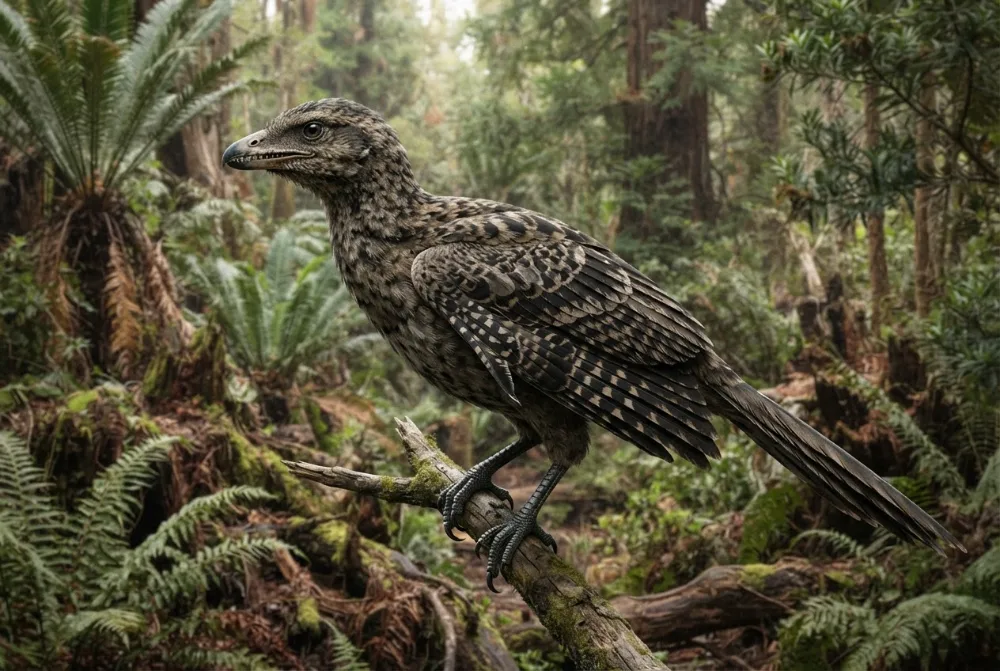
Mirarce had quill knobs on its ulna bone, which are bumps that help anchor flight feathers. This is the first time such knobs have been found in enantiornithine birds.21
It had a deeply keeled sternum (breastbone) and a narrow furcula (wishbone), features that improved its flight abilities.2
Mirarce lived during the Campanian age of the Late Cretaceous, about 76 to 74 million years ago.1
Its name combines Latin 'mirus' (wonderful) and the Greek messenger Arke, referring to its well-preserved flight-related features.1
Nsɛm a wɔbisa bebree fa Mirarce ho
?Was Mirarce a dinosaur?
Yes, Mirarce was a bird, and birds are a type of dinosaur called avialan theropods. So it was a dinosaur, but not a non-avian dinosaur like T. rex.1
?How big was Mirarce?
Mirarce was about the size of a turkey vulture, growing to around 60 cm tall. It weighed about 0.45 kg.13
?What did Mirarce eat?
Mirarce was a raptorial predator, meaning it hunted and ate other animals. It had powerful talons and leg tendons, similar to modern birds of prey.1
?When did Mirarce live?
Mirarce lived during the Campanian age of the Late Cretaceous, about 76 to 74 million years ago.1
Ma dino ho animdefoɔ
- Nyansahu din
- Mirarce
- Obi a ɔtoo din
- Atterholt et al. 20184
- Kuo
- Nnomaa a wɔdii kan
- Abusua / kuo kɛseɛ
- Avisauridae4
- Nkyekyɛmu
- Theropoda > Avialae4
- Abotan no mfeɛ
- mfeɛ ɔpepem 84 kɔsi 72 (Campanian)4
- Abotan nhyehyɛeɛ
- Kaiparowits4
- Aman
- Amerika4
- Fɔsil nkyerɛwee
- 1 wɔ The Paleobiology Database mu4
- Nhunumu
- The fossil was collected in 1992 by Howard Hutchison in Utah. It was studied and named by Jesse Atterholt and colleagues in 2018, who called it Mirarce eatoni in honor of paleontologist Jeffrey Eaton.1
- Wɔda so gye ho akyinnye
- Scientists are still debating how enantiornithine birds like Mirarce compare to modern birds in terms of flight abilities and evolutionary relationships.2
Baabi a nsɛm no firi
- Mirarce (en.wikipedia.org)
- The most complete enantiornithine from North America and a phylogenetic analysis of the Avisauridae (pmc.ncbi.nlm.nih.gov)
- Rare fossil bird deepens mystery of avian extinctions (vcresearch.berkeley.edu)
- Mirarce in The Paleobiology Database (CC BY 4.0): mfeɛ, mmeaeɛ, abotan nhyehyɛeɛ, nkyekyɛmu.
Asɛm biara a ɛwɔ krataafa yi so wɔ nɔma a ɛkyerɛ baabi a ɛfiri. Sɛ yɛfom biribi a, kafra, yɛyɛ dino dɔfoɔ, yɛnyɛ nyansahu nsɛmma krataa. Ka kyerɛ yɛn wɔ [email protected] na yɛbɛsiesie.
 Ɔkɔm de Rex! Dino Wiki yɛ agya bi adwuma a ɔyɛɛ maa ne babarima a ɔdɔ dino. Ɛyɛ kwa, dawurubɔ biara nni mu, akyidifoɔ biara nni mu. Mpanimfoɔ bɛtumi ama Rex aduane kakra, na aboa ama Dino Wiki atena intanɛt so.Ma Rex aduane
 Archaeopteryx
 Hesperornis
 Ichthyornis
 Baptornis
 Jurapteryx
 Gobipteryx
 Tyrannosaurus
 Triceratops
 Velociraptor
 Spinosaurus
 Ankylosaurus
 Parasaurolophus