 Woyɛ dino bɛn? Nsɛmmisa agoro
 Dino ko
 Dino mmirikatuo
 Dino agodie nketewa
 Stika nwoma
 Dino TOP nhyehyɛeɛ
 Ma me nwanwa!
Muraenosaurus
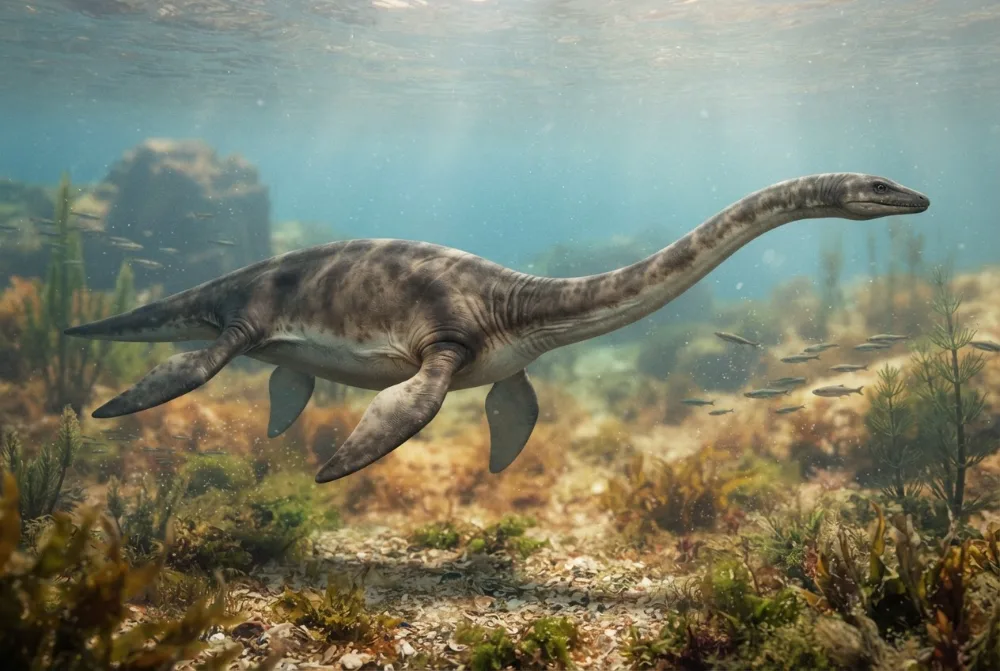
Muraenosaurus was a plesiosaur with a very long neck and a tiny head. It swam in warm, shallow seas during the Jurassic Period. Its name means 'eel lizard' because its neck looked like an eel's body.1
Berɛ bɛn na ɛtenaa ase?
Na ne kɛseɛ yɛ sɛn?
Na ne tenten yɛ sɛn?
 ne tenten te sɛ nkraman 5 firi hwene kɔsi dua🍌ne tenten te sɛ kwadu 29 a wɔde abɔ toatoa so🏊anka ɔbɛtumi aguare nsuguarebea kɛseɛ (50 m) tenten wɔ sikɛn 6.4 mu
Muraenosaurus kɛseɛ yɛ sɛn sɛ wode toto WO ho a?
Akontaa nko ara wɔ wo browser mu. Yɛnkora biribiara so, na yɛmmfa biribiara nkɔ baabiara.
Na ɛyɛ ntɛm sɛn?


Nsɛm a ɛyɛ anigye
Muraenosaurus had 44 bones in its neck, which made up most of its 66 backbone bones before the hips.1
Its head was only about 37 centimeters (15 inches) long, very small compared to its 5.2-meter (17-foot) body.1
The first Muraenosaurus fossil was collected by Charles E. Leeds and described by Harry Seeley in 1874.1
Muraenosaurus lived in a warm, shallow sea that was less than 50 meters deep and about 20 °C (68 °F).1
Scientists think Muraenosaurus may have swallowed stones called gastroliths to help grind up food or to stop it from rolling in the water.1
Muraenosaurus was first thought to be an elasmosaur, but now scientists place it in the family Cryptoclididae.1
Nsɛm a wɔbisa bebree fa Muraenosaurus ho
?How long was Muraenosaurus?
About 5.2 metres (17 feet) long.1
?What did Muraenosaurus eat?
It probably ate fish and cephalopods (like squid). Scientists think it may have swallowed stones to help grind up its food.1
?Could Muraenosaurus swim?
Yes, it was a marine reptile that swam in warm, shallow seas. Its long neck and flippers helped it move through the water.1
Atosɛm sɛefoɔ
Atosɛm: Some people think Muraenosaurus was a dinosaur.
Nokorɛ: Muraenosaurus was a plesiosaur, a marine reptile that lived in the sea, not a dinosaur.1
Ma dino ho animdefoɔ
- Nyansahu din
- Muraenosaurus
- Obi a ɔtoo din
- Seeley 18742
- Kuo
- Plesiosɔɔ
- Abusua / kuo kɛseɛ
- Cryptoclididae2
- Nkyekyɛmu
- Plesiosauria > Sauropterygia2
- Abotan no mfeɛ
- mfeɛ ɔpepem 165 kɔsi 155 (Callovian / Oxfordian)2
- Abotan nhyehyɛeɛ
- Oxford Clay, Lajas, Argiles de Montaubert2
- Aman
- Engiresi, Argentina, Frɛnse2
- Fɔsil nkyerɛwee
- 11 wɔ The Paleobiology Database mu2
- Wɔsan frɛ no
- Tremamesacleis (din dada no nso, yɛkan no sɛ aboa korɔ no ara)2
- Nhunumu
- The first Muraenosaurus fossil was found by Charles E. Leeds in the Oxford Clay of England. Harry Seeley named it Muraenosaurus leedsii in 1874.1
- Wɔda so gye ho akyinnye
- Scientists are not sure exactly how Muraenosaurus used its long neck to catch food. It may have attacked fish from below or grazed on the seafloor.1
Baabi a nsɛm no firi
- Muraenosaurus (en.wikipedia.org)
- Muraenosaurus in The Paleobiology Database (CC BY 4.0): mfeɛ, mmeaeɛ, abotan nhyehyɛeɛ, nkyekyɛmu.
Asɛm biara a ɛwɔ krataafa yi so wɔ nɔma a ɛkyerɛ baabi a ɛfiri. Sɛ yɛfom biribi a, kafra, yɛyɛ dino dɔfoɔ, yɛnyɛ nyansahu nsɛmma krataa. Ka kyerɛ yɛn wɔ [email protected] na yɛbɛsiesie.
 Ɔkɔm de Rex! Dino Wiki yɛ agya bi adwuma a ɔyɛɛ maa ne babarima a ɔdɔ dino. Ɛyɛ kwa, dawurubɔ biara nni mu, akyidifoɔ biara nni mu. Mpanimfoɔ bɛtumi ama Rex aduane kakra, na aboa ama Dino Wiki atena intanɛt so.Ma Rex aduane
 Elasmosaurus
 Pliosaurus
 Plesiosaurus
 Cimoliasaurus
 Colymbosaurus
 Trinacromerum
 Brachiosaurus
 Diplodocus
 Allosaurus
 Brontosaurus
 Compsognathus
 Camarasaurus