 Woyɛ dino bɛn? Nsɛmmisa agoro
 Dino ko
 Dino mmirikatuo
 Dino agodie nketewa
 Stika nwoma
 Dino TOP nhyehyɛeɛ
 Ma me nwanwa!
Nichollsia
Nichollssaura was a small, fast-swimming marine reptile that lived in the sea that once covered Alberta, Canada. It was a plesiosaur, not a dinosaur, and had a long neck and four flippers for paddling through the water. This creature helps scientists fill in a big 40-million-year gap in the plesiosaur fossil record of North America.1
Berɛ bɛn na ɛtenaa ase?
Na ne kɛseɛ yɛ sɛn?
Na ne tenten yɛ sɛn?
Na ne mu yɛ duru sɛn?
 ne tenten te sɛ nkraman 3 firi hwene kɔsi dua🍌ne tenten te sɛ kwadu 16 a wɔde abɔ toatoa so🍉ne mu duru te sɛ watamɛlɔn 27🧸ne mu duru te sɛ nkɔkɔaa sukuu mmofra 7🎒ne mu duru te sɛ sukuu mmofra 4🏊anka ɔbɛtumi aguare nsuguarebea kɛseɛ (50 m) tenten wɔ sikɛn 6.4 mu
Nichollsia kɛseɛ yɛ sɛn sɛ wode toto WO ho a?
Akontaa nko ara wɔ wo browser mu. Yɛnkora biribiara so, na yɛmmfa biribiara nkɔ baabiara.
Na ɛyɛ ntɛm sɛn?


Nsɛm a ɛyɛ anigye
The fossil was discovered accidentally by giant electric shovel operators in an oilsand mine. The shovel cut off some bones, but the rest of the skeleton was almost complete.1
This plesiosaur was named after Dr. Betsy Nicholls, a famous paleontologist. The first name Nichollsia was already used for a type of isopod, so scientists changed it to Nichollssaura.1
Nichollssaura had 165 gastroliths (stomach stones) inside it. The stones were smooth and round, probably swallowed to help grind food.1
The stomach stones came from rocks that were 8 to 10 million years older than the plesiosaur itself. This suggests Nichollssaura may have swum west to collect pebbles from ancient beaches.1
It lived about 110 million years ago in the Boreal Sea, a warm shallow sea that covered parts of North America.1
The holotype specimen is on display at the Royal Tyrrell Museum in Alberta, Canada.1
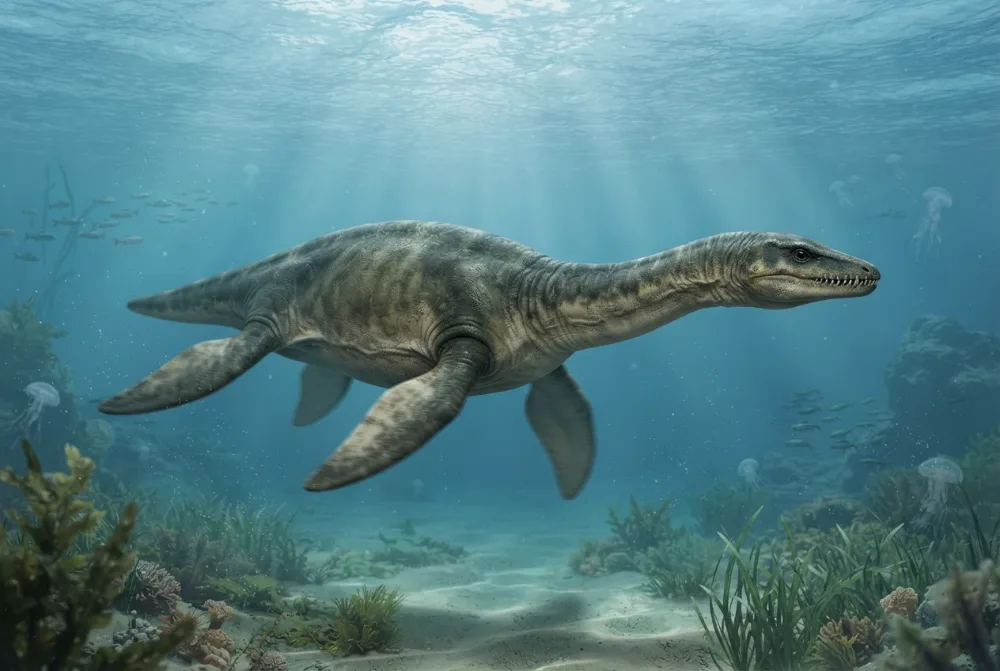
Ma dino ho animdefoɔ
- Nyansahu din
- Nichollsia
- Obi a ɔtoo din
- Druckenmiller and Russell 20082
- Kuo
- Plesiosɔɔ
- Abusua / kuo kɛseɛ
- Leptocleididae2
- Nkyekyɛmu
- Plesiosauria > Sauropterygia2
- Abotan no mfeɛ
- mfeɛ ɔpepem 113 kɔsi 100 (Albian)2
- Fɔsil nkyerɛwee
- 1 wɔ The Paleobiology Database mu2
- Nhunumu
- The specimen was found in 1994 by shovel operators Greg Fisher and Lorne Cundal at a Syncrude oilsand mine in Alberta. It was named Nichollsia borealis by Druckenmiller and Russell in 2008, but the name was changed to Nichollssaura in 2009 because Nichollsia was already taken.12
Baabi a nsɛm no firi
- Nichollssaura (en.wikipedia.org)
- Nichollsia in The Paleobiology Database (CC BY 4.0): mfeɛ, mmeaeɛ, abotan nhyehyɛeɛ, nkyekyɛmu.
Asɛm biara a ɛwɔ krataafa yi so wɔ nɔma a ɛkyerɛ baabi a ɛfiri. Sɛ yɛfom biribi a, kafra, yɛyɛ dino dɔfoɔ, yɛnyɛ nyansahu nsɛmma krataa. Ka kyerɛ yɛn wɔ [email protected] na yɛbɛsiesie.
 Ɔkɔm de Rex! Dino Wiki yɛ agya bi adwuma a ɔyɛɛ maa ne babarima a ɔdɔ dino. Ɛyɛ kwa, dawurubɔ biara nni mu, akyidifoɔ biara nni mu. Mpanimfoɔ bɛtumi ama Rex aduane kakra, na aboa ama Dino Wiki atena intanɛt so.Ma Rex aduane
 Elasmosaurus
 Pliosaurus
 Plesiosaurus
 Cimoliasaurus
 Colymbosaurus
 Trinacromerum
 Stegosaurus
 Iguanodon
 Archaeopteryx
 Giganotosaurus
 Microraptor
 Deinonychus