 Woyɛ dino bɛn? Nsɛmmisa agoro
 Dino ko
 Dino mmirikatuo
 Dino agodie nketewa
 Stika nwoma
 Dino TOP nhyehyɛeɛ
 Ma me nwanwa!
Nichollssaura
Nichollssaura was a small, fast-swimming marine reptile that lived in the ancient seas of North America. It had a long neck, four flippers, and a mouth full of sharp teeth for catching fish.1
Berɛ bɛn na ɛtenaa ase?
Na ne kɛseɛ yɛ sɛn?
Na ne tenten yɛ sɛn?
Na ne mu yɛ duru sɛn?
 ne tenten te sɛ nkraman 3 firi hwene kɔsi dua🍌ne tenten te sɛ kwadu 16 a wɔde abɔ toatoa so🍉ne mu duru te sɛ watamɛlɔn 27🧸ne mu duru te sɛ nkɔkɔaa sukuu mmofra 7🎒ne mu duru te sɛ sukuu mmofra 4🏊anka ɔbɛtumi aguare nsuguarebea kɛseɛ (50 m) tenten wɔ sikɛn 6.4 mu
Nichollssaura kɛseɛ yɛ sɛn sɛ wode toto WO ho a?
Akontaa nko ara wɔ wo browser mu. Yɛnkora biribiara so, na yɛmmfa biribiara nkɔ baabiara.
Na ɛyɛ ntɛm sɛn?


Nsɛm a ɛyɛ anigye
Nichollssaura fills a 40-million-year gap in the fossil record of North American plesiosaurs, meaning no plesiosaur fossils from that time were known before its discovery.1
The only known skeleton was accidentally discovered by a 100-ton electric shovel operator in an oilsand mine near Fort McMurray, Alberta, in 1994.1
The fossil is almost complete, missing only a few bones like the left forelimb and some ribs, which were lost when the shovel hit the skeleton.1
Inside the stomach of the Nichollssaura fossil, scientists found 165 gastroliths (stomach stones) made of chert and quartzite, which may have helped it digest food.1
The gastroliths in Nichollssaura are similar to those found in another plesiosaur from the same area, Wapuskanectes, suggesting both animals collected stones from the same ancient beaches.1
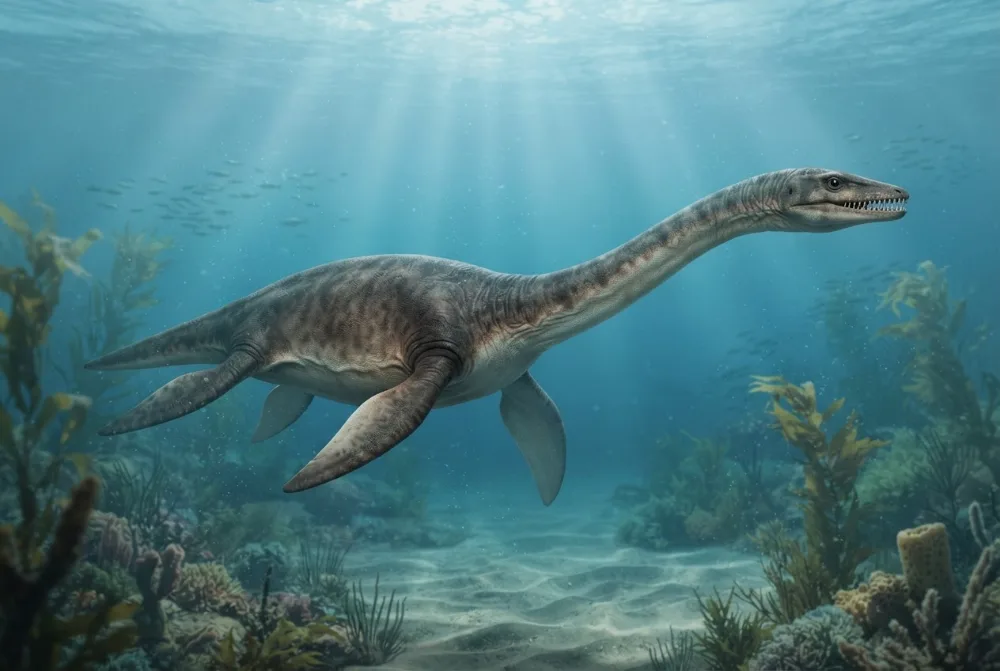
Ma dino ho animdefoɔ
- Nyansahu din
- Nichollssaura
- Obi a ɔtoo din
- Druckenmiller and Russell 20092
- Kuo
- Plesiosɔɔ
- Abusua / kuo kɛseɛ
- Leptocleididae2
- Nkyekyɛmu
- Plesiosauria > Sauropterygia2
- Abotan no mfeɛ
- mfeɛ ɔpepem 113 kɔsi 100 (Albian)2
- Abotan nhyehyɛeɛ
- Clearwater2
- Aman
- Kanada2
- Fɔsil nkyerɛwee
- 1 wɔ The Paleobiology Database mu2
- Nhunumu
- The fossil was discovered in 1994 by shovel operators Greg Fisher and Lorne Cundal in an oilsand mine near Fort McMurray, Alberta. It was named Nichollsia borealis in 2008 by Druckenmiller and Russell, but renamed Nichollssaura borealis in 2009 because the original name was already taken.12
- Wɔda so gye ho akyinnye
- Scientists are not sure exactly where Nichollssaura collected its stomach stones, but they think it may have swum westward to gather rocks from the Cadomin Formation, which is 8 to 10 million years older than the plesiosaur itself.1
Baabi a nsɛm no firi
- Nichollssaura (en.wikipedia.org)
- Nichollssaura in The Paleobiology Database (CC BY 4.0): mfeɛ, mmeaeɛ, abotan nhyehyɛeɛ, nkyekyɛmu.
Asɛm biara a ɛwɔ krataafa yi so wɔ nɔma a ɛkyerɛ baabi a ɛfiri. Sɛ yɛfom biribi a, kafra, yɛyɛ dino dɔfoɔ, yɛnyɛ nyansahu nsɛmma krataa. Ka kyerɛ yɛn wɔ [email protected] na yɛbɛsiesie.
 Ɔkɔm de Rex! Dino Wiki yɛ agya bi adwuma a ɔyɛɛ maa ne babarima a ɔdɔ dino. Ɛyɛ kwa, dawurubɔ biara nni mu, akyidifoɔ biara nni mu. Mpanimfoɔ bɛtumi ama Rex aduane kakra, na aboa ama Dino Wiki atena intanɛt so.Ma Rex aduane
 Elasmosaurus
 Pliosaurus
 Plesiosaurus
 Cimoliasaurus
 Colymbosaurus
 Trinacromerum
 Stegosaurus
 Iguanodon
 Archaeopteryx
 Giganotosaurus
 Microraptor
 Deinonychus