 Woyɛ dino bɛn? Nsɛmmisa agoro
 Dino ko
 Dino mmirikatuo
 Dino agodie nketewa
 Stika nwoma
 Dino TOP nhyehyɛeɛ
 Ma me nwanwa!
Orienantius
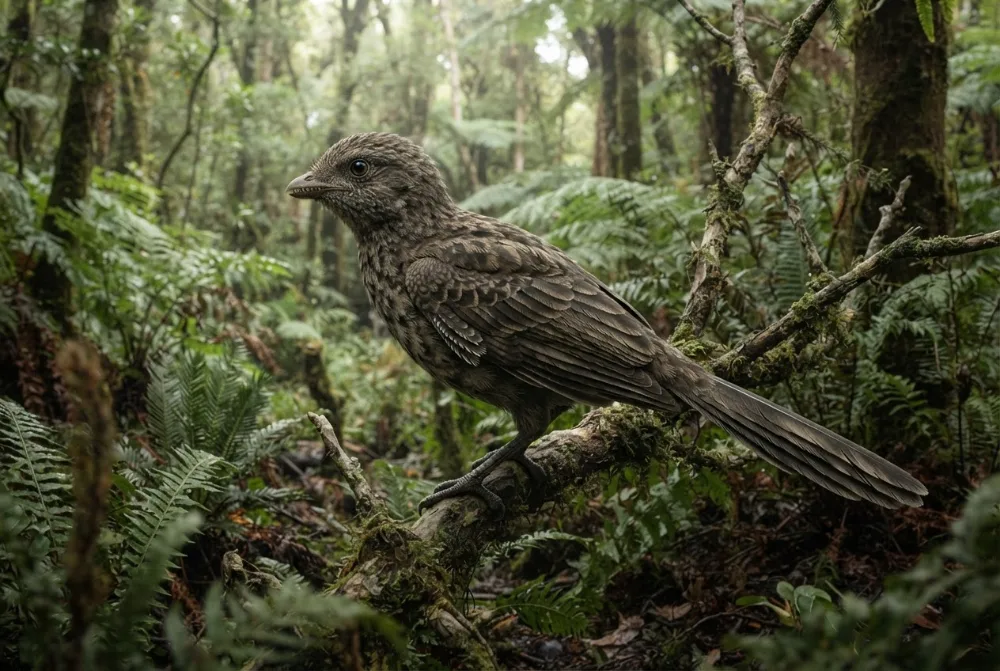
Orienantius was a tiny bird that lived about 130 million years ago in what is now China. It had feathers and could fly, but it was not like modern birds, it belonged to an ancient group called enantiornithines, which had a different way of flying.21
Berɛ bɛn na ɛtenaa ase?
Na ɛyɛ ntɛm sɛn?


Nsɛm a ɛyɛ anigye
Orienantius is known from two nearly complete skeletons that still have feathers and even soft tissues like wing skin preserved.12
It was about the size of a modern Eurasian Skylark, a small songbird.1
Orienantius could fly with high maneuverability and used a flap-gliding style, like some birds today.2
The holotype (main specimen) was not fully grown when it died, some of its bones had not yet fused together.1
Its name comes from Latin and Greek words meaning 'east' and 'opposite', referring to its discovery in East Asia and its group Enantiornithes.1
Orienantius lived during the Early Cretaceous, making it one of the oldest known enantiornithine birds.2
Ma dino ho animdefoɔ
- Nyansahu din
- Orienantius
- Obi a ɔtoo din
- Liu et al. 20193
- Kuo
- Nnomaa a wɔdii kan
- Abusua / kuo kɛseɛ
- Enantiornithes3
- Nkyekyɛmu
- Theropoda > Avialae3
- Abotan no mfeɛ
- mfeɛ ɔpepem 133 kɔsi 126 (Hauterivian)3
- Abotan nhyehyɛeɛ
- Huajiying3
- Aman
- Kyaena3
- Fɔsil nkyerɛwee
- 1 wɔ The Paleobiology Database mu3
- Nhunumu
- Orienantius was named in 2019 by Di Liu and colleagues based on two fossils from the Huajiying Formation in Hebei, China. The species name ritteri honors German scientist Johann Wilhelm Ritter.12
- Wɔda so gye ho akyinnye
- Scientists are still debating exactly how Orienantius and other early enantiornithines evolved their flight abilities, since they show features of both primitive and advanced birds.2
Baabi a nsɛm no firi
- Orienantius (en.wikipedia.org)
- Soft tissue preservation in two new enantiornithine specimens (Aves) from the Lower Cretaceous Huajiying Formation of Hebei Province, China (sciencedirect.com)
- Orienantius in The Paleobiology Database (CC BY 4.0): mfeɛ, mmeaeɛ, abotan nhyehyɛeɛ, nkyekyɛmu.
Asɛm biara a ɛwɔ krataafa yi so wɔ nɔma a ɛkyerɛ baabi a ɛfiri. Sɛ yɛfom biribi a, kafra, yɛyɛ dino dɔfoɔ, yɛnyɛ nyansahu nsɛmma krataa. Ka kyerɛ yɛn wɔ [email protected] na yɛbɛsiesie.
 Ɔkɔm de Rex! Dino Wiki yɛ agya bi adwuma a ɔyɛɛ maa ne babarima a ɔdɔ dino. Ɛyɛ kwa, dawurubɔ biara nni mu, akyidifoɔ biara nni mu. Mpanimfoɔ bɛtumi ama Rex aduane kakra, na aboa ama Dino Wiki atena intanɛt so.Ma Rex aduane
 Archaeopteryx
 Hesperornis
 Ichthyornis
 Baptornis
 Jurapteryx
 Gobipteryx
 Stegosaurus
 Iguanodon
 Giganotosaurus
 Microraptor
 Deinonychus
 Baryonyx