 Woyɛ dino bɛn? Nsɛmmisa agoro
 Dino ko
 Dino mmirikatuo
 Dino agodie nketewa
 Stika nwoma
 Dino TOP nhyehyɛeɛ
 Ma me nwanwa!
Pachycostasaurus
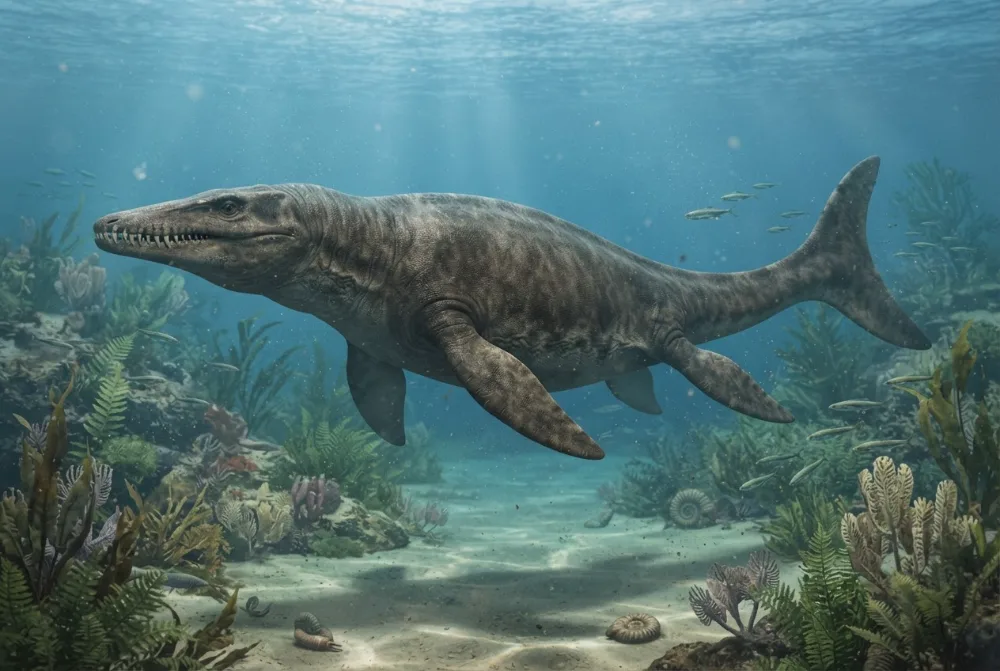
Pachycostasaurus was a pliosaur, a kind of short-necked plesiosaur that lived in the sea. It had very thick, heavy ribs that made its body barrel-shaped, like a fat sausage. This marine reptile was not a fast swimmer, but it used its heavy bones to stay stable underwater.1
Berɛ bɛn na ɛtenaa ase?
Na ne kɛseɛ yɛ sɛn?
Na ne tenten yɛ sɛn?
 ne tenten te sɛ nkraman 3 firi hwene kɔsi dua🍌ne tenten te sɛ kwadu 17 a wɔde abɔ toatoa so🏊anka ɔbɛtumi aguare nsuguarebea kɛseɛ (50 m) tenten wɔ sikɛn 6.4 mu
Pachycostasaurus kɛseɛ yɛ sɛn sɛ wode toto WO ho a?
Akontaa nko ara wɔ wo browser mu. Yɛnkora biribiara so, na yɛmmfa biribiara nkɔ baabiara.
Na ɛyɛ ntɛm sɛn?


Nsɛm a ɛyɛ anigye
Pachycostasaurus had ribs and belly bones that were so thick they looked like sausages. This condition is called pachyostosis, and it also happens in modern dugongs and manatees.1
Its flippers were small compared to its body, and its neck was short. This made it a slow swimmer, unlike many other pliosaurs.1
The only known fossil of Pachycostasaurus was found by Alan Dawn, an amateur geologist and museum volunteer, in a quarry in Peterborough, England.1
Its head was about 20% of its total body length, which is typical for pliosaurs of its time.1
Pachycostasaurus lived about 165 to 161 million years ago, during the Middle Jurassic period.2
The bones of its backbone had a large canal for the spinal cord, and some parts were not fully hardened, suggesting the animal might not have been fully grown when it died.1
Atosɛm sɛefoɔ
Atosɛm: Pachycostasaurus was a fast, powerful predator like other pliosaurs.
Nokorɛ: Its heavy ribs, small flippers, and short neck show it was a slow swimmer that probably stayed near the seafloor, hunting soft prey.1
Ma dino ho animdefoɔ
- Nyansahu din
- Pachycostasaurus
- Obi a ɔtoo din
- Cruickshank et al. 19962
- Kuo
- Plesiosɔɔ
- Abusua / kuo kɛseɛ
- Pliosauridae2
- Nkyekyɛmu
- Plesiosauria > Pliosauridae > Sauropterygia2
- Abotan no mfeɛ
- mfeɛ ɔpepem 165 kɔsi 162 (Callovian)2
- Abotan nhyehyɛeɛ
- Oxford Clay2
- Aman
- Engiresi2
- Fɔsil nkyerɛwee
- 1 wɔ The Paleobiology Database mu2
- Nhunumu
- The fossil was discovered by amateur geologist Alan Dawn in a quarry near Peterborough, England. Scientists Arthur Cruickshank, David Martill and Leslie Noè described and named it in 1996.1
- Wɔda so gye ho akyinnye
- Scientists are not sure whether Pachycostasaurus lived in freshwater rivers and estuaries and was washed into the sea, or if it lived in the deep ocean and drifted to shallow waters.1
Baabi a nsɛm no firi
- Pachycostasaurus (en.wikipedia.org)
- Pachycostasaurus in The Paleobiology Database (CC BY 4.0): mfeɛ, mmeaeɛ, abotan nhyehyɛeɛ, nkyekyɛmu.
Asɛm biara a ɛwɔ krataafa yi so wɔ nɔma a ɛkyerɛ baabi a ɛfiri. Sɛ yɛfom biribi a, kafra, yɛyɛ dino dɔfoɔ, yɛnyɛ nyansahu nsɛmma krataa. Ka kyerɛ yɛn wɔ [email protected] na yɛbɛsiesie.
 Ɔkɔm de Rex! Dino Wiki yɛ agya bi adwuma a ɔyɛɛ maa ne babarima a ɔdɔ dino. Ɛyɛ kwa, dawurubɔ biara nni mu, akyidifoɔ biara nni mu. Mpanimfoɔ bɛtumi ama Rex aduane kakra, na aboa ama Dino Wiki atena intanɛt so.Ma Rex aduane
 Elasmosaurus
 Pliosaurus
 Plesiosaurus
 Cimoliasaurus
 Colymbosaurus
 Trinacromerum
 Ichthyosaurus
 Khudiakovia
 Ophthalmosaurus
 Pterodactylus
 Rhamphocephalus
 Gongbusaurus