 Woyɛ dino bɛn? Nsɛmmisa agoro
 Dino ko
 Dino mmirikatuo
 Dino agodie nketewa
 Stika nwoma
 Dino TOP nhyehyɛeɛ
 Ma me nwanwa!
Berɛ bɛn na ɛtenaa ase?

Na ne kɛseɛ yɛ sɛn?
Na ne ntaban trɛ sɛn?
Parvavis kɛseɛ yɛ sɛn sɛ wode toto WO ho a?
Akontaa nko ara wɔ wo browser mu. Yɛnkora biribiara so, na yɛmmfa biribiara nkɔ baabiara.
Na ɛyɛ ntɛm sɛn?


Nsɛm a ɛyɛ anigye
When Parvavis was discovered, it was the smallest known enantiornithine bird, even smaller than Iberomesornis.1
The fossil of Parvavis includes parts of the skull, spine, tail, and even impressions of its feathers in the rock.1
Scientists studied the bone structure and found that Parvavis was nearly full-grown when it died, but it was still surprisingly tiny.12
Parvavis had a special feature: the bottom joint of its second metatarsal (a foot bone) was wider than the joints of its other metatarsals.1
The claw on the fourth toe of Parvavis was reduced, meaning it was smaller than the other toe claws.1
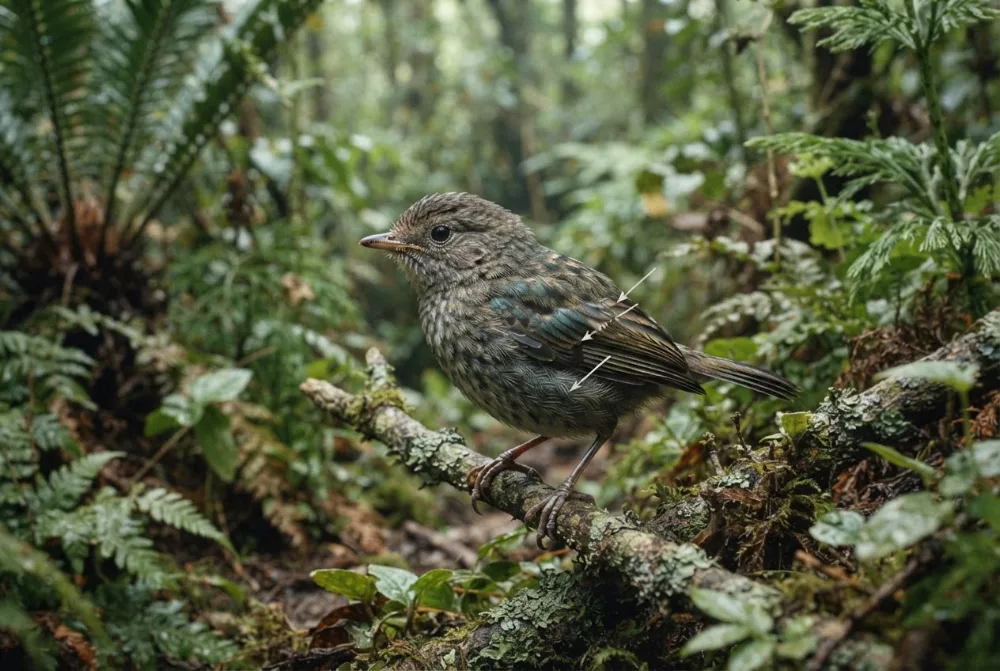
Ma dino ho animdefoɔ
- Nyansahu din
- Parvavis
- Obi a ɔtoo din
- Wang et al. 20143
- Kuo
- Nnomaa a wɔdii kan
- Abusua / kuo kɛseɛ
- Enantiornithes3
- Nkyekyɛmu
- Theropoda > Avialae3
- Abotan no mfeɛ
- mfeɛ ɔpepem 94 kɔsi 84 (Turonian / Santonian)3
- Abotan nhyehyɛeɛ
- Jiangdihe3
- Aman
- Kyaena3
- Fɔsil nkyerɛwee
- 1 wɔ The Paleobiology Database mu3
- Nhunumu
- The skeleton of Parvavis was found in 2010 near Luojumei Village in Yunnan, China. It was named and described in 2014 by Wang Min, Zhou Zhonghe, and Xu Guanghui.1
- Wɔda so gye ho akyinnye
- Scientists are still debating exactly where Parvavis fits on the enantiornithine family tree. Some analyses place it in a relatively basal position, meaning it may have been an early branch of this group.1
Baabi a nsɛm no firi
- Parvavis (en.wikipedia.org)
- The first enantiornithine bird from the Upper Cretaceous of China (tandfonline.com)
- Parvavis in The Paleobiology Database (CC BY 4.0): mfeɛ, mmeaeɛ, abotan nhyehyɛeɛ, nkyekyɛmu.
Asɛm biara a ɛwɔ krataafa yi so wɔ nɔma a ɛkyerɛ baabi a ɛfiri. Sɛ yɛfom biribi a, kafra, yɛyɛ dino dɔfoɔ, yɛnyɛ nyansahu nsɛmma krataa. Ka kyerɛ yɛn wɔ [email protected] na yɛbɛsiesie.
 Ɔkɔm de Rex! Dino Wiki yɛ agya bi adwuma a ɔyɛɛ maa ne babarima a ɔdɔ dino. Ɛyɛ kwa, dawurubɔ biara nni mu, akyidifoɔ biara nni mu. Mpanimfoɔ bɛtumi ama Rex aduane kakra, na aboa ama Dino Wiki atena intanɛt so.Ma Rex aduane
 Archaeopteryx
 Hesperornis
 Ichthyornis
 Baptornis
 Jurapteryx
 Gobipteryx
 Tyrannosaurus
 Triceratops
 Velociraptor
 Spinosaurus
 Ankylosaurus
 Parasaurolophus