 Woyɛ dino bɛn? Nsɛmmisa agoro
 Dino ko
 Dino mmirikatuo
 Dino agodie nketewa
 Stika nwoma
 Dino TOP nhyehyɛeɛ
 Ma me nwanwa!
Berɛ bɛn na ɛtenaa ase?

Na ɛyɛ ntɛm sɛn?


Nsɛm a ɛyɛ anigye
Pasquiaornis lived about 95 to 93 million years ago, during the Late Cretaceous period.1
Two species are known: Pasquiaornis hardiei and Pasquiaornis tankei. P. tankei was about one-third larger than P. hardiei.1
Pasquiaornis was a member of the Hesperornithes, a group of toothed, diving birds that were mostly flightless.1
Its wing bones were thickened and not well suited for flying, so scientists think it probably could not fly.1
Fossils of at least 9 individuals were found in a small area, which might mean they lived in colonies or died together in a mass event.1
The rocks where Pasquiaornis was found were once the bottom of the Western Interior Seaway, a shallow sea that split North America in two.1
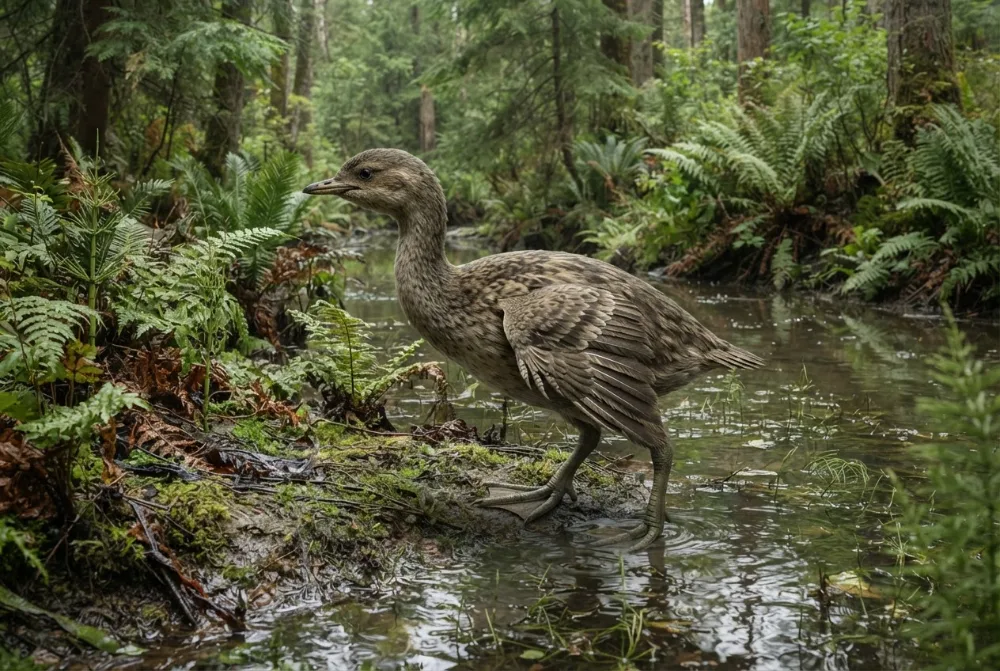
Ma dino ho animdefoɔ
- Nyansahu din
- Pasquiaornis
- Obi a ɔtoo din
- Tokaryk et al. 19972
- Kuo
- Nnomaa a wɔdii kan
- Abusua / kuo kɛseɛ
- Hesperornithiformes2
- Nkyekyɛmu
- Theropoda > Avialae2
- Abotan no mfeɛ
- mfeɛ ɔpepem 100 kɔsi 94 (Cenomanian)2
- Abotan nhyehyɛeɛ
- Belle Fourche2
- Aman
- Kanada2
- Fɔsil nkyerɛwee
- 2 wɔ The Paleobiology Database mu2
- Nhunumu
- Pasquiaornis was named in 1997 by Tim Tokaryk, Stephen Cumbaa and John Storer. The fossils were collected near Arborfield, Saskatchewan, mostly during 1992 to 1993 expeditions by the Royal Saskatchewan Museum and the Canadian Museum of Nature.12
- Wɔda so gye ho akyinnye
- Scientists are not sure whether Pasquiaornis could still fly, because its wing bones look like those of flying birds but are too thick for good flight.1
Baabi a nsɛm no firi
- Pasquiaornis (en.wikipedia.org)
- Pasquiaornis in The Paleobiology Database (CC BY 4.0): mfeɛ, mmeaeɛ, abotan nhyehyɛeɛ, nkyekyɛmu.
Asɛm biara a ɛwɔ krataafa yi so wɔ nɔma a ɛkyerɛ baabi a ɛfiri. Sɛ yɛfom biribi a, kafra, yɛyɛ dino dɔfoɔ, yɛnyɛ nyansahu nsɛmma krataa. Ka kyerɛ yɛn wɔ [email protected] na yɛbɛsiesie.
 Ɔkɔm de Rex! Dino Wiki yɛ agya bi adwuma a ɔyɛɛ maa ne babarima a ɔdɔ dino. Ɛyɛ kwa, dawurubɔ biara nni mu, akyidifoɔ biara nni mu. Mpanimfoɔ bɛtumi ama Rex aduane kakra, na aboa ama Dino Wiki atena intanɛt so.Ma Rex aduane
 Archaeopteryx
 Hesperornis
 Ichthyornis
 Baptornis
 Jurapteryx
 Gobipteryx
 Tyrannosaurus
 Triceratops
 Velociraptor
 Spinosaurus
 Ankylosaurus
 Parasaurolophus