 Woyɛ dino bɛn? Nsɛmmisa agoro
 Dino ko
 Dino mmirikatuo
 Dino agodie nketewa
 Stika nwoma
 Dino TOP nhyehyɛeɛ
 Ma me nwanwa!
Berɛ bɛn na ɛtenaa ase?

Na ne kɛseɛ yɛ sɛn?
Na ne tenten yɛ sɛn?
Na ne korɔn yɛ sɛn?
nsusuiɛ
Pegomastax kɛseɛ yɛ sɛn sɛ wode toto WO ho a?
Akontaa nko ara wɔ wo browser mu. Yɛnkora biribiara so, na yɛmmfa biribiara nkɔ baabiara.
Na ɛyɛ ntɛm sɛn?


Nsɛm a ɛyɛ anigye
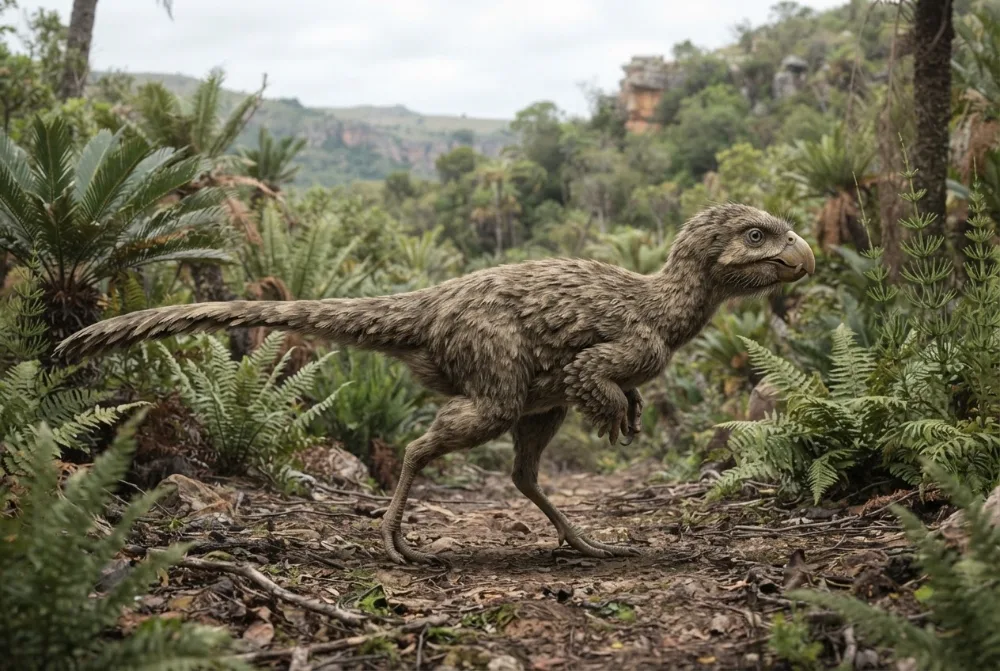
Pegomastax had a very deep, parrot-like beak at the front of its jaw, which helped it bite into tough plants.1
Its skull was only about 73 mm (2.9 inches) long, smaller than a chicken's skull.1
Pegomastax lived alongside many other dinosaurs, including the long-necked Massospondylus and the small ornithischian Lesothosaurus.1
The only fossil of Pegomastax is a partial skull with a well-preserved lower jaw and teeth, found in the upper Elliot Formation.1
Scientists think Pegomastax may have been most closely related to a South American dinosaur called Manidens.1
Pegomastax had a mobile predentary bone in its lower jaw, which helped it move its beak up and down while chewing.1
Nsɛm a wɔbisa bebree fa Pegomastax ho
?Did Pegomastax have feathers?
Scientists think it was covered in porcupine-like quills, not feathers.4
?What did Pegomastax eat?
It was a plant-eater. It used its beak and cheek teeth like scissors to shear tough plants.14
?Why did Pegomastax have fangs?
It used its fangs for self-defense and competing for mates, like some modern plant-eating deer and peccaries.4
?When did Pegomastax live?
It lived during the Early Jurassic, about 200 to 190 million years ago.1
?Where was Pegomastax found?
Its only fossil was found in the upper Elliot Formation in South Africa.1
Ma dino ho animdefoɔ
- Nyansahu din
- Pegomastax
- Obi a ɔtoo din
- Sereno 20126
- Kuo
- Ahabandifoɔ a wɔwɔ anomaa ano
- Abusua / kuo kɛseɛ
- Heterodontosauridae6
- Nkyekyɛmu
- Ornithischia > Heterodontosauridae6
- Abotan no mfeɛ
- mfeɛ ɔpepem 201 kɔsi 193 (Hettangian / Sinemurian)6
- Abotan nhyehyɛeɛ
- Elliot6
- Aman
- Afrika Anaafoɔ6
- Fɔsil nkyerɛwee
- 1 wɔ The Paleobiology Database mu6
- Nhunumu
- Pegomastax was named by American paleontologist Paul Sereno in 2012, based on a partial skull discovered in the 1966 to 1967 expedition to the Transkei District of Cape Province, South Africa.1
- Wɔda so gye ho akyinnye
- Scientists are still debating whether the large canine teeth of Pegomastax were used for defense, display, or occasional omnivory.1
Baabi a nsɛm no firi
- Pegomastax (en.wikipedia.org)
- PBDB Taxon (paleobiodb.org)
- Dwarf species of fanged dinosaur emerges from southern Africa | University of Chicago News (news.uchicago.edu)
- New Fanged Dwarf Dinosaur Found—"Would Be Nice Pet" | National Geographic (nationalgeographic.com)
- Dwarf 'vampire' dinosaur was a plant eater - BBC News (bbc.com)
- Pegomastax in The Paleobiology Database (CC BY 4.0): mfeɛ, mmeaeɛ, abotan nhyehyɛeɛ, nkyekyɛmu.
Asɛm biara a ɛwɔ krataafa yi so wɔ nɔma a ɛkyerɛ baabi a ɛfiri. Sɛ yɛfom biribi a, kafra, yɛyɛ dino dɔfoɔ, yɛnyɛ nyansahu nsɛmma krataa. Ka kyerɛ yɛn wɔ [email protected] na yɛbɛsiesie.
 Ɔkɔm de Rex! Dino Wiki yɛ agya bi adwuma a ɔyɛɛ maa ne babarima a ɔdɔ dino. Ɛyɛ kwa, dawurubɔ biara nni mu, akyidifoɔ biara nni mu. Mpanimfoɔ bɛtumi ama Rex aduane kakra, na aboa ama Dino Wiki atena intanɛt so.Ma Rex aduane
 Iguanodon
 Tenontosaurus
 Thescelosaurus
 Zalmoxes
 Camptosaurus
 Rhabdodon
 Dilophosaurus
 Stenopterygius
 Dorygnathus
 Lufengosaurus
 Scutellosaurus
 Yunnanosaurus