 Woyɛ dino bɛn? Nsɛmmisa agoro
 Dino ko
 Dino mmirikatuo
 Dino agodie nketewa
 Stika nwoma
 Dino TOP nhyehyɛeɛ
 Ma me nwanwa!
Pengornis
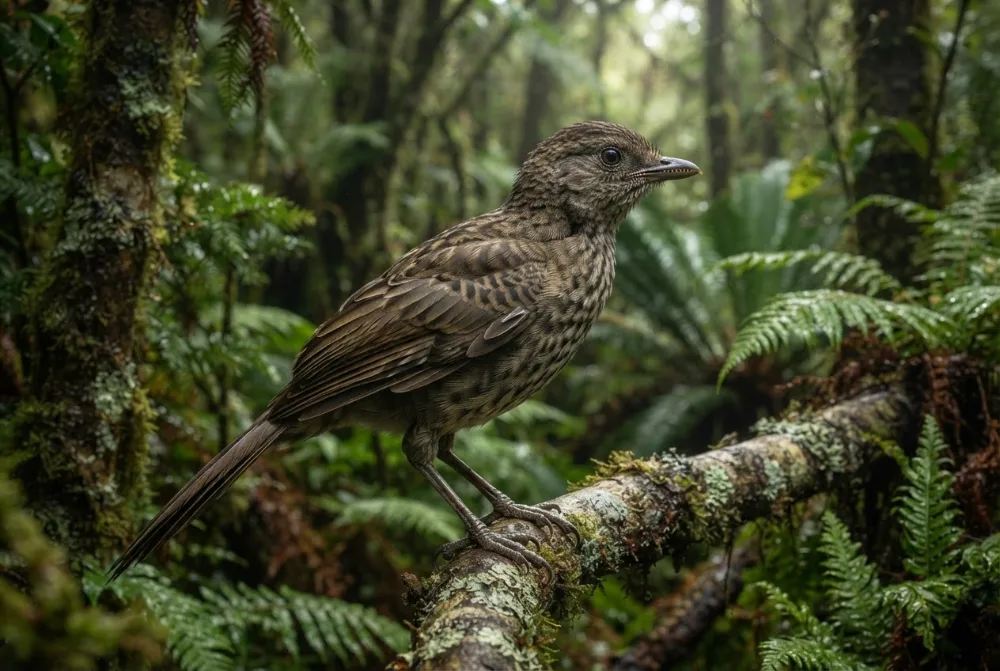
Pengornis was a bird that lived in the Early Cretaceous, about 120 million years ago. It was one of the biggest birds of its time, with a wingspan as wide as a small car. It had tiny teeth and ate meat.21
Berɛ bɛn na ɛtenaa ase?
Na ɛyɛ ntɛm sɛn?


Nsɛm a ɛyɛ anigye
Pengornis is the largest known enantiornithine bird from the Early Cretaceous of northeast China.1
Its skull is one of the best preserved among all Mesozoic birds, showing details like tiny teeth and wear facets.2
Pengornis had a globose humeral head that stuck out further than its deltopectoral crest, a feature not seen in other enantiornithines.2
The name comes from 'Peng', a giant mythological bird in Chinese folklore, and 'ornis' meaning bird in Greek.1
Its teeth were small, conical, and not curved, similar to those of the early bird Archaeopteryx.2
Pengornis had a long tail with a pygostyle, a fused bone at the tip that helped control flight.2
Nsɛm a wɔbisa bebree fa Pengornis ho
?How big was Pengornis?
Pengornis was a small bird with a wingspan of roughly 1 meter (3.3 feet). It is the largest known enantiornithine bird from the Early Cretaceous.13
?Did Pengornis have teeth?
Yes, Pengornis had tiny, conical teeth that were not curved, similar to those of the early bird Archaeopteryx. It had about 13 teeth in its lower jaw and used them to eat meat.13
?When did Pengornis live?
Pengornis lived during the Early Cretaceous period, about 120 million years ago.1
?What does the name Pengornis mean?
The name Pengornis comes from 'Peng', a giant mythological bird in Chinese folklore, and 'ornis', which means bird in Greek.1
Ma dino ho animdefoɔ
- Nyansahu din
- Pengornis
- Obi a ɔtoo din
- Zhou et al. 20084
- Kuo
- Nnomaa a wɔdii kan
- Abusua / kuo kɛseɛ
- Pengornithidae4
- Nkyekyɛmu
- Theropoda > Avialae4
- Abotan no mfeɛ
- mfeɛ ɔpepem 121 kɔsi 113 (Aptian)4
- Abotan nhyehyɛeɛ
- Jiufotang4
- Aman
- Kyaena4
- Fɔsil nkyerɛwee
- 1 wɔ The Paleobiology Database mu4
- Nhunumu
- Pengornis was named in 2008 by Zhou, Clarke, and Zhang based on a nearly complete skeleton found in the Jiufotang Formation in Liaoning, China. The species name 'houi' honors the pioneering paleo-ornithologist Lianhai Hou.12
- Wɔda so gye ho akyinnye
- Scientists debate whether Enantiornithes and Ornithurae (the group including modern birds) are truly separate groups. Pengornis has features of both, which blurs the line.12
Baabi a nsɛm no firi
- Pengornis (en.wikipedia.org)
- Insight into diversity, body size and morphological evolution from the largest Early Cretaceous enantiornithine bird (pmc.ncbi.nlm.nih.gov)
- Insight into diversity, body size and morphological evolution from the largest Early Cretaceous enantiornithine bird - Zhou - 2008 - Journal of Anatomy - Wiley Online Library (onlinelibrary.wiley.com)
- Pengornis in The Paleobiology Database (CC BY 4.0): mfeɛ, mmeaeɛ, abotan nhyehyɛeɛ, nkyekyɛmu.
Asɛm biara a ɛwɔ krataafa yi so wɔ nɔma a ɛkyerɛ baabi a ɛfiri. Sɛ yɛfom biribi a, kafra, yɛyɛ dino dɔfoɔ, yɛnyɛ nyansahu nsɛmma krataa. Ka kyerɛ yɛn wɔ [email protected] na yɛbɛsiesie.
 Ɔkɔm de Rex! Dino Wiki yɛ agya bi adwuma a ɔyɛɛ maa ne babarima a ɔdɔ dino. Ɛyɛ kwa, dawurubɔ biara nni mu, akyidifoɔ biara nni mu. Mpanimfoɔ bɛtumi ama Rex aduane kakra, na aboa ama Dino Wiki atena intanɛt so.Ma Rex aduane
 Archaeopteryx
 Hesperornis
 Ichthyornis
 Baptornis
 Jurapteryx
 Gobipteryx
 Stegosaurus
 Iguanodon
 Giganotosaurus
 Microraptor
 Deinonychus
 Baryonyx