 Woyɛ dino bɛn? Nsɛmmisa agoro
 Dino ko
 Dino mmirikatuo
 Dino agodie nketewa
 Stika nwoma
 Dino TOP nhyehyɛeɛ
 Ma me nwanwa!
Plesiopterys
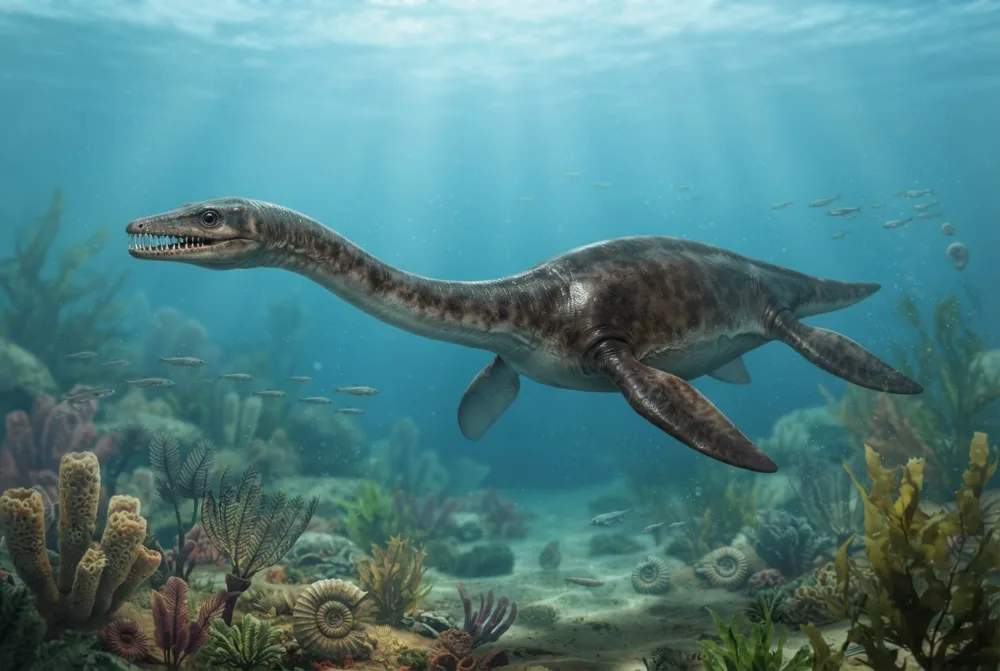
Plesiopterys was a small, long-necked marine reptile that swam in the warm seas of Early Jurassic Germany. It had flippers like paddles and a mouth full of sharp teeth for catching fish and squid.1
Berɛ bɛn na ɛtenaa ase?
Na ne kɛseɛ yɛ sɛn?
Na ne tenten yɛ sɛn?
 ne tenten te sɛ nkraman 3 firi hwene kɔsi dua🍌ne tenten te sɛ kwadu 17 a wɔde abɔ toatoa so🏊anka ɔbɛtumi aguare nsuguarebea kɛseɛ (50 m) tenten wɔ sikɛn 6.4 mu
Plesiopterys kɛseɛ yɛ sɛn sɛ wode toto WO ho a?
Akontaa nko ara wɔ wo browser mu. Yɛnkora biribiara so, na yɛmmfa biribiara nkɔ baabiara.
Na ɛyɛ ntɛm sɛn?


Nsɛm a ɛyɛ anigye
Plesiopterys had 39 neck vertebrae, giving it a long, flexible neck.2
One fossil of Plesiopterys preserves traces of scaly skin on its front flipper and smooth skin on its tail.1
The tail skin of that fossil also contains dark-colored melanosomes, which are pigment cells that may have given the animal a dark color.1
Plesiopterys is one of the most primitive plesiosaurs known, meaning it had many features from earlier ancestors.2
Its skull was small compared to its neck, only about 17 percent of the neck length.2
The name Plesiopterys also refers to the pterygoid bones in the roof of its mouth, which are important for identifying the species.1
Ma dino ho animdefoɔ
- Nyansahu din
- Plesiopterys
- Obi a ɔtoo din
- O'Keefe 20043
- Kuo
- Plesiosɔɔ
- Abusua / kuo kɛseɛ
- Plesiosauroidea3
- Nkyekyɛmu
- Plesiosauria > Sauropterygia3
- Abotan no mfeɛ
- mfeɛ ɔpepem 184 kɔsi 183 (Toarcian)3
- Abotan nhyehyɛeɛ
- Posidonienschiefer3
- Aman
- Gyaaman3
- Fɔsil nkyerɛwee
- 1 wɔ The Paleobiology Database mu3
- Nhunumu
- Plesiopterys was named in 2004 by paleontologist F. Robin O'Keefe, based on a skeleton found in the 19th century near Holzmaden, Germany. The species name P. wildi honors German paleontologist Rupert Wild.12
- Wɔda so gye ho akyinnye
- Scientists debate whether Plesiopterys is a separate species or the same as another plesiosaur called Seeleyosaurus guilelmiimperatoris.1
Baabi a nsɛm no firi
- Plesiopterys (en.wikipedia.org)
- pleo_78_511.973_988.tp (doc.rero.ch)
- Plesiopterys in The Paleobiology Database (CC BY 4.0): mfeɛ, mmeaeɛ, abotan nhyehyɛeɛ, nkyekyɛmu.
Asɛm biara a ɛwɔ krataafa yi so wɔ nɔma a ɛkyerɛ baabi a ɛfiri. Sɛ yɛfom biribi a, kafra, yɛyɛ dino dɔfoɔ, yɛnyɛ nyansahu nsɛmma krataa. Ka kyerɛ yɛn wɔ [email protected] na yɛbɛsiesie.
 Ɔkɔm de Rex! Dino Wiki yɛ agya bi adwuma a ɔyɛɛ maa ne babarima a ɔdɔ dino. Ɛyɛ kwa, dawurubɔ biara nni mu, akyidifoɔ biara nni mu. Mpanimfoɔ bɛtumi ama Rex aduane kakra, na aboa ama Dino Wiki atena intanɛt so.Ma Rex aduane
 Elasmosaurus
 Pliosaurus
 Plesiosaurus
 Cimoliasaurus
 Colymbosaurus
 Trinacromerum
 Dilophosaurus
 Stenopterygius
 Dorygnathus
 Lufengosaurus
 Scutellosaurus
 Yunnanosaurus