 Woyɛ dino bɛn? Nsɛmmisa agoro
 Dino ko
 Dino mmirikatuo
 Dino agodie nketewa
 Stika nwoma
 Dino TOP nhyehyɛeɛ
 Ma me nwanwa!
Berɛ bɛn na ɛtenaa ase?

Na ɛyɛ ntɛm sɛn?


Nsɛm a ɛyɛ anigye
Rapaxavis had teeth only in the front of its upper and lower jaws, unlike many other birds.2
Its feet were perfectly adapted for grasping branches, making it one of the first birds known to be strongly arboreal (tree-living).2
The fossil of Rapaxavis was so well preserved that scientists could see the keratin sheaths on its toe claws.2
Rapaxavis lived about 113 million years ago, during the Early Cretaceous period.1
The holotype (main specimen) was a subadult, meaning it was not fully grown when it died.1
Its name comes from the Latin word 'rapax' meaning grasping, because of its strong feet.1
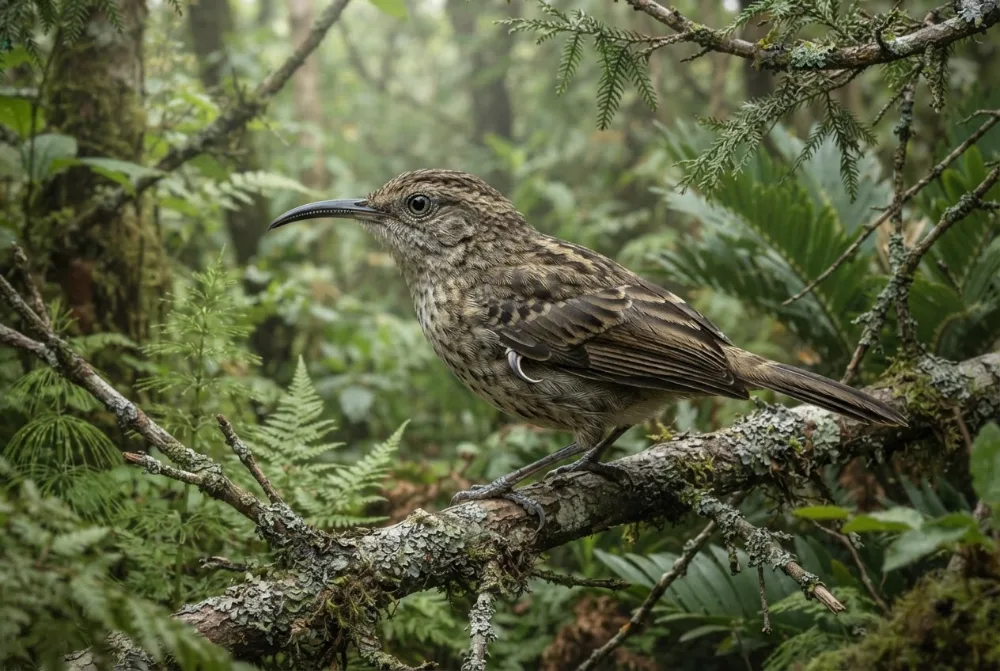
Ma dino ho animdefoɔ
- Nyansahu din
- Rapaxavis
- Obi a ɔtoo din
- Morschhauser et al. 20093
- Kuo
- Nnomaa a wɔdii kan
- Abusua / kuo kɛseɛ
- Longipterygidae3
- Nkyekyɛmu
- Theropoda > Avialae3
- Abotan no mfeɛ
- mfeɛ ɔpepem 121 kɔsi 113 (Aptian)3
- Abotan nhyehyɛeɛ
- Jiufotang3
- Aman
- Kyaena3
- Fɔsil nkyerɛwee
- 1 wɔ The Paleobiology Database mu3
- Nhunumu
- Rapaxavis was named in 2009 by Eric Morschhauser and colleagues. The fossil was found by Pan Lijun at Xiaioyugou, China, and was first thought to be a different bird called Longirostravis.1
- Wɔda so gye ho akyinnye
- Scientists are not sure if Rapaxavis was fully grown when it died, because its bones were not completely fused.2
Baabi a nsɛm no firi
- Rapaxavis (en.wikipedia.org)
- Anatomy of the Early Cretaceous bird Rapaxavis pani, a new species from Liaoning Province, China: Journal of Vertebrate Paleontology: Vol 29, No 2 (tandfonline.com)
- Rapaxavis in The Paleobiology Database (CC BY 4.0): mfeɛ, mmeaeɛ, abotan nhyehyɛeɛ, nkyekyɛmu.
Asɛm biara a ɛwɔ krataafa yi so wɔ nɔma a ɛkyerɛ baabi a ɛfiri. Sɛ yɛfom biribi a, kafra, yɛyɛ dino dɔfoɔ, yɛnyɛ nyansahu nsɛmma krataa. Ka kyerɛ yɛn wɔ [email protected] na yɛbɛsiesie.
 Ɔkɔm de Rex! Dino Wiki yɛ agya bi adwuma a ɔyɛɛ maa ne babarima a ɔdɔ dino. Ɛyɛ kwa, dawurubɔ biara nni mu, akyidifoɔ biara nni mu. Mpanimfoɔ bɛtumi ama Rex aduane kakra, na aboa ama Dino Wiki atena intanɛt so.Ma Rex aduane
 Archaeopteryx
 Hesperornis
 Ichthyornis
 Baptornis
 Jurapteryx
 Gobipteryx
 Stegosaurus
 Iguanodon
 Giganotosaurus
 Microraptor
 Deinonychus
 Baryonyx