 Woyɛ dino bɛn? Nsɛmmisa agoro
 Dino ko
 Dino mmirikatuo
 Dino agodie nketewa
 Stika nwoma
 Dino TOP nhyehyɛeɛ
 Ma me nwanwa!
Rhomaleosaurus
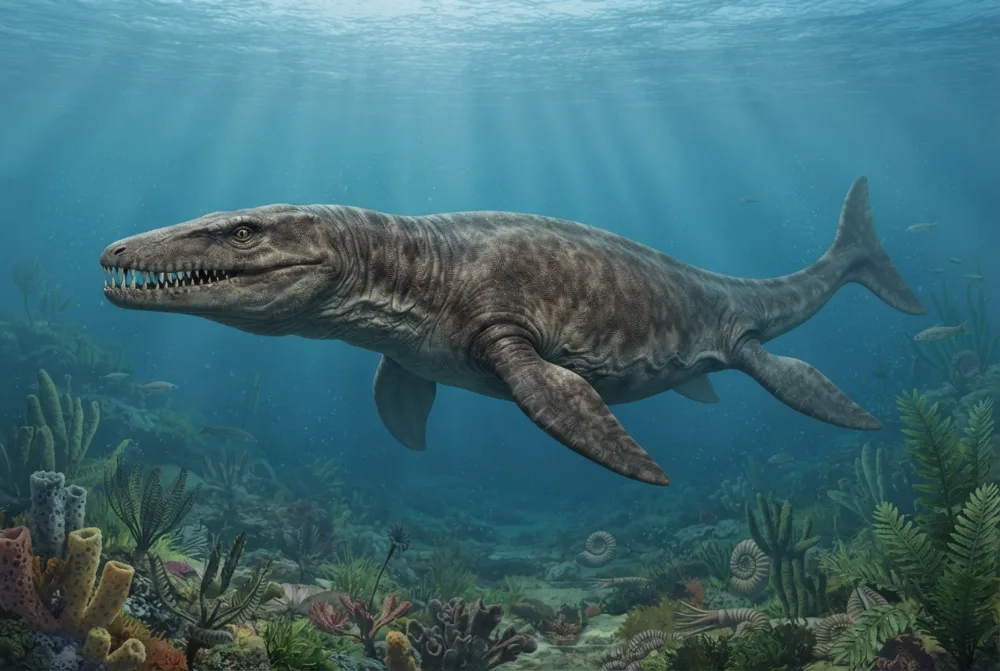
Rhomaleosaurus was a giant marine reptile that swam in the seas during the Early Jurassic period, about 183 to 175 million years ago. It was one of the biggest predators in the ocean at that time, with a huge head and a long neck, and it ate other sea creatures like ichthyosaurs and ammonites.1
Berɛ bɛn na ɛtenaa ase?
Na ne kɛseɛ yɛ sɛn?
Na ne tenten yɛ sɛn?
 ne tenten te sɛ nkraman 7 firi hwene kɔsi dua🍌ne tenten te sɛ kwadu 39 a wɔde abɔ toatoa so🏊anka ɔbɛtumi aguare nsuguarebea kɛseɛ (50 m) tenten wɔ sikɛn 6.9 mu
Rhomaleosaurus kɛseɛ yɛ sɛn sɛ wode toto WO ho a?
Akontaa nko ara wɔ wo browser mu. Yɛnkora biribiara so, na yɛmmfa biribiara nkɔ baabiara.
Na ɛyɛ ntɛm sɛn?


Nsɛm a ɛyɛ anigye
Rhomaleosaurus had a very long neck compared to other pliosaurs, but still had a gigantic head, making it a mix of features from both long-necked and short-necked plesiosaurs.2
The first fossil of Rhomaleosaurus was found in 1848 in an alum quarry at Kettleness, near Whitby, England, and was kept at Mulgrave Castle for five years before being sent to Dublin.1
The skull of the holotype specimen is 88 centimeters long, and the whole animal was about 7 meters (23 feet) long.2
Rhomaleosaurus lived at the same time as the large ichthyosaur Temnodontosaurus, and both were top predators in the same ocean.1
Scientists think Rhomaleosaurus could pick up scents while underwater, helping it find prey.1
Nsɛm a wɔbisa bebree fa Rhomaleosaurus ho
Ma dino ho animdefoɔ
- Nyansahu din
- Rhomaleosaurus
- Obi a ɔtoo din
- Seeley 18745
- Kuo
- Plesiosɔɔ
- Abusua / kuo kɛseɛ
- Rhomaleosauridae5
- Nkyekyɛmu
- Plesiosauria > Sauropterygia5
- Abotan no mfeɛ
- mfeɛ ɔpepem 201 kɔsi 175 (Hettangian / Toarcian)5
- Abotan nhyehyɛeɛ
- Whitby Mudstone, Alum Shale, Blue Lias5
- Aman
- Engiresi5
- Fɔsil nkyerɛwee
- 15 wɔ The Paleobiology Database mu5
- Nhunumu
- The first Rhomaleosaurus fossil was discovered in 1848 in an alum quarry at Kettleness, near Whitby, England. It was named Plesiosaurus cramptoni by Alexander Carte and W. H. Bailey in 1863, and later Harry Seeley placed it in its own genus, Rhomaleosaurus, in 1874.1
- Wɔda so gye ho akyinnye
- Scientists still debate which species belong to Rhomaleosaurus. Some species once placed here, like Rhomaleosaurus megacephalus, are now thought to belong to other genera.1
Baabi a nsɛm no firi
- Rhomaleosaurus (en.wikipedia.org)
- The skull of the giant predatory pliosaur Rhomaleosaurus cramptoni: implications for plesiosaur phylogenetics (plesiosauria.com)
- Rhomaleosaurus – Plesiosaur Directory (plesiosauria.com)
- An exceptional fossil plesiosaur - Rhomaleosaurus cramptoni | National Museum of Ireland (museum.ie)
- Rhomaleosaurus in The Paleobiology Database (CC BY 4.0): mfeɛ, mmeaeɛ, abotan nhyehyɛeɛ, nkyekyɛmu.
Asɛm biara a ɛwɔ krataafa yi so wɔ nɔma a ɛkyerɛ baabi a ɛfiri. Sɛ yɛfom biribi a, kafra, yɛyɛ dino dɔfoɔ, yɛnyɛ nyansahu nsɛmma krataa. Ka kyerɛ yɛn wɔ [email protected] na yɛbɛsiesie.
 Ɔkɔm de Rex! Dino Wiki yɛ agya bi adwuma a ɔyɛɛ maa ne babarima a ɔdɔ dino. Ɛyɛ kwa, dawurubɔ biara nni mu, akyidifoɔ biara nni mu. Mpanimfoɔ bɛtumi ama Rex aduane kakra, na aboa ama Dino Wiki atena intanɛt so.Ma Rex aduane
 Elasmosaurus
 Pliosaurus
 Plesiosaurus
 Cimoliasaurus
 Colymbosaurus
 Trinacromerum
 Dilophosaurus
 Stenopterygius
 Dorygnathus
 Lufengosaurus
 Scutellosaurus
 Yunnanosaurus